


 Need car parts? Shop by vehicle
(Select the exact fit for your vehicle)
Need car parts? Shop by vehicle
(Select the exact fit for your vehicle)
Chevy LS Swap Headers
Shop Headers by Brand: Chevrolet
Shop by Model: Chevrolet Camaro Headers | Chevy C1500 Headers | Chevrolet Suburban 1500 Headers
Shop by Engine: Small Block Chevy Headers
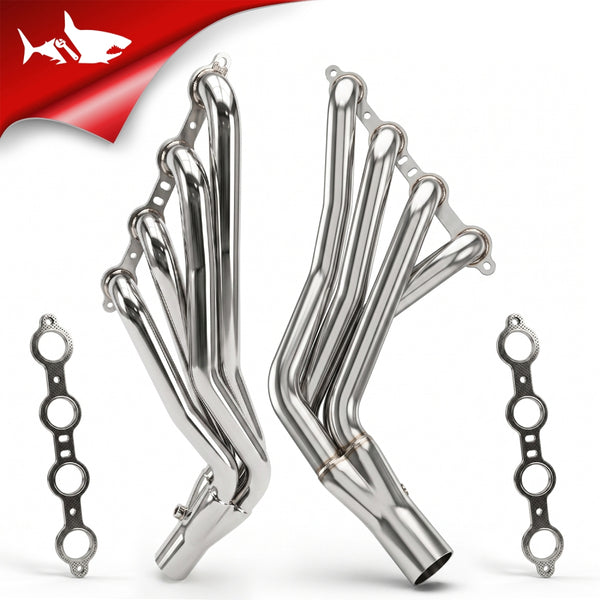
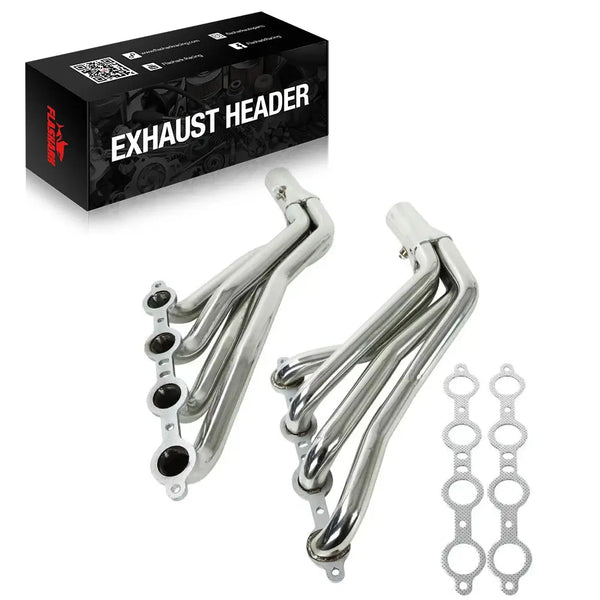
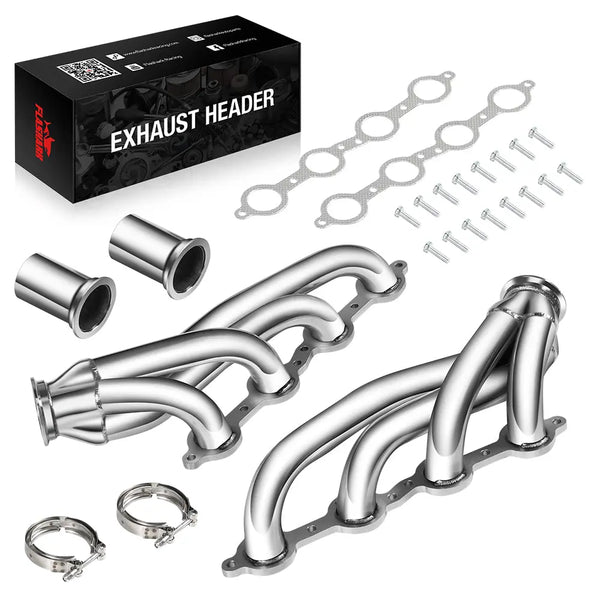
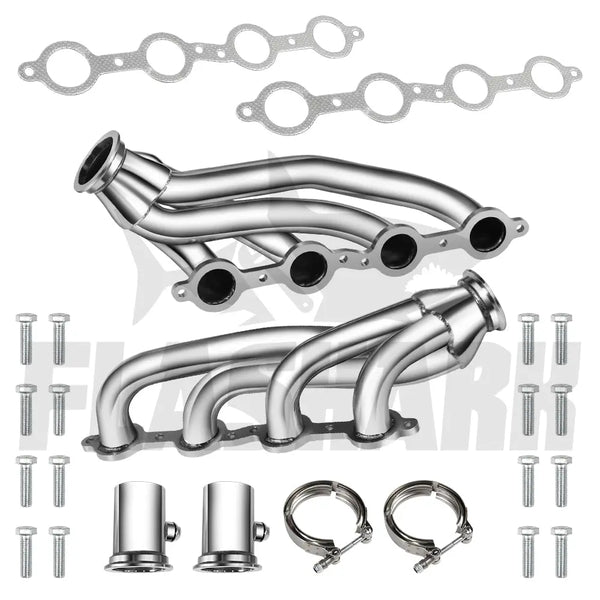
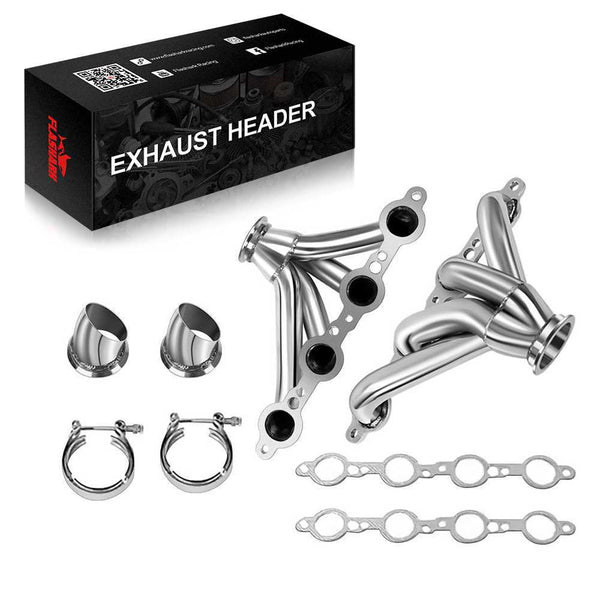
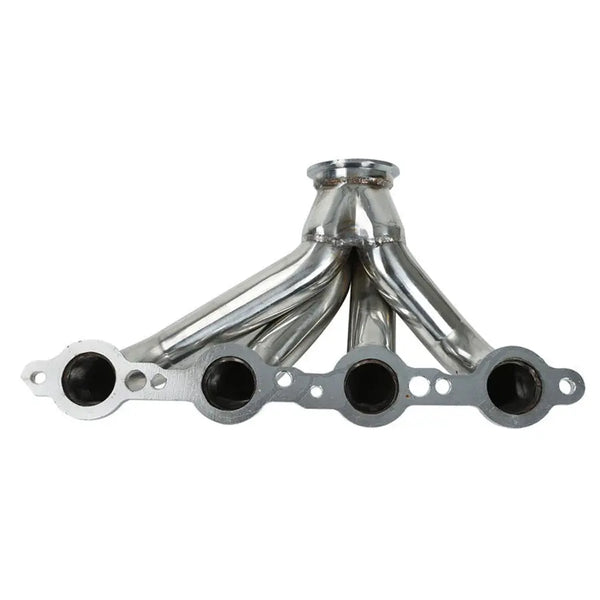
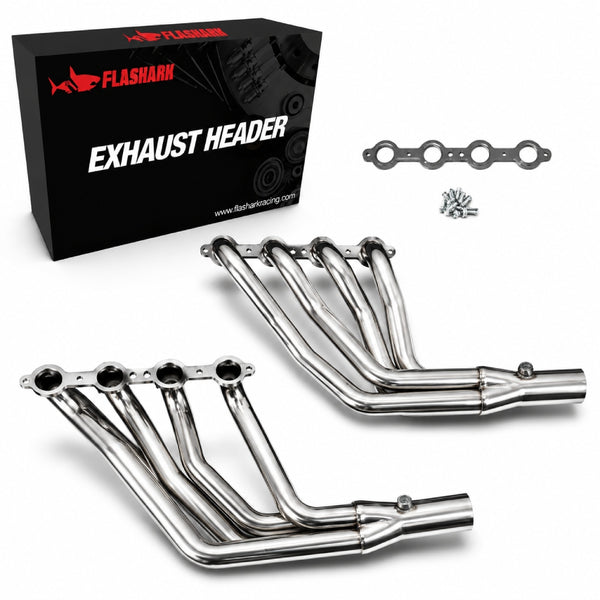
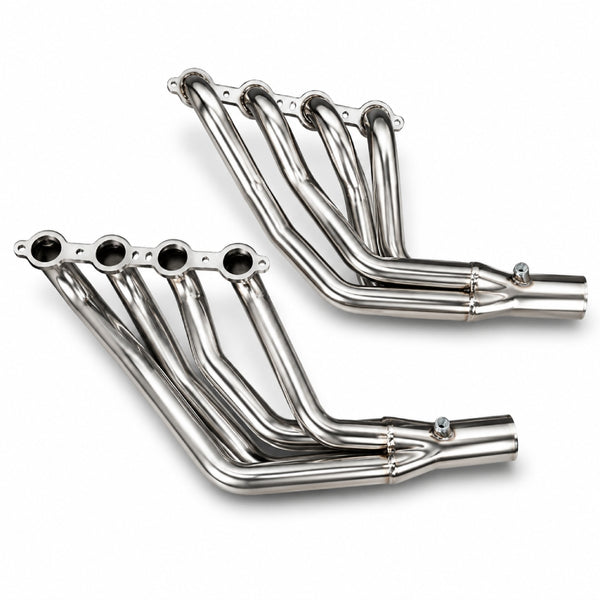
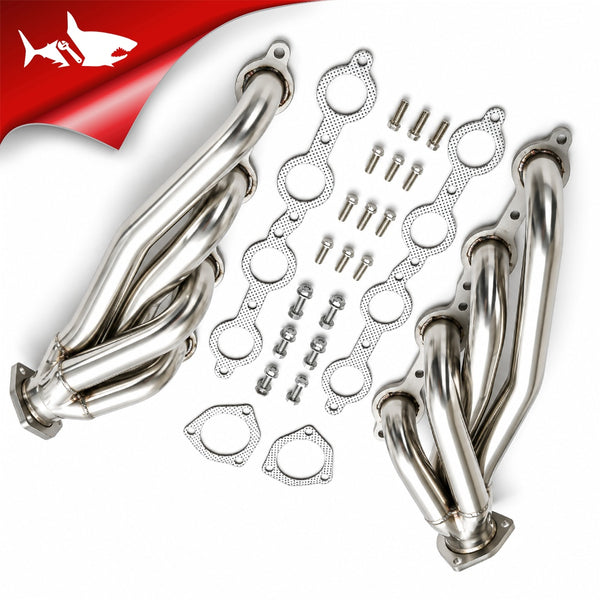
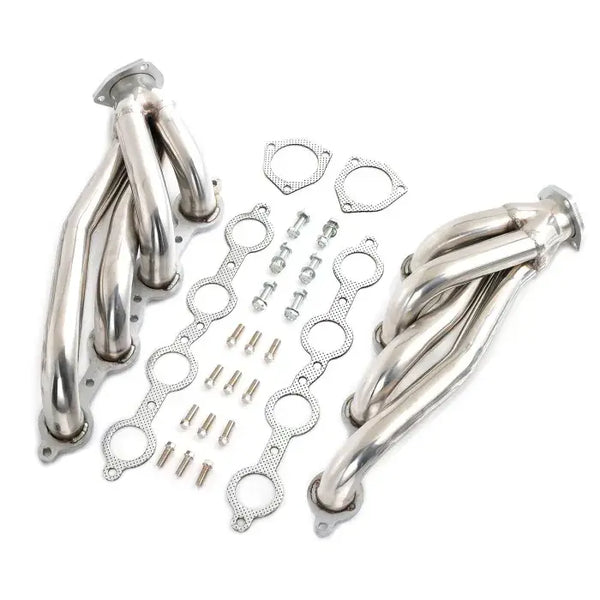
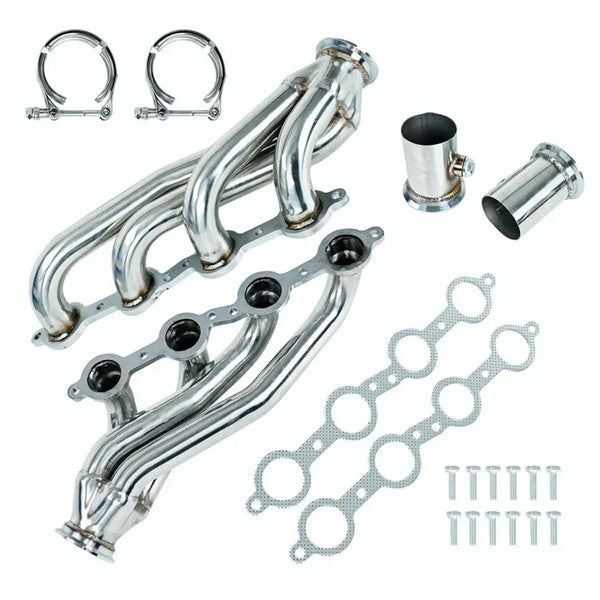
Shop LS swap headers for classic Chevrolet and GM platforms, including C10 and K10 pickups, S10 and GMT325 trucks and SUVs, Camaro, Firebird, Nova, Chevelle, and selected early Chevrolet chassis. The collection includes long-tube, shorty, and block-hugger designs for LS-family V8 swaps, with different primary routing and collector configurations to suit the space available in each chassis. These options let you choose around your engine bay, exhaust layout, ground-clearance needs, and fabrication plans instead of treating every LS swap as the same build. Before ordering, check the individual product page against your vehicle year, chassis, 2WD or 4WD configuration, engine position, oil pan, transmission, steering components, and planned collector connection.






Shop Headers by Brand: Chevrolet
Shop by Model: Chevrolet Camaro Headers | Chevy C1500 Headers | Chevrolet Suburban 1500 Headers
Shop by Engine: Small Block Chevy Headers
Shop LS swap headers for classic Chevrolet and GM platforms, including C10 and K10 pickups, S10 and GMT325 trucks and SUVs, Camaro, Firebird, Nova, Chevelle, and selected early Chevrolet chassis. The collection includes long-tube, shorty, and block-hugger designs for LS-family V8 swaps, with different primary routing and collector configurations to suit the space available in each chassis. These options let you choose around your engine bay, exhaust layout, ground-clearance needs, and fabrication plans instead of treating every LS swap as the same build. Before ordering, check the individual product page against your vehicle year, chassis, 2WD or 4WD configuration, engine position, oil pan, transmission, steering components, and planned collector connection.
Choose Headers for the Chassis, Not Just the LS Engine
An LS cylinder-head bolt pattern tells you whether a header can attach to the engine. It does not confirm that the primary tubes will clear the vehicle around it. Steering shafts, frame rails, front crossmembers, engine mounts, oil pans, starters, transmissions, and floor clearance all change from one swap platform to another.
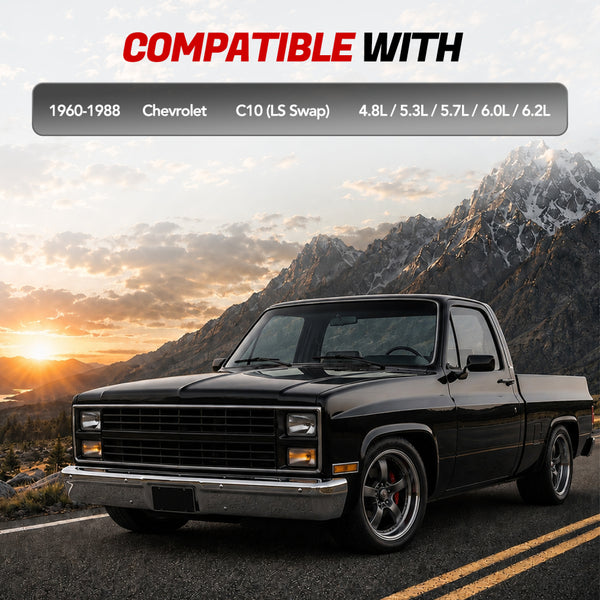
This collection covers several distinct build types. They include C10 and K10 pickups, C1500 and K1500 applications, GMT325-based S10 vehicles, multiple Camaro and Firebird generations, Nova and Chevelle applications, and selected early Chevrolet chassis. Use the product written for your chassis whenever one is available. A header listed for one LS-swapped platform should not be assumed to fit another vehicle simply because both use a 4.8L, 5.3L, 5.7L, 6.0L, or 6.2L LS-family engine.
Before You Buy
- Confirm that the vehicle has an LS-family engine swap, not a Gen I small-block Chevy or big-block Chevy engine.
- Match the product to the chassis, model years, and drivetrain shown on its product page.
- Check engine-mount position, oil-pan shape, transmission size, steering clearance, and ground clearance.
- Verify collector diameter, attachment style, O2 sensor provisions, and the connection to the rest of the exhaust.
- Plan for possible exhaust fabrication instead of assuming every swap will be a no-modification installation.
Long-Tube, Shorty, or Block-Hugger Headers?
The collection contains more than one header layout because classic GM engine bays do not all present the same packaging problem. The right structure depends on the chassis and the rest of the swap, not on a universal rule about which design is best.
| Header Style | Best Reason to Consider It | What to Check | Exhaust Connection |
|---|---|---|---|
| Long-tube | Provides longer primary routing for builds with sufficient chassis and underbody space. | Crossmember, steering, transmission, floor, oil-pan, and ground clearance. | Often requires careful planning or fabrication after the collector. |
| Shorty | Uses a more compact layout where long primary tubes would be difficult to package. | Outlet position, steering clearance, engine mounts, and compatibility with the planned exhaust. | Do not assume it connects to the original exhaust without verifying the outlet position. |
| Block-hugger | Keeps the tubes close to the engine for selected early-chassis and tight-engine-bay builds. | Starter, spark-plug boots, steering box, frame, oil dipstick, and center-dump clearance. | Commonly requires custom pipes from the collector to the remaining exhaust system. |
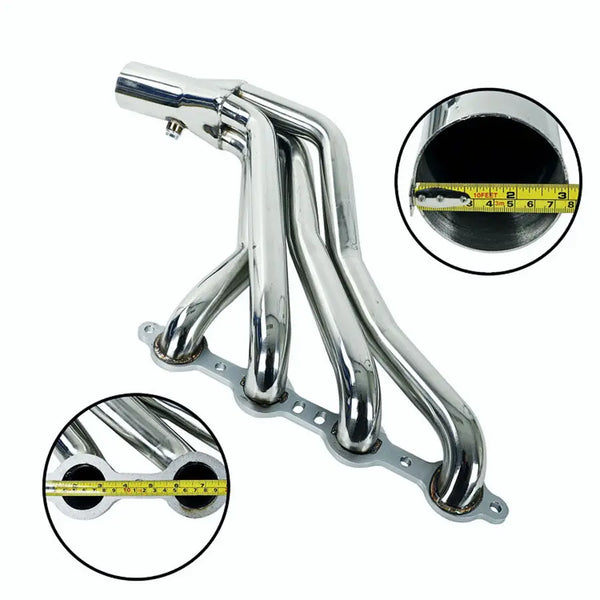
Primary and collector dimensions also vary across the products in this collection. Available listings include primary diameters such as 1-5/8, 1-3/4, and 1-7/8 inches, along with 2-1/2- and 3-inch collectors. Those dimensions should be treated as product-specific specifications, not as interchangeable choices for every chassis.
Platform-Specific Fitment Matters
C10, K10, C1500, and K1500 Builds
The collection includes both long-tube C10 products and more compact header listings covering Chevrolet and GMC pickups. Pay close attention to the exact product, because similar-looking listings do not necessarily share the same routing. On early C10 installations, engine-mount position can affect whether a long-tube header clears the front crossmember. Products mentioning K10 or K1500 must still be checked against the actual drivetrain and front suspension; the model name alone is not enough to confirm 4WD clearance.
S10 and GMT325 LS Swaps
The S10/GMT325 product group covers listed Chevrolet S10 and Blazer, GMC Sonoma and Jimmy, and Oldsmobile Bravada applications within the years stated on its product page. The current S10 header listing is for 2WD applications and excludes 4WD vehicles. It also notes that some 4L80E, TH350, or TH400 installations may require clearance work at the bellhousing ears, and that some aftermarket oil pans can interfere near the collector. Spark-plug-wire routing must also be checked around the primary tubes.
Camaro, Firebird, Nova, and Chevelle Builds
Separate products are shown for different Camaro and Firebird generations, along with selected Nova and Chevelle applications. Do not combine their year ranges. A header intended for a 1982–1992 third-generation F-body is not automatically suitable for an earlier Camaro or Firebird, even when the same LS engine is installed. Steering, subframe, transmission, and collector locations differ between these platforms.
Early Chevrolet Chassis
Long-tube and block-hugger options are shown for selected early Chevrolet builds. Broad wording such as “universal” describes a swap-oriented design, not guaranteed clearance in every vehicle within a large year range. Original frames, aftermarket front clips, relocated steering components, engine-setback choices, and custom mounts can all change the available space.
Fitment Warning
LS-family engines and traditional small-block Chevy engines do not use the same exhaust-port layout or header bolt pattern. A reference to a “small-block” chassis or a vehicle that originally used a 350 does not mean the LS swap header fits a Gen I SBC 350. Confirm the engine family before ordering. The S10/GMT325 LS swap header currently listed in this collection is also identified for 2WD applications and should not be ordered for a 4WD build.
Collector and Exhaust-System Planning
A swap header is only the front section of the exhaust. Before purchasing, compare the product’s collector diameter and attachment style with the exhaust you intend to run. Products in this collection use different configurations, including 2-1/2-inch and 3-inch collectors. The block-hugger listing identifies a three-bolt collector flange, while other products may use a different flange or starter-tube arrangement.
Existing factory pipes usually were not designed around an LS swap header location. The collector may finish higher, lower, farther forward, or closer to the transmission than the original manifold outlet. Custom intermediate pipes, reducers, flanges, welding, or complete exhaust fabrication may be required. If the product includes starter tubes, confirm their diameter and O2 sensor locations before planning the remaining system.
O2 Sensors, Catalytic Converters, and Tuning
Some products show or describe O2 sensor provisions, but the required sensor count and location depend on the vehicle’s engine-management system and exhaust plan. Check whether the header or included connection pipes have the correct bungs, whether the sensor wiring reaches safely, and whether the sensors can be positioned away from heat and road contact.
Long-tube routing can change the original catalytic-converter location. Do not assume a header retains the factory converters or complies with local emissions rules unless the individual product has applicable documentation. Removing, relocating, or changing catalytic converters may affect road legality and can also influence diagnostic monitoring.
A tune is not automatically required solely because a header has been installed, but it may be appropriate when sensor placement, catalyst configuration, airflow, or other engine modifications change. No header should be presented as guaranteed to prevent a check-engine light. If the ECU reports an O2 sensor, catalyst-efficiency, fuel-trim, or misfire fault after installation, diagnose the cause instead of using a tune to hide an exhaust leak or wiring problem.
Installation Checks That Prevent Expensive Rework
Dry-fit the headers before final tightening and before building the rest of the exhaust. Check both sides through the full range of engine movement and steering travel. Leave room around brake lines, fuel lines, wiring, hoses, the starter cable, and spark-plug boots. Heat-sensitive components may need rerouting or suitable protection.
Confirm that the collector does not contact the transmission, floor, frame, suspension, or crossmember. Ground clearance should be assessed at the collector and the lowest primary tube with the vehicle at its normal ride height. Engine and transmission mounts must be in good condition because excessive movement can turn a close fit into repeated contact.
After the first complete heat cycles, inspect the flange fasteners, collector joints, sensor wiring, and nearby components. An exhaust leak can create noise, introduce outside air near an O2 sensor, and lead to misleading fuel-trim or sensor readings.
Technician’s Note
This is a general LS swap fitment rule, not a record of a specific Flashark installation: establish the final engine, transmission, steering, and oil-pan positions before committing to the downstream exhaust. Headers should not be used to force an engine into position, and the exhaust should not place tension on the collectors. When clearance is close, measure the actual vehicle rather than relying only on the engine displacement or body name.
Realistic Performance and Sound Expectations
Compared with restrictive cast manifolds, a properly matched header can support improved exhaust flow and change the character of an LS-swapped vehicle. The actual result depends on primary size and length, collector design, engine combination, camshaft, intake, catalytic converters, pipe diameter, mufflers, and calibration.
Long-tube headers commonly produce a stronger, more assertive exhaust character than compact manifolds, but the header is only one part of the sound. Mufflers, resonators, crossover design, pipe diameter, and cabin insulation have a major influence on volume and tone. This collection does not provide a universal horsepower, torque, or sound-level result for every supported build.
Frequently Asked Questions
Q1: Are these headers for LS swaps or traditional small-block Chevy engines?
A1: These products are intended for LS-family engine swaps unless an individual product page states otherwise. They should not be used on a Gen I small-block Chevy 283, 305, 327, 350, or 400, or on a big-block Chevy engine, because those engines use different exhaust-port layouts and bolt patterns.
Q2: Will any LS swap header in this collection fit any LS engine and chassis?
A2: No. LS engine compatibility only addresses the cylinder-head side of the installation. The header must also match the vehicle chassis, model years, drivetrain, engine-mount position, oil pan, steering system, transmission, and planned exhaust connection.
Q3: What is the difference between long-tube, shorty, and block-hugger LS headers?
A3: Long-tube headers use longer primary routing and require more chassis and underbody space. Shorty headers use a more compact layout, while block-hugger headers keep the tubes close to the engine for selected tight-engine-bay or early-chassis builds. Collector location and installation requirements differ between designs.
Q4: Do the S10 and GMT325 LS swap headers fit 4WD vehicles?
A4: The current S10/GMT325 header listing in this collection is identified for 2WD applications and does not fit 4WD S10, Blazer, Sonoma, or Jimmy configurations. Verify the drivetrain on the product page before ordering.
Q5: Will these headers clear a 4L80E, TH350, or TH400 transmission?
A5: Clearance depends on the chassis, mounts, and header model. The current S10/GMT325 listing notes that some installations using a larger 4L80E or an older TH350 or TH400 may require trimming of the bellhousing ears. Do not apply that instruction to another platform without checking its product information.
Q6: Will LS swap headers work with any oil pan and engine-mount position?
A6: No. Oil-pan shape and engine position can change primary-tube and collector clearance. Some S10 installations may need collector-area modification with an aftermarket oil pan, while early C10 long-tube installations may be affected by mount position and front-crossmember clearance.
Q7: Do these headers connect directly to the existing exhaust system?
A7: Not necessarily. Collector diameters and attachment styles vary, and an LS swap often changes the outlet location from the original exhaust. Custom pipes, reducers, flanges, welding, or other fabrication may be required between the collectors and the remaining exhaust system.
Q8: Do the headers include O2 sensor locations?
A8: Some products describe O2 sensor provisions or include starter tubes with sensor locations, but this is not confirmed for every header in the collection. Check the individual product for bung quantity and position, then confirm sensor type, wiring reach, and placement for the vehicle’s engine-management system.
Q9: Will installing LS swap headers require a tune or cause a check-engine light?
A9: It depends on the ECU, O2 sensor placement, catalytic-converter configuration, exhaust leaks, and other engine modifications. A tune may be appropriate for some builds, but these headers cannot be guaranteed to prevent a check-engine light. Diagnose mechanical, sensor, and wiring issues before changing the calibration.
Q10: Do these headers retain the factory catalytic converters and remain street legal?
A10: Do not assume that they do. Long-tube routing can relocate the original exhaust connection and catalytic converters. Verify the individual product configuration and follow the emissions and road-use requirements that apply where the vehicle is registered or operated.
Q11: What should I measure before ordering LS swap headers?
A11: Confirm the chassis and drivetrain, then inspect steering-shaft, frame, crossmember, oil-pan, starter, transmission, floor, and ground clearance. Also verify collector diameter and location, engine-mount position, spark-plug-wire routing, O2 sensor needs, and the path to the rest of the exhaust.
Q12: Are horsepower or sound gains the same for every header in this collection?
A12: No. Results depend on the engine combination, header dimensions, complete exhaust, catalytic converters, mufflers, intake, camshaft, and calibration. The collection does not establish one fixed horsepower, torque, or sound-level result for every supported vehicle.