




 Product Specifications
1988-1991 Honda Civic & CRX Cold Air Intake Kit
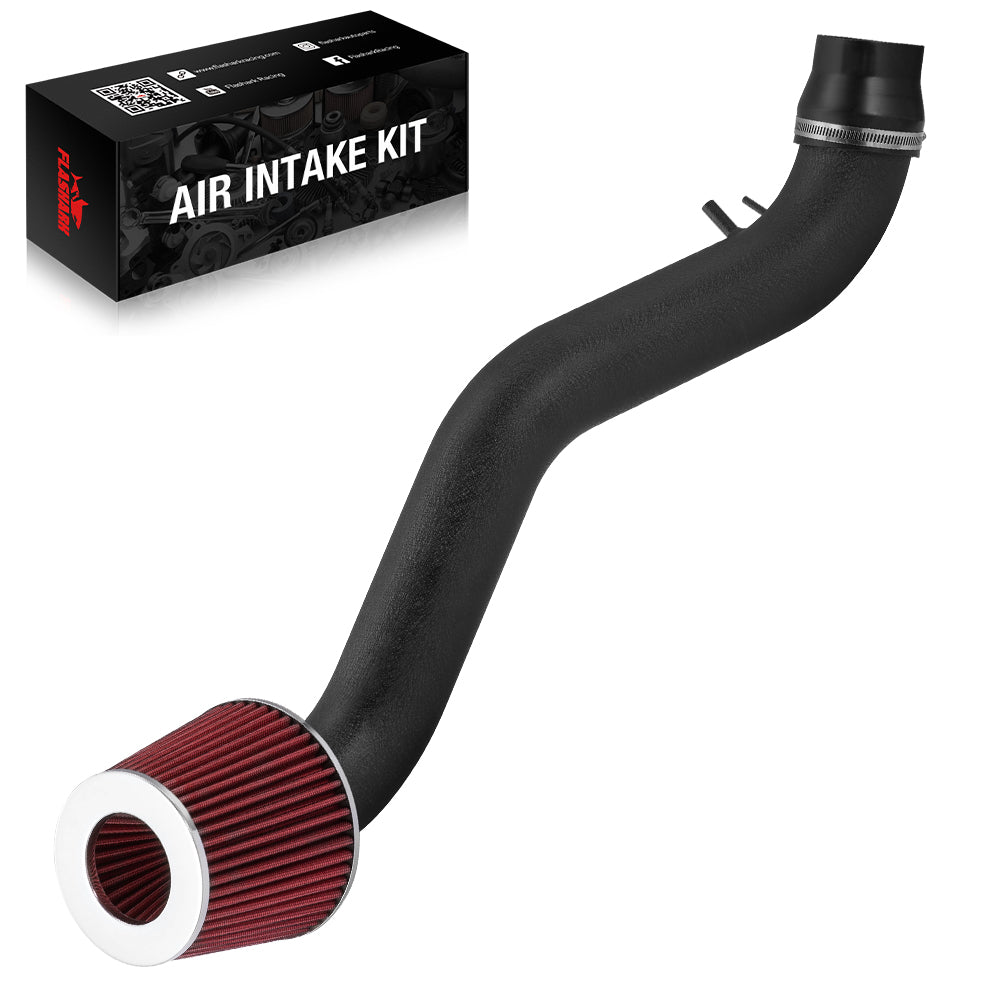
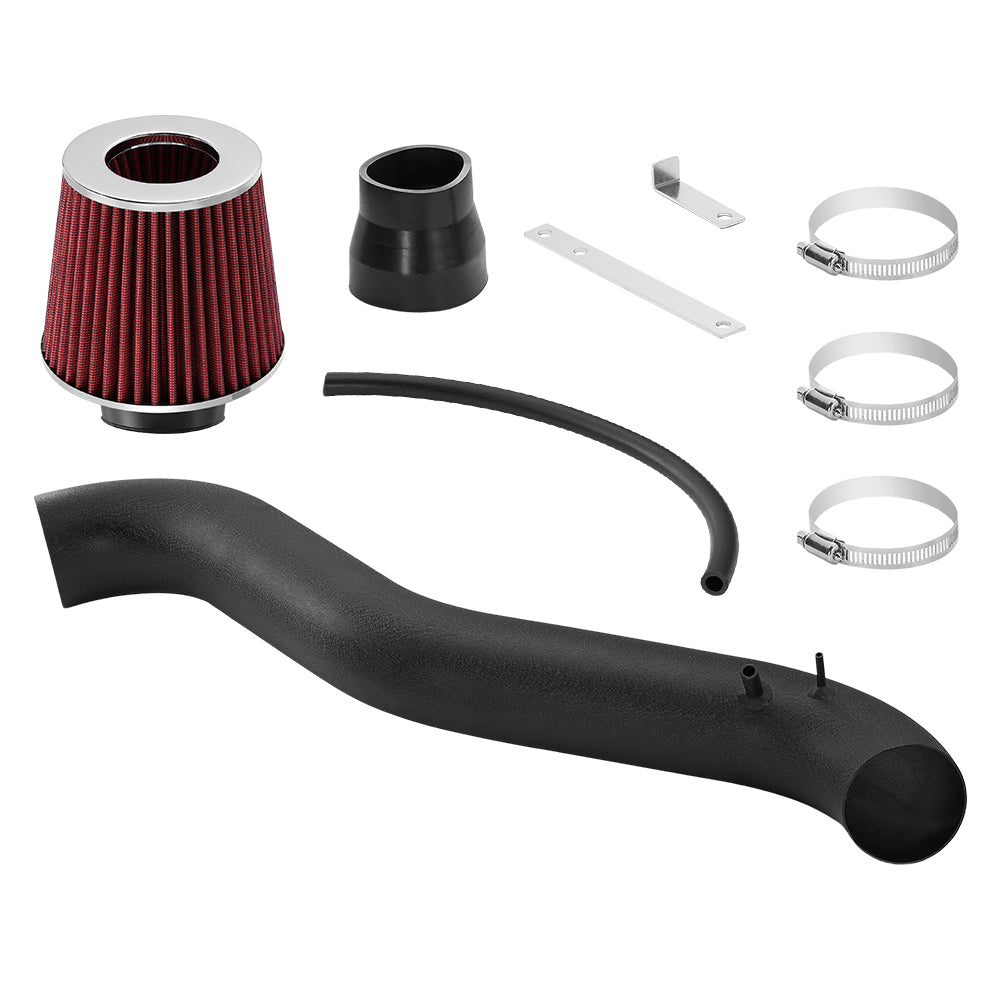
Sharper throttle response and a deeper, sportier induction note in about an hour of wrench time: this Flashark cold air intake kit for the 1988-1991 Honda Civic and CRX replaces the factory airbox and intake tube with a lightweight aluminum pipe and a reusable dry cone air filter. Expected output range is approximately 5-10 hp and 6-8% torque, and the complete package — intake pipe, cone filter, couplers, clamps, hose and mounting hardware — arrives in one box, ready for a bolt-on install with common hand tools.
Specifications
| Specification | Detail |
|---|---|
| Vehicle fitment | 1988-1991 Honda Civic; 1988-1991 Honda CRX |
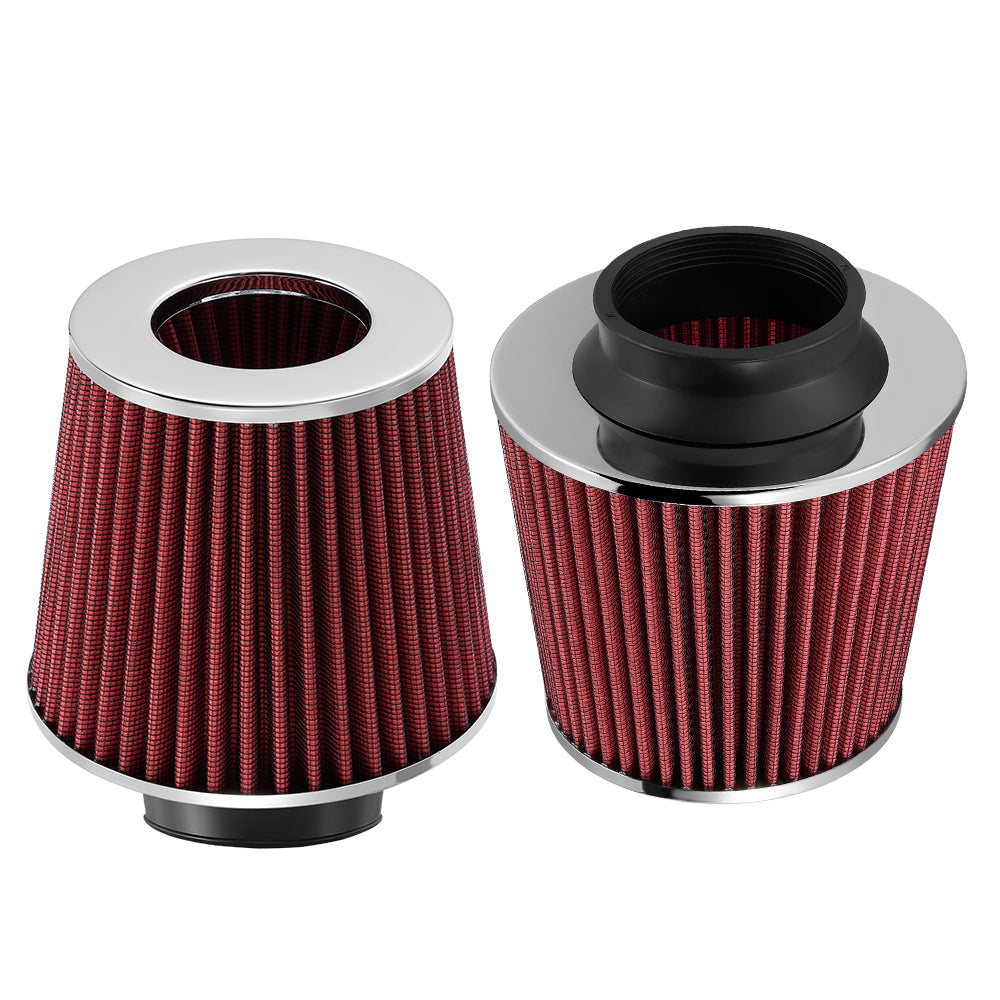
| Intake type | Cold air intake kit — aluminum intake pipe with reusable dry cone air filter |
| System replaced | Factory airbox and factory intake tube |
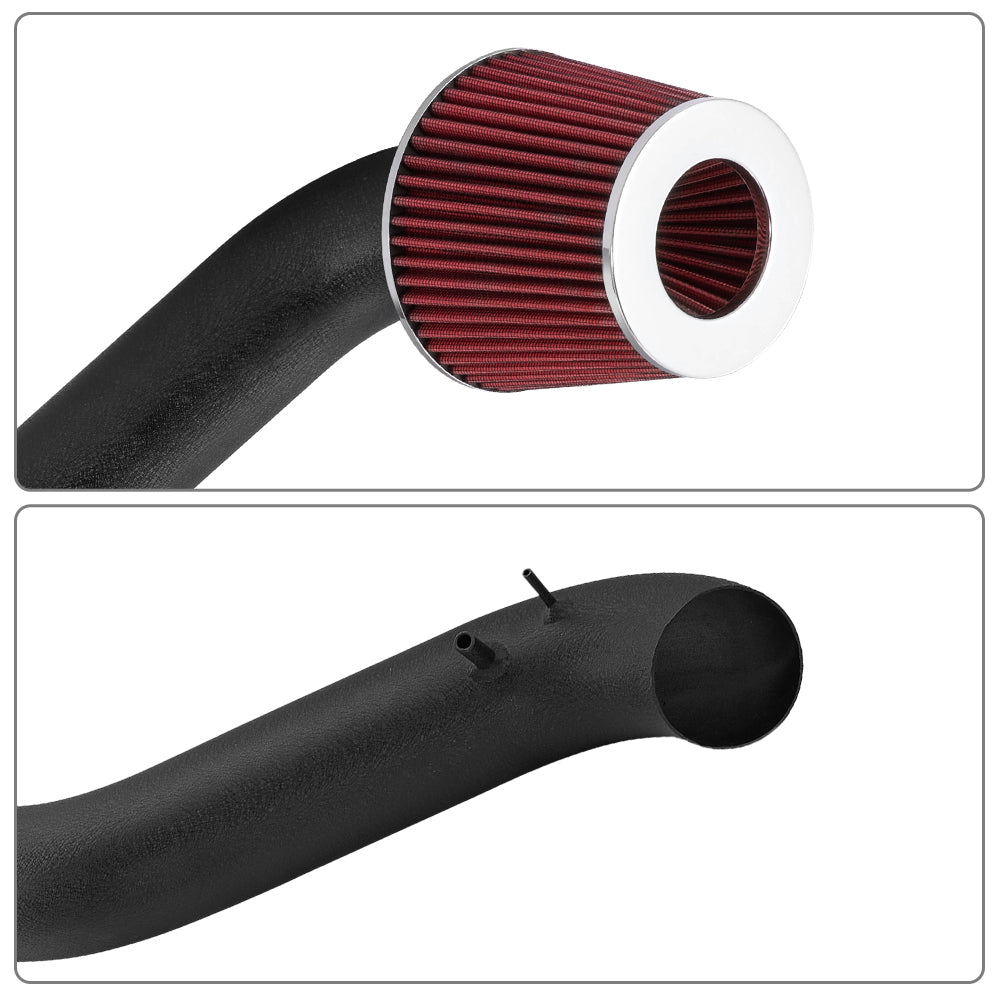
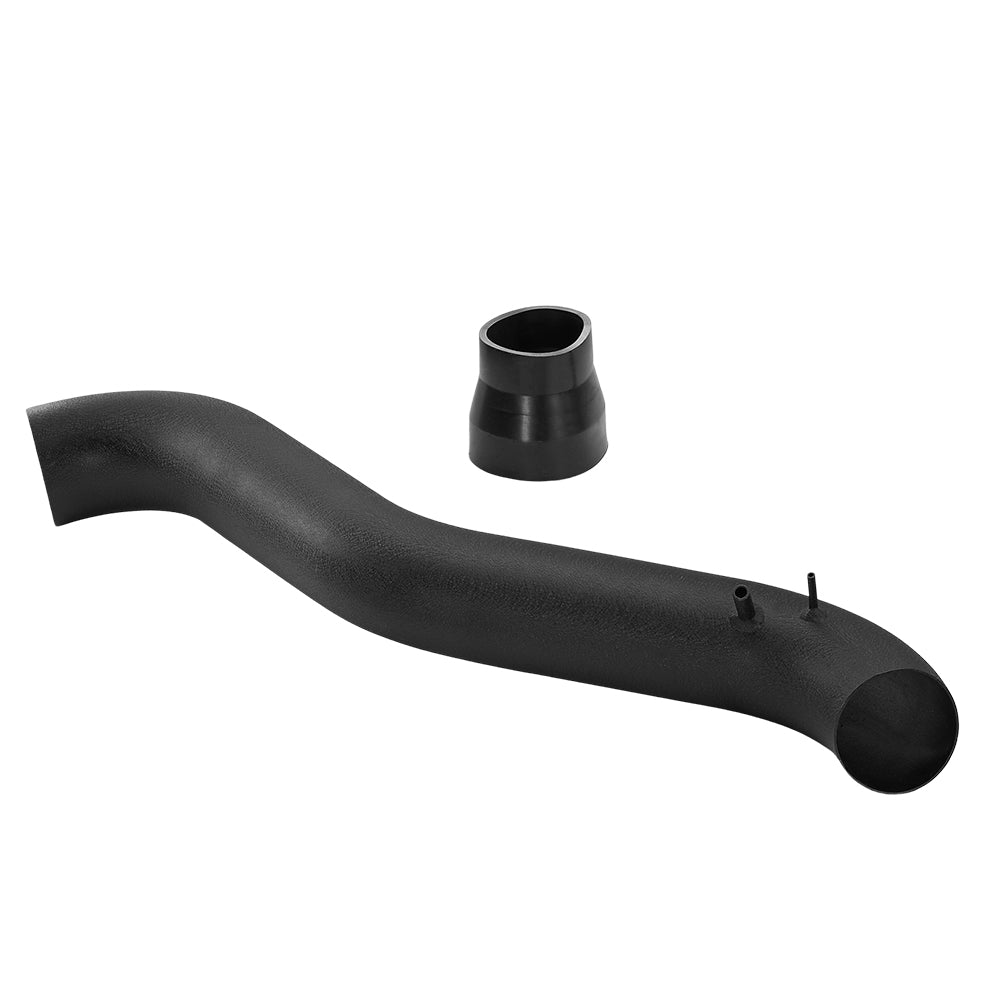
| Intake pipe | High-quality aluminum; lightweight, high-airflow design |
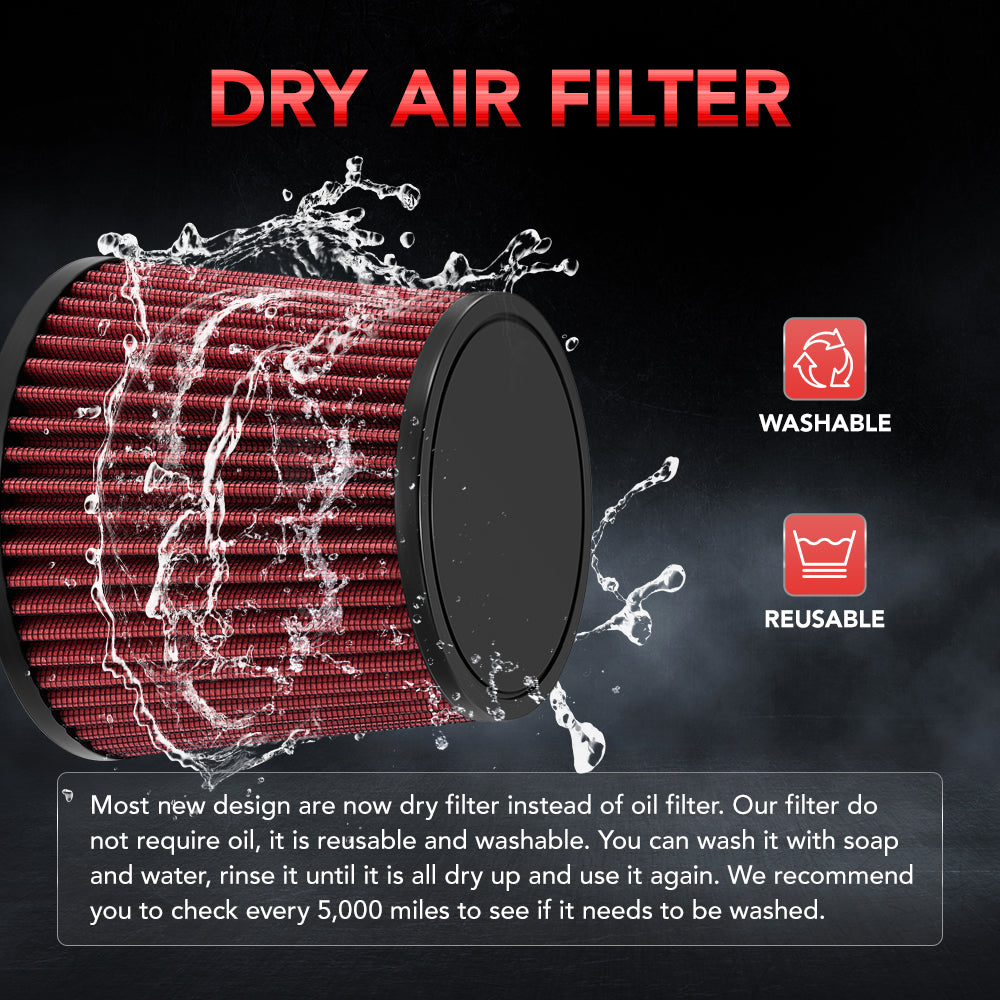
| Filter | Reusable dry cone air filter — no oil required; wash with soap and water |
| Filtration efficiency | Up to 95% |
| Expected output range | Approximately 5-10 hp and 6-8% torque |
| Filter service interval | Check approximately every 5,000 miles; more often in dusty driving |
| Intake sound | Deeper, more aggressive induction tone under acceleration |
| Installation | Bolt-on; under 60 minutes with common hand tools |
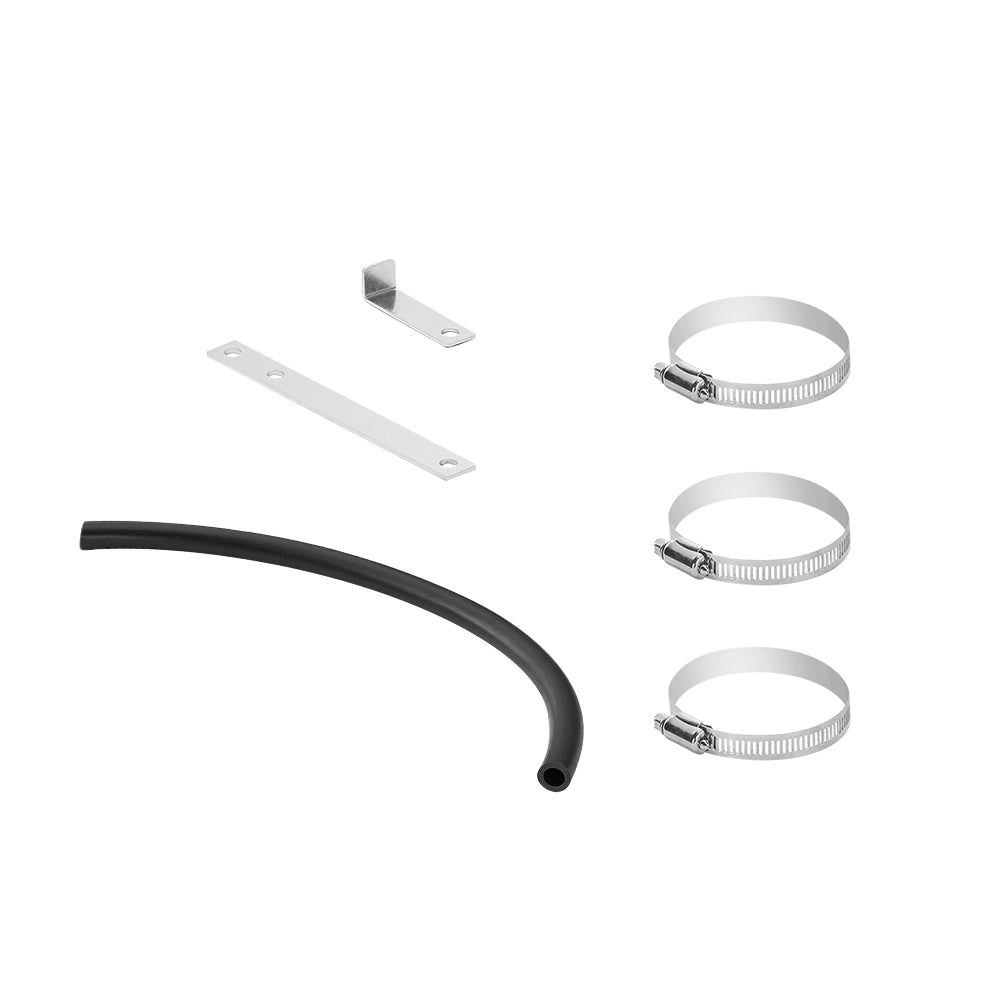
| Hardware included | Couplers, clamps, hose, mounting hardware |
| SKU | FLIS25052 |
Key Features
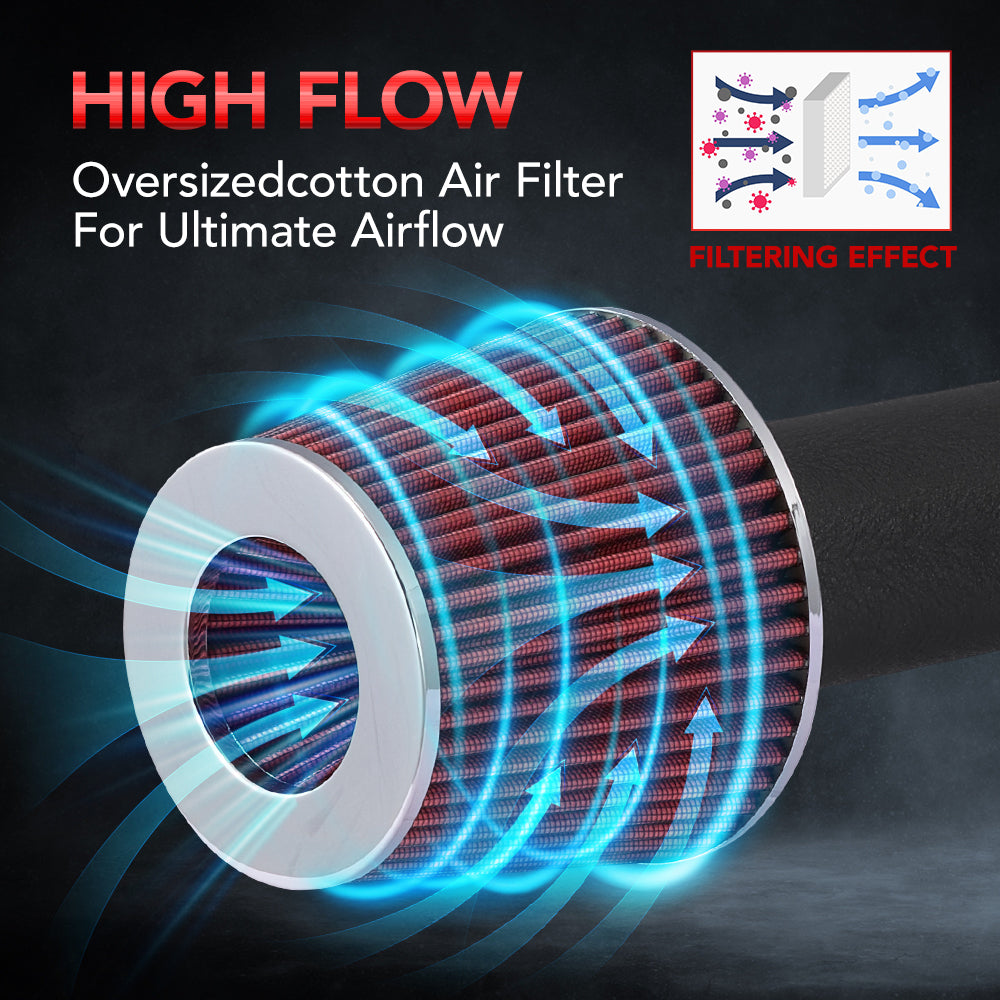
- Replaces the factory airbox and intake tube: the aluminum pipe and open cone filter give the engine a shorter, less restrictive intake path than the stock airbox.
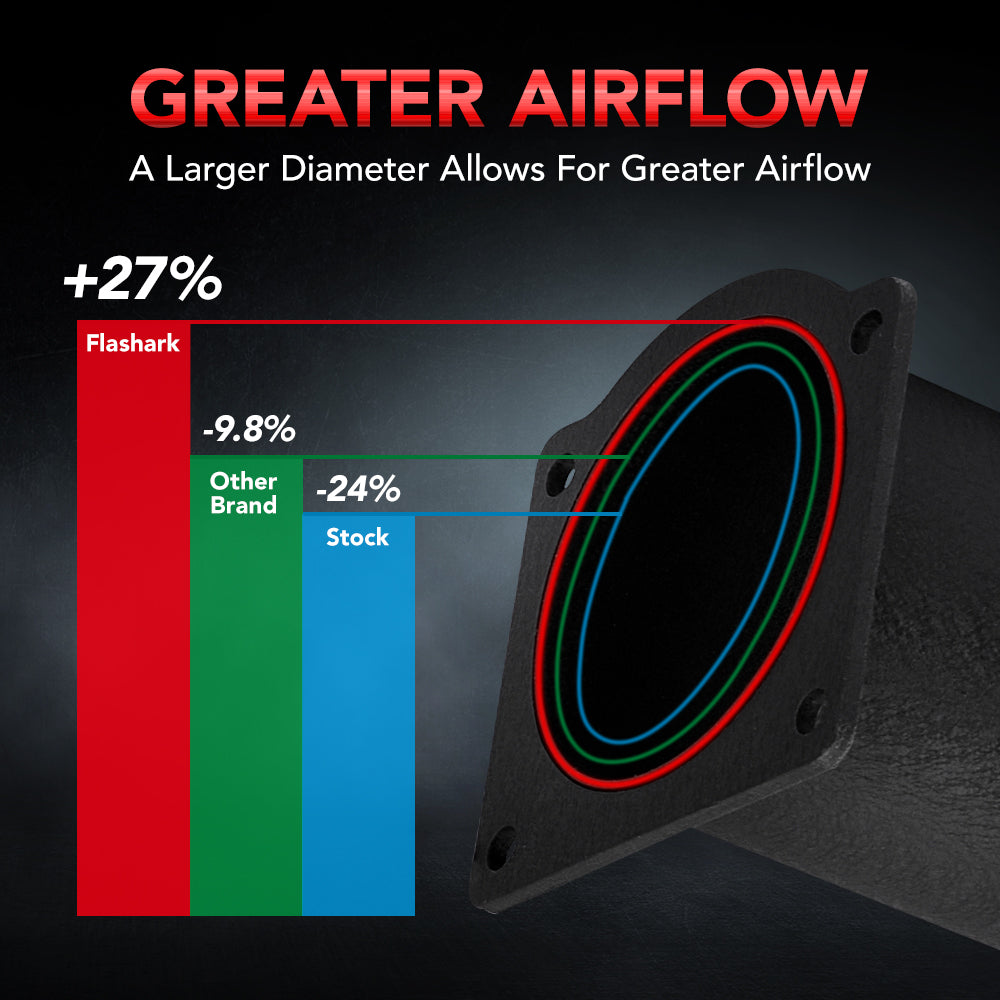
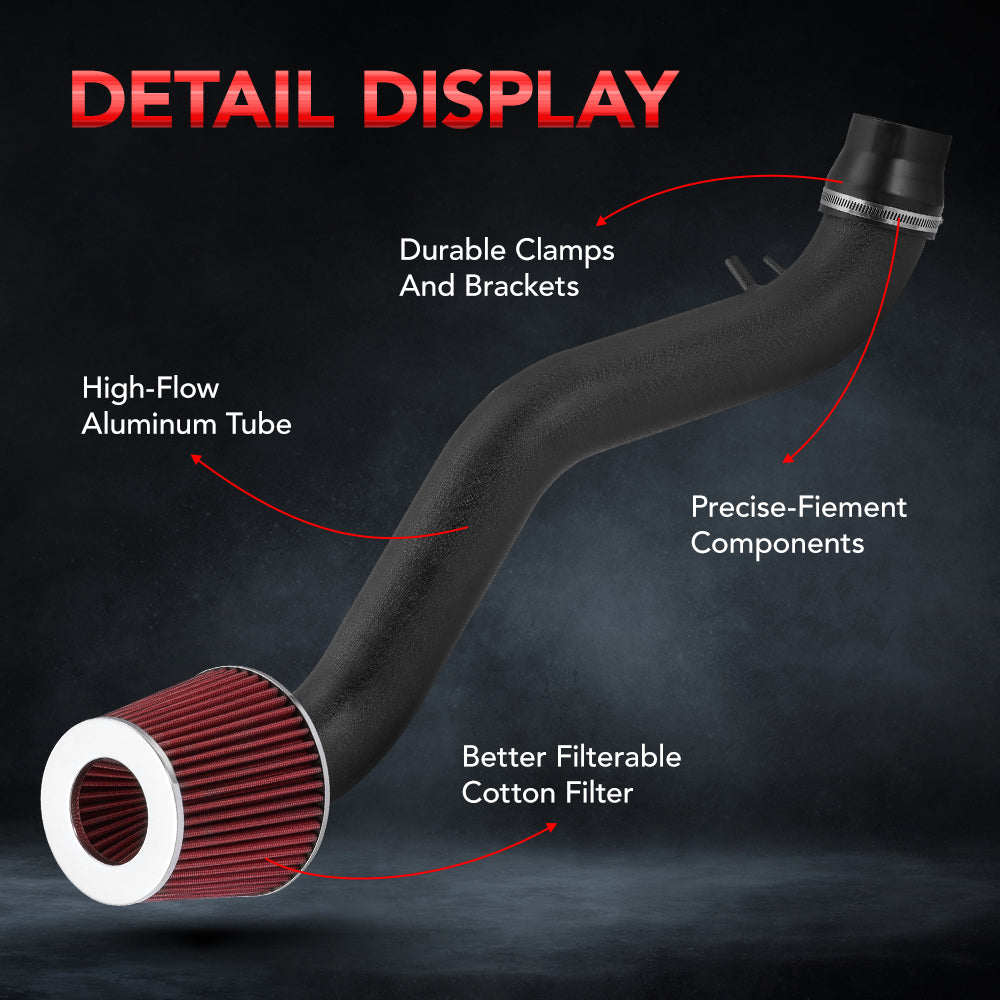
- Lightweight aluminum intake pipe: high-quality aluminum for strength and durability, in a lightweight high-airflow design.
- More air for sharper response: drawing more air — and cooler outside air when the filter is routed toward the fender — supports better throttle response and higher horsepower output.
- Reusable dry cone filter: rated for up to 95% filtration efficiency, washable with soap and water with no re-oiling needed; check it about every 5,000 miles.
- Expected output range: approximately 5-10 hp and 6-8% torque, plus a sporty, more aggressive engine sound; results vary with the engine, fuel-injection system, exhaust setup, ignition condition and testing method.
- Under-60-minute bolt-on install: the kit sets up in under 60 minutes using common hand tools.
Who This Kit Is For
This Flashark cold air intake kit replaces the factory airbox and intake tube on the 1988-1991 Honda Civic and CRX. It is for owners who want a reusable dry cone filter, a lightweight aluminum intake pipe, a cleaner engine-bay look and a sportier induction sound — with a bolt-on install done in under an hour with hand tools.
- ✓ For you if you drive a 1988-1991 Civic or CRX and want a first bolt-on upgrade for throttle response and intake sound.
- ✓ For you if you prefer a washable dry filter over a disposable paper element.
- ✓ For you if you have confirmed your state and local emissions rules (see the Compliance Notice below).
- ✗ Not for you if you need an OEM-replacement filter, hose or airbox part.
- ✗ Not for you if you expect a guaranteed fuel-economy gain — MPG follows driving habits more than the intake.
- ✗ Not for you if you regularly ford deep water with the filter mounted low (see the hydrolock note in Check Before Ordering).
- ✗ Not for you if you drive a 1992-1995 Civic or Del Sol — see the 1992-1995 Honda Civic / Del Sol intake kit instead.
To compare options across the line-up, browse Honda Cold Air Intake Kits.
Check Before Ordering
- 1. Vehicle: exact-fit is listed for the 1988-1991 Honda Civic and CRX. Engines, fuel-injection layouts (DPFI vs MPFI), trims such as the CRX DX, HF and Si, and EF body styles varied across these years — compare your factory intake routing, throttle-body connection and breather-hose locations with the product photos before ordering. If your generation is not listed, browse the Honda Civic Cold Air Intake Kits collection or message us before ordering.
- 2. Intake style: this kit is an aluminum pipe with an open cone filter. Routed toward the fender it draws cooler outside air (cold-air behavior); sitting high in the engine bay it behaves more like a short ram intake with maximum intake sound. If you are weighing the two styles, see Short Ram vs Cold Air Intake for a Civic before you order.
- 3. Filter: this kit ships with a reusable dry cone filter — no oiling required. Wash it with soap and water, let it dry fully, and reinstall; check it about every 5,000 miles, and more often in dusty conditions.
- 4. Sensors and hose connections: compare the factory sensor provisions, breather-hose locations and throttle-body connection against the supplied pipe before install — an intake leak, a disconnected breather hose or a loose clamp is the usual cause of a rough idle after installation.
- 5. Legality: this kit carries no CARB Executive Order. Not legal for sale or use in California (and other CARB-adopting states). Check your state and local emissions rules before ordering.
- 6. Install space and water exposure: if the filter ends up mounted low near the bumper or inner fender, avoid flooded roads and deep standing water — water ingestion can cause hydrolock and severe engine damage. Keep the factory splash shields installed and inspect the filter after heavy rain.
What's in the Box
Everything below ships with the kit:
- 1 x aluminum intake pipe kit
- Set of couplers, clamps, hose and mounting hardware
- 1 x reusable dry cone air filter

Shipping & Returns
Free U.S. Shipping: Orders are typically processed within 1–2 business days and delivered within 7–9 business days. Additional charges may apply to remote areas.
30-Day Returns: Unopened and unused items in their original packaging may be returned within 30 days of receipt. Return shipping is covered for verified quality issues.
Worry-Free Delivery: Optional protection against eligible loss, theft, delay, or transit damage is available at checkout.


