






 Product Specifications
1997-2003 Ford F-150 Cold Air Intake Kit for 4.6L/5.4L V8
The factory intake on the 1997-2003 Ford F-150, Expedition, F-250 LD and Lincoln Navigator was built around quiet operation and parts-bin cost, not airflow — a sealed plastic airbox with a restrictive paper-panel filter, then a narrow ribbed intake tube routed past resonance chambers to the throttle body. Ford's 4.6L and 5.4L Modular V8s still do the work, they just do it with one hand tied behind their back.
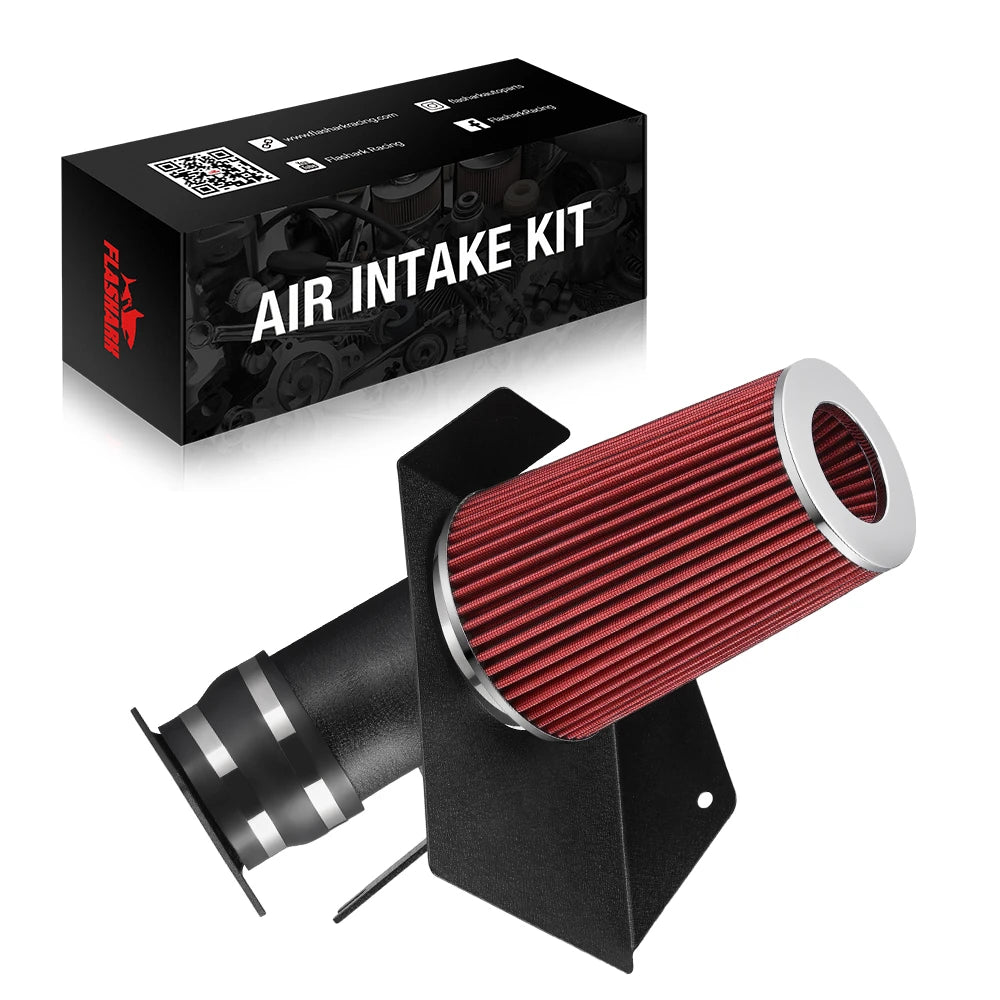
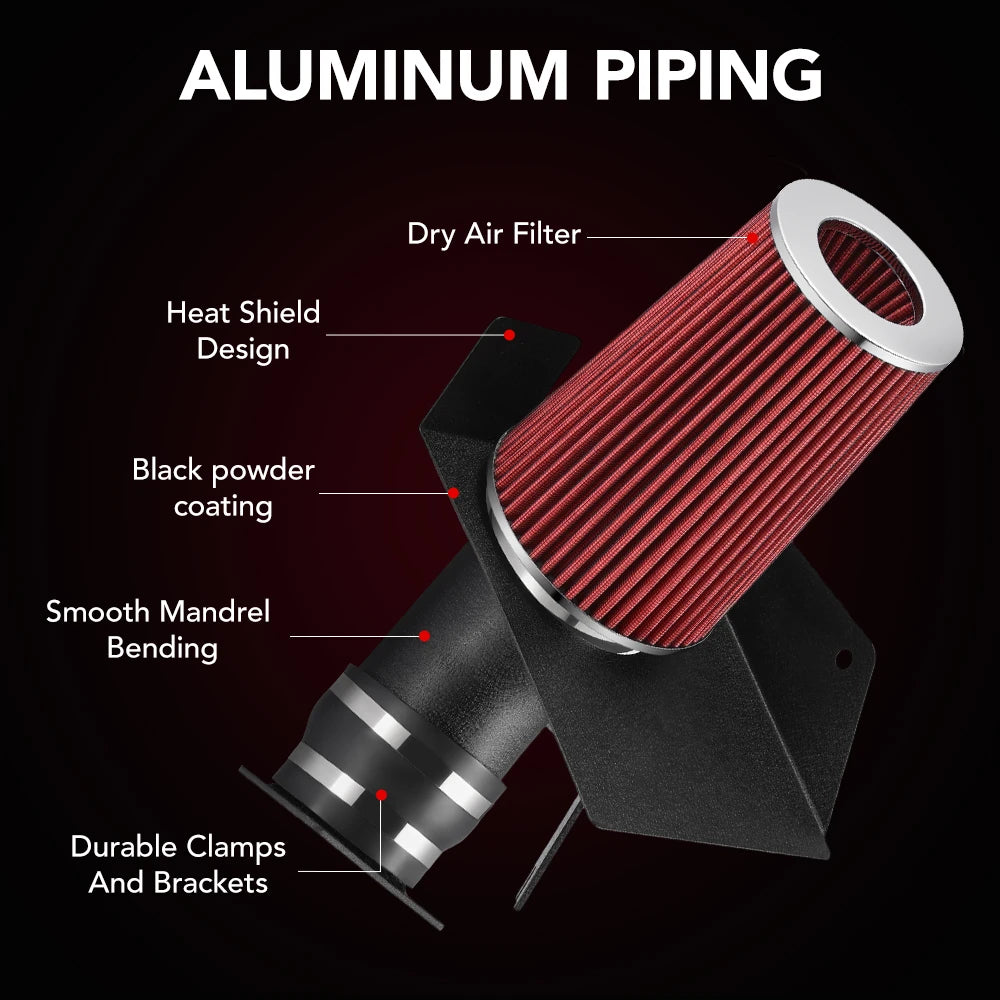
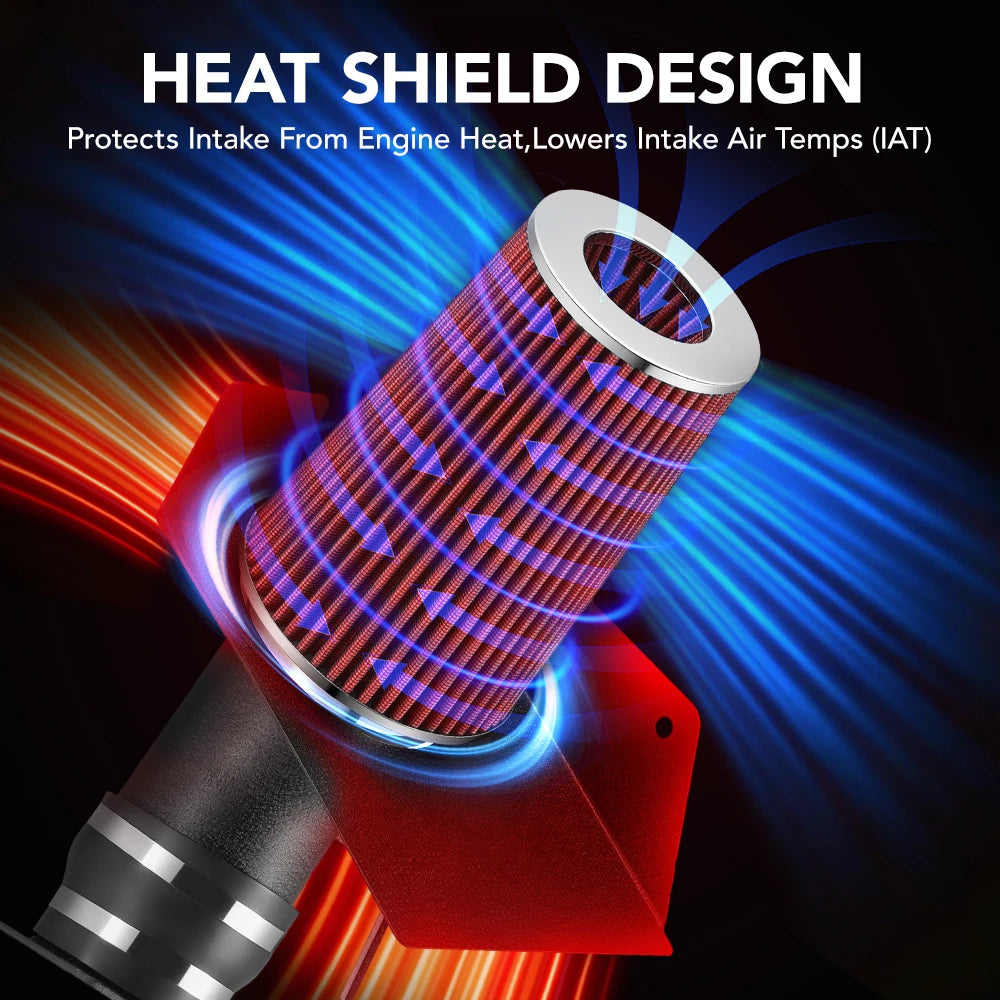
This Flashark cold air intake kit replaces the entire factory setup with a large-diameter mandrel-bent aluminum intake tube, a high-flow dry cone filter, and a formed steel heat shield that draws cooler, denser air from inside the shielded engine-bay pocket. The smooth mandrel-bent tube eliminates the turbulence and restriction of the factory-ribbed plastic path, while the open-element filter sits inside a heat shield that blocks direct engine-bay heat. On an otherwise stock 4.6L or 5.4L 2V Modular V8, expect a sharper throttle tip-in and stronger mid-range pull across the 2,000-4,000 RPM band where these trucks spend most of their working life.
Installation is a direct bolt-on affair. The heat shield mounts to factory bolt locations, the intake tube aligns with the stock throttle body through the included silicone coupler, and the filter clamps onto the tube inside the shield. No cutting, no drilling, no permanent modification — basic hand tools, 45 to 60 minutes, and your Modular V8 breathes as it should.
Specifications
| SKU | FLIS25006 |
|---|---|
| Intake Tube Material | Aluminum |
| Intake Tube Finish | Matte black powder-coated |
| Filter Type | Dry |
| Filter Media | Red cotton-gauze |
| Heat Shield | Formed steel, black finish |
| Estimated Install Time | 45-60 minutes |
Key Features
- Large-Diameter Mandrel-Bent Aluminum Intake Tube: Single-piece construction with an integrated MAF sensor flange, finished in heat-resistant matte black powder coat. The smooth tube replaces the factory ribbed plastic path and its resonance chambers with an unrestricted airflow channel from the filter to the throttle body.
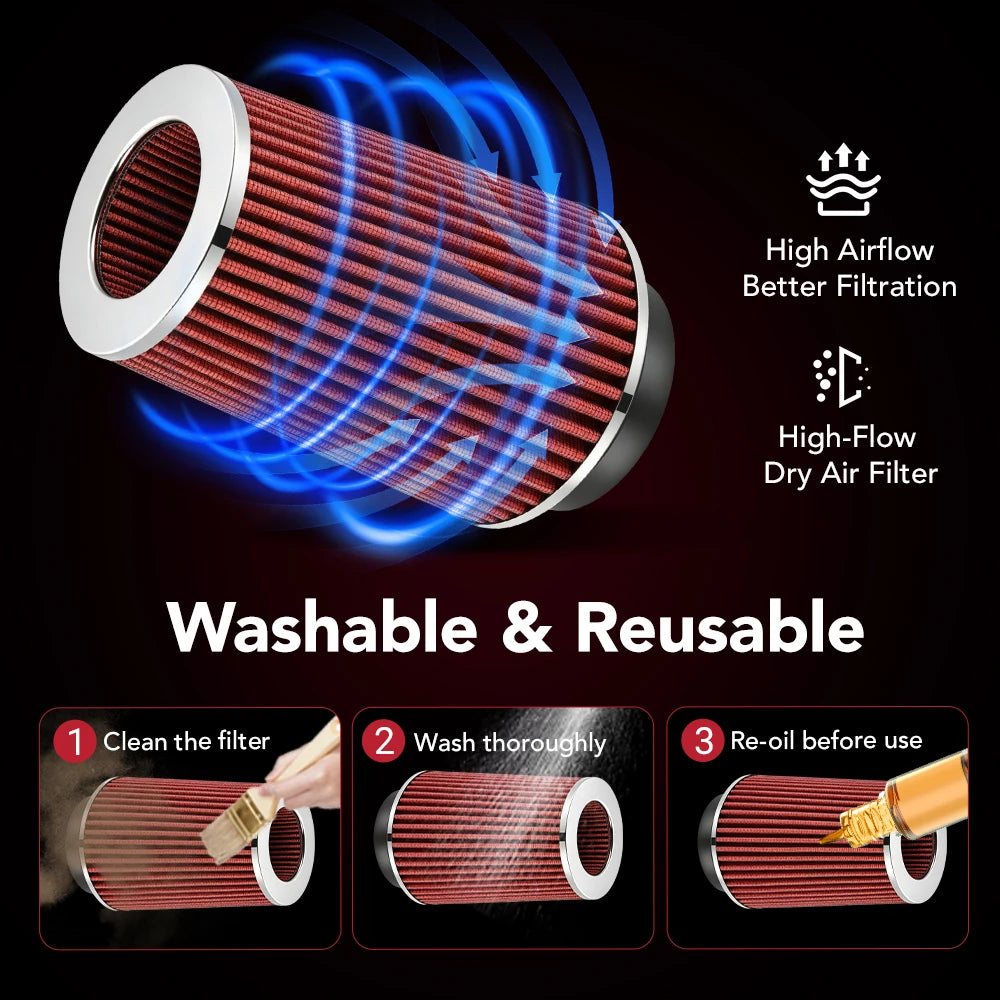
- Heat-Shielded Dry Cone Filter: High-flow red cotton-gauze element enclosed in a formed steel heat shield that blocks direct engine-bay heat and draws cooler air from the fender-well pocket. Dry media requires no oiling — tap off debris, rinse, air-dry, and reinstall for the life of the vehicle.
- Direct-Fit Silicone Coupler: Bridges the new aluminum intake tube to the factory throttle body with a heat-resistant, airtight seal. The silicone won't crack, deform, or collapse under engine bay heat or vacuum.
- Retains the Factory MAF Sensor: The intake tube's integrated MAF flange accepts the OEM sensor transferred from the stock airbox lid, so you keep the factory MAF location, bore, and calibration envelope without spacer or adapter.
- Complete Hardware Kit: Mounting brackets, clamps, breather hose connectors, and fasteners are all included — everything shown in the product images is in the box, no extra parts to source.
- True Bolt-On Installation: The heat shield mounts to factory bolt locations and the stock airbox can be reinstalled at any time. No cutting, no drilling, no permanent modification — basic hand tools, 45 to 60 minutes.
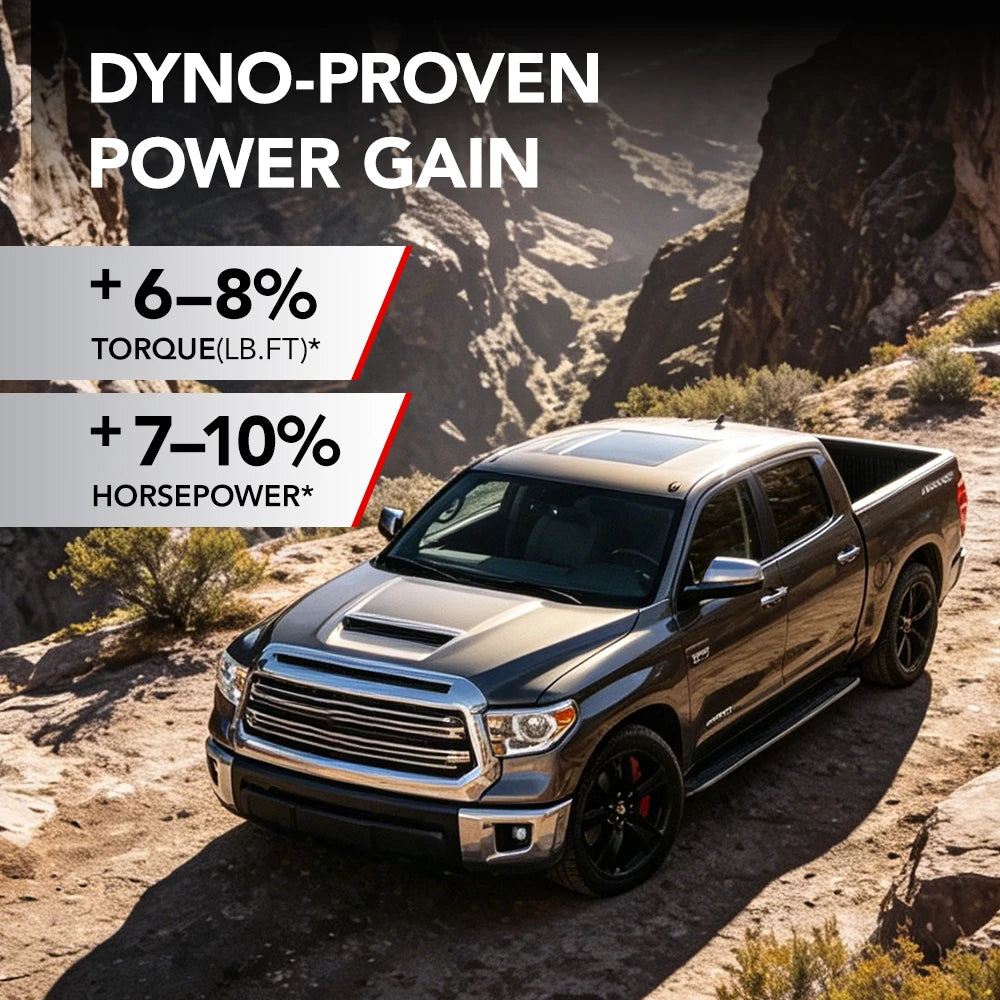
- Sharper Throttle Response Across 2,000-4,000 RPM: Replacing the restrictive factory airbox and ribbed tube with the open-element shielded intake gives a more immediate throttle tip-in and stronger mid-range pull where these trucks spend most working, towing, or merging. Realistic gains are around 5-10 wheel horsepower on a stock 4.6L or 5.4L 2V tune.
- Deep V8 Induction Sound: The open-element filter and aluminum tube produce a deeper intake growl at half-throttle and above without being obnoxious at cruise, and pairs naturally with an aftermarket cat-back exhaust on the same Modular V8.

Who This Kit Is For
This Flashark Cold Air Intake is built for 1997-2003 Ford F-150, Expedition, F-250 LD and Lincoln Navigator owners running the 4.6L or 5.4L 2V Modular V8 who want a bolt-on first upgrade with a reusable dry filter, sharper throttle tip-in, and a deeper intake note.
✓ For you if… you tow, haul, or merge in traffic and want stronger mid-range pull · you drive a 10th-gen F-150 or UN93-platform Expedition and want a first bolt-on upgrade · you prefer a washable dry filter over disposable paper elements · you have basic hand tools and an afternoon.
✗ Not for you if… you drive the 4.2L Essex V6 F-150 (different intake path and throttle body) · you have a 1999+ F-250 Super Duty (different platform, this kit does not fit) · you expect a guaranteed MPG gain · you need a CARB EO-compliant kit for street use in California or other adopting states.
If you also own an F-150 outside the 1997-2003 range, browse the full Ford F-150 cold air intake kits collection for the rest of the lineup. For the F-250 LD or the older F-250 light-duty that shares this intake layout, the Ford F-250 cold air intake kits collection lists the matching SKUs. Looking at a different heat-shielded kit for the same 4.6L/5.4L Modular V8? See the alternate 1997-2003 F-150 4.6L/5.4L V8 high-flow cold air intake SKU for a direct comparison.
Check Before Ordering
① Vehicle match: Direct fit on 1997-2003 Ford F-150 (all cab/bed configurations) and 1997-2003 Expedition with the 4.6L or 5.4L 2V Modular V8, plus 1997-1999 F-250 LD and 1998-2003 Lincoln Navigator with the 5.4L V8. Does not fit the 4.2L V6, 1999+ F-250 Super Duty, or any non-V8 trim.
② Intake type: Heat-shielded open-element cold air intake that draws from the fender-well pocket inside the engine bay. If you want a fully sealed box with outside-air routing, look at a true CAI variant.
③ Filter maintenance: Dry cotton-gauze media — no oiling required. Clean only when airflow drops: tap out, wash with filter cleaner, rinse, air-dry completely, then reinstall. Oiling this dry filter can coat the MAF sensor.
④ Sensors and throttle body: The factory MAF sensor is reused (transferred from the stock airbox lid to the new tube). Throttle body is left untouched. No spacer or adapter is required.
⑤ Compliance: This kit does not carry a CARB Executive Order (EO) and is not legal for sale or use in California (and other CARB-adopting states) for the listed 4.6L/5.4L applications. For off-road, export, or non-CARB states, the kit is unrestricted.
⑥ Install and water exposure: 45 to 60 minutes with basic hand tools. Avoid deep water crossings — the open-element filter sits in the engine bay and water ingestion can hydrolock the engine.
What's in the Box
- 2 × Matte black powder-coated aluminum intake tube
- 1 × High-flow red dry cone air filter
- 1 × Formed steel heat shield
- 2 × Silicone throttle body coupler
- 1 × Complete hardware kit
- 1 × Installation guide
Shipping & Returns
Free U.S. Shipping: Orders are typically processed within 1–2 business days and delivered within 7–9 business days. Additional charges may apply to remote areas.
30-Day Returns: Unopened and unused items in their original packaging may be returned within 30 days of receipt. Return shipping is covered for verified quality issues.
Worry-Free Delivery: Optional protection against eligible loss, theft, delay, or transit damage is available at checkout.


