If I had a dollar for every time a guy rolled into my shop with a glowing Check Engine Light right after bolting on headers in his driveway, I'd have retired by now. The factory cast-iron manifolds on the 5.7L HEMI are basically restrictive logs. Swapping them out for a set of long tubes is step one for actual horsepower. But here is the reality: you fire it up, it sounds incredibly aggressive, and then you see that CEL pop up on the dash. Customers panic. I get it.
Do you actually need to flash the computer, or can you just bolt the pipes on and hit the throttle? Let's talk about what's actually happening to your air/fuel ratios and how to keep your dash clear of codes.
Bottom Line Up Front: The Tuning Verdict
Yes, getting a custom calibration after installing long tube headers on a 5.7 HEMI is mandatory if you actually care about your engine's health and want to feel the power you paid for. Here is what to expect:
- Running untuned: The truck will run either excessively rich or lean. It's guaranteed to throw P0420/P0430 codes, and you might even notice a drop in low-end grunt.
- With a proper tune: A tuner corrects the Air/Fuel Ratio (AFR), permanently disables the rear O2 monitors to kill the CEL, and usually frees up 25 to 35 rear-wheel horsepower (rwhp) depending on your intake.
- Hardware realities: Running catless mids? A tune is non-negotiable. Using high-flow cats? You might keep the light off for a few days, but the long-term fuel trims (LTFT) will eventually drift out of range.
Why Do 5.7 HEMI Long Tube Headers Trigger a Check Engine Light (CEL)?
The factory ECU isn't malfunctioning; it's doing exactly what it was programmed to do—monitor emissions. When you swap the factory exhaust for aftermarket pipes, you drastically alter the exhaust scavenging and velocity. More importantly, you are physically moving the Oxygen (O2) sensors further downstream from the cylinder heads.
Because these sensors take longer to get up to operating temp and are reading a totally different volume of gas, the computer assumes the catalytic converters are failing.

The Notorious P0420 & P0430 Codes
Almost every time, the scanner is going to spit out P0420 (Bank 1) and P0430 (Bank 2). This translates to "Catalyst System Efficiency Below Threshold." Because long tubes replace the dense factory cats with either high-flow race cats or straight off-road pipes, the rear sensors catch a whiff of unburned fuel. Boom. The engine light comes on.
Can You Run Long Tube Headers Without a Tune?
Will the truck start and drive down the street? Sure. Should you make a habit of it? Absolutely not. Your ECU is going to freak out over the massive change in exhaust flow and try to save the engine by dumping extra fuel or pulling timing.
🛠️ Tech Bay Case Study: The "Cheap Fix" Disaster
A lot of guys read old forum posts and try to slap O2 sensor spacers (anti-foulers) on the rear sensors to trick the computer. Don't do this. We had a 2014 Ram 1500 dragged into the bay a few years ago. The owner did the driveway install, used spacers, and refused to pay a tuner.
His exhaust tips were caked in black soot. We pulled the spark plugs, and they were completely fouled, smelling like raw gasoline. The fuel trims were pegged so high the engine was basically washing the cylinder walls with fuel. He saved a few hundred bucks on a flash but ended up paying for a top-end rebuild not even a year later. Do it right.

The Real Performance Gains: Unleashing the V8
You didn't spend a whole weekend busting your knuckles just to make your neighbors mad on a cold start. You want actual power. Upgrading the exhaust is crucial for reducing backpressure. When you upgrade, you want 304 stainless steel so the flanges don't warp and leak two months down the line. I've seen a lot of guys run these long tube headers for 5.7 hemi, and the weld quality holds up solid under heat cycles.
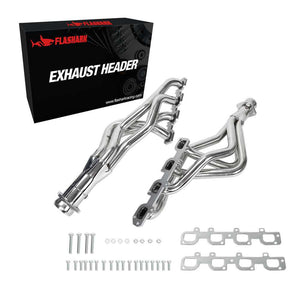
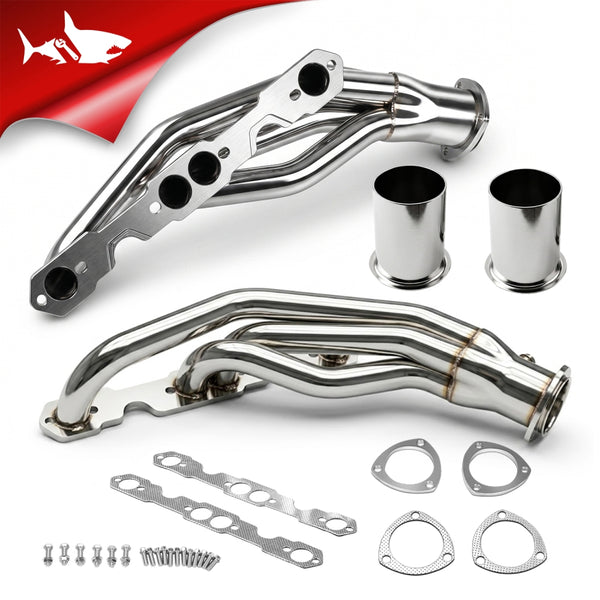
Short & Long Tube Headers for 2009-2018 Dodge RAM 1500 Hemi 5.7L V8
$289.00 $198.99
- The Hemi Tick Fix: Resists heat warping common in OEM manifolds.
- Max Airflow: Unlocks +15-30 HP restricted by factory exhaust.
- Material: Durable 201 Stainless Steel construction.
- Options: Available in Shorty (Plug & Play) or Long Tube.
But hardware only gets you halfway there. Dialing in a 5.7 hemi long tube headers and tune package is what actually translates that increased airflow into tire-spinning torque.
Dialing in the Air/Fuel Ratio (AFR)
From the factory, a HEMI cruises around a 14.7:1 AFR (closed loop). Under wide-open throttle (WOT), Dodge programs it to dip down into the 11s. That is extremely rich—great for warranty claims, bad for performance. A good tuner will lean that WOT AFR out to around 12.5:1. That specific mixture is what wakes up the 5.7L block without causing dangerous detonation.
Expected Horsepower and Torque Increases
Let's look at the numbers. We see these setups on the dyno all the time.
| Setup (5.7L HEMI) | Estimated WHP Gain | Drivability & AFR | CEL Status |
|---|---|---|---|
| Stock Manifolds | Baseline | Factory Safe (Sluggish) | Off |
| Long Tubes (NO TUNE) | +10 to 15 whp | Poor. Surging idle, running rich. | ON (P0420/P0430) |
| Long Tubes + Custom Tune | +28 to 35 whp | Crisp throttle, optimized power curve. | OFF (Disabled) |

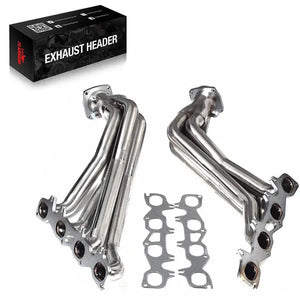
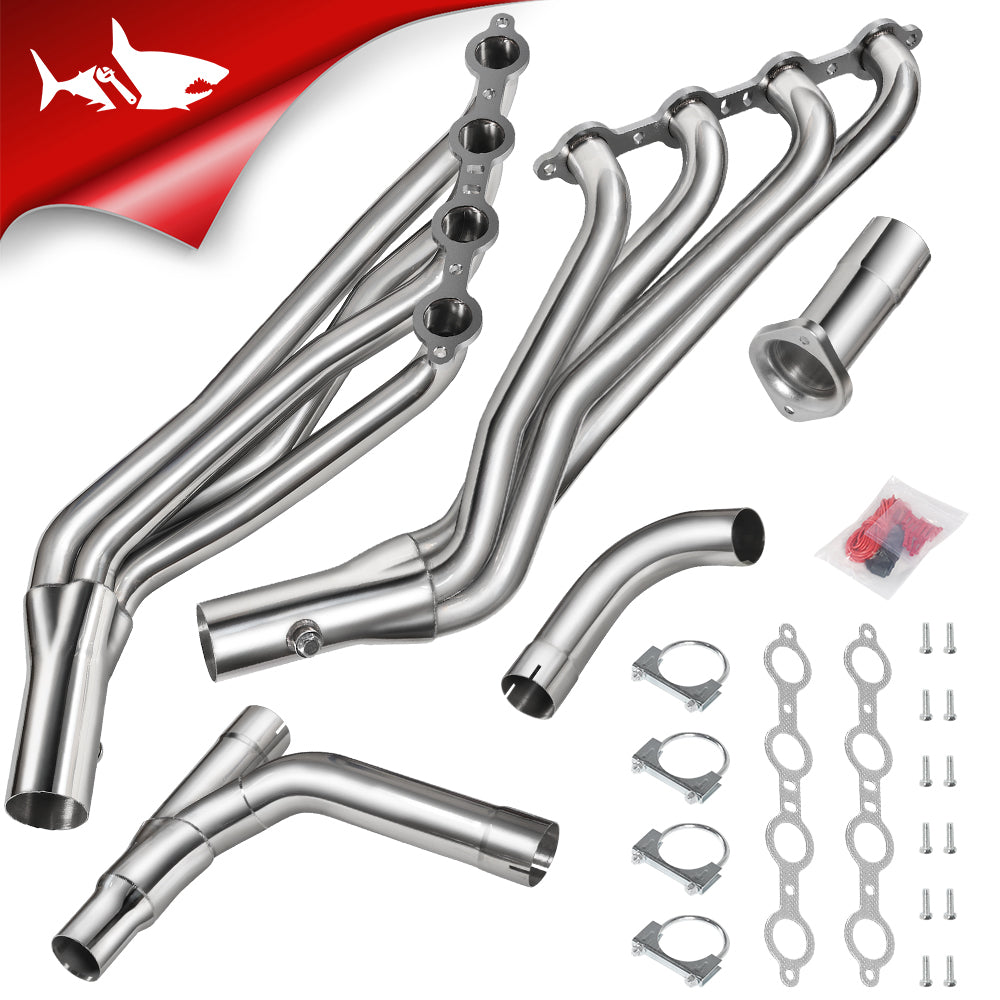
Long Tube Headers for '05-'11 Challenger/Charger/300C 5.7L/6.1L Hemi
✔ Permanent Warranty & Free Shipping
- Design: 8-2 piping design with CNC machined flanges.
- Construction: TIG and MIG welded Stainless Steel (Mirror Polish).
- Performance: Dramatically reduces backpressure for max HP/TQ.
- Fitment: 5.7L R/T & 6.1L SRT8 platforms (RWD only).
CEL Solutions: How to Properly Tune Your 5.7L HEMI
Alright, you know the flash is required. How do you actually get it done?
Handhelds vs. Custom Tuning
You can grab a handheld device like an HP Tuners or DiabloSport. A lot of these have "canned" (pre-loaded) files. Canned tunes are fine for a cold air intake, but they are generally useless for long tube headers. You need a custom email tune or a physical dyno session. The tuner will have you record data logs (doing 3rd gear pulls) and build a specific file that turns off the rear O2 sensors entirely.
The PCM Unlocking Headache (2015+ HEMI Models)
Chrysler started locking the PCM (Powertrain Control Module) in 2015. You cannot just plug an OBD2 tuner into a newer Ram, Charger, or Challenger and flash it. You have to physically mail your factory PCM out to be unlocked, or buy an unlocked PCM swap. Factor this extra cost into your build budget right now.
FAQs About 5.7 HEMI Headers and Tuning
Q1: Will shorty headers throw a code on a 5.7 HEMI?
A1: Usually, no. Shorties bolt right up to the factory catalytic mid-pipes, so the O2 sensors stay exactly where they belong. You don't necessarily need a tune for shorties, but you also won't get that massive top-end power gain.
Q2: How much HP does a 5.7 HEMI gain from long tube headers and a tune?
A2: Assuming the engine is healthy, expect a solid 25 to 35 wheel horsepower (whp) and around 30 lb-ft of torque. Throw a good intake and a 180-degree thermostat into the mix, and you're pushing closer to +40 whp.
Q3: Do O2 spacers work on a 5.7 HEMI with long tubes?
A3: It's a gamble, and the house usually wins. Modern Mopar computers are sharp. A spacer might trick the system for a few days, but the ECU will eventually notice the sensor's slow switching rate and pop the CEL anyway.
Q4: Can I drive my truck to the tuner after installing headers?
A4: Yes, you can limp it across town to the shop. Just keep the RPMs low, stay off the floorboard, and avoid heavy loads. It’s going to feel sluggish, but gentle driving won't grenade the motor.
Q5: What happens if I don't tune after installing headers?
A5: Your dash lights up. Your MPG will tank because the truck is dumping fuel. You’ll notice a loss in low-end torque, and if you ignore it long enough, you'll foul out your spark plugs and risk cylinder wash.
Q6: Do I need to upgrade fuel injectors with long tube headers?
A6: No. The factory 5.7 injectors have plenty of headroom for just an exhaust and intake. You only need to step up injector size if you're throwing in a big cam or adding boost.
Q7: How long does it take to tune a 5.7 HEMI?
A7: On a physical dyno, maybe 2 to 4 hours. If you are doing email tuning with a datalogger, expect it to take a few days of emailing log files back and forth until the tuner gets the revision perfect.
Q8: Will a tune void my Dodge/Ram powertrain warranty?
A8: Yes. Anytime you flash the PCM, it leaves a digital footprint. If you blow the trans and the dealer sees the computer has been messed with, your warranty claim is getting denied.
Q9: Are long tube headers illegal in California?
A9: Completely. Because they alter or remove the factory catalytic converters, they are illegal for street use in California (and other CARB states). They are strictly for off-road or track use.
Q10: What is the difference between shorty and long tube headers on a 5.7?
A10: Shorties give you a slightly better exhaust note and bolt to stock cats without throwing codes. Long tubes have massive primary runners that scavenge gas at higher RPMs—they make significantly more power but absolutely require a tune and modified mid-pipes.