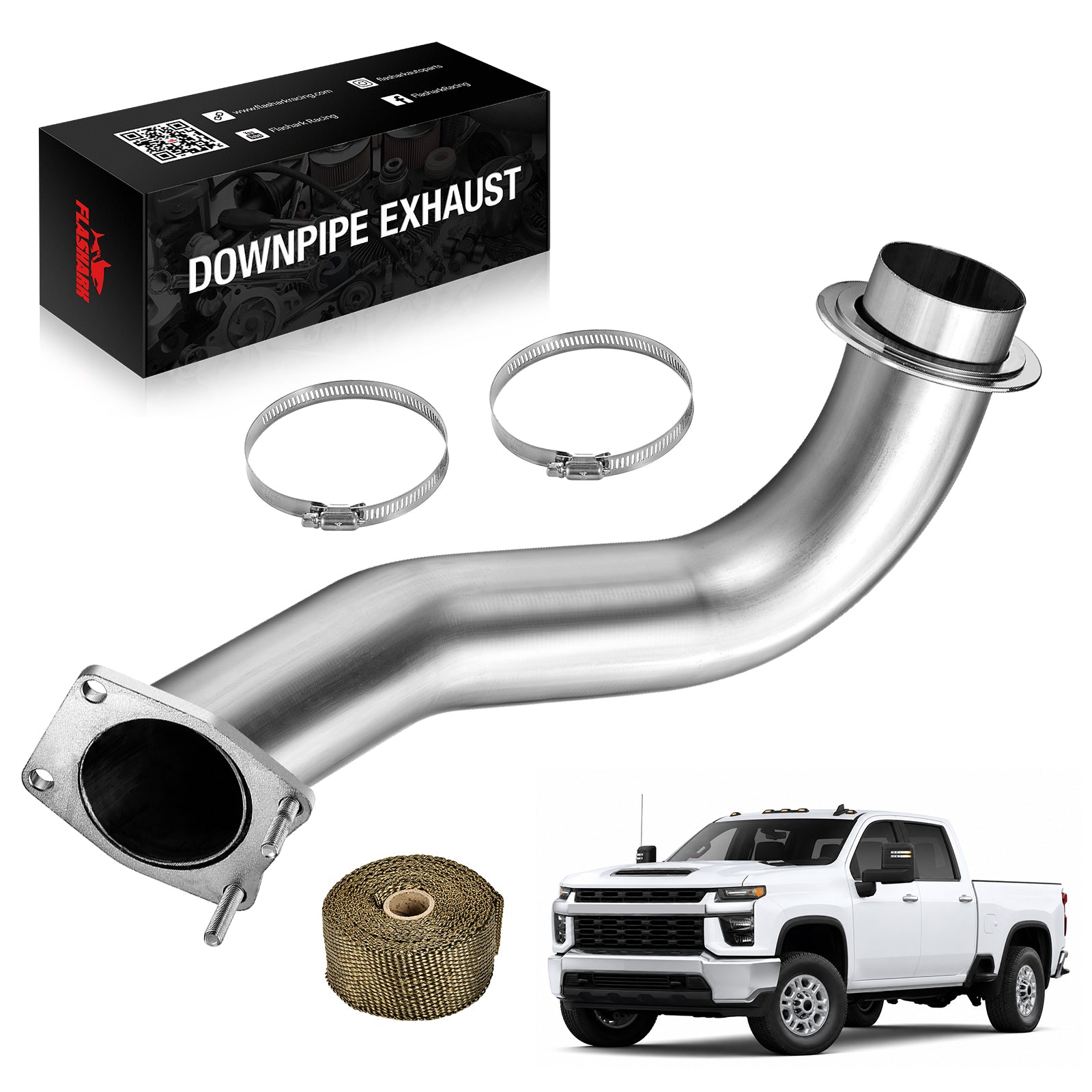
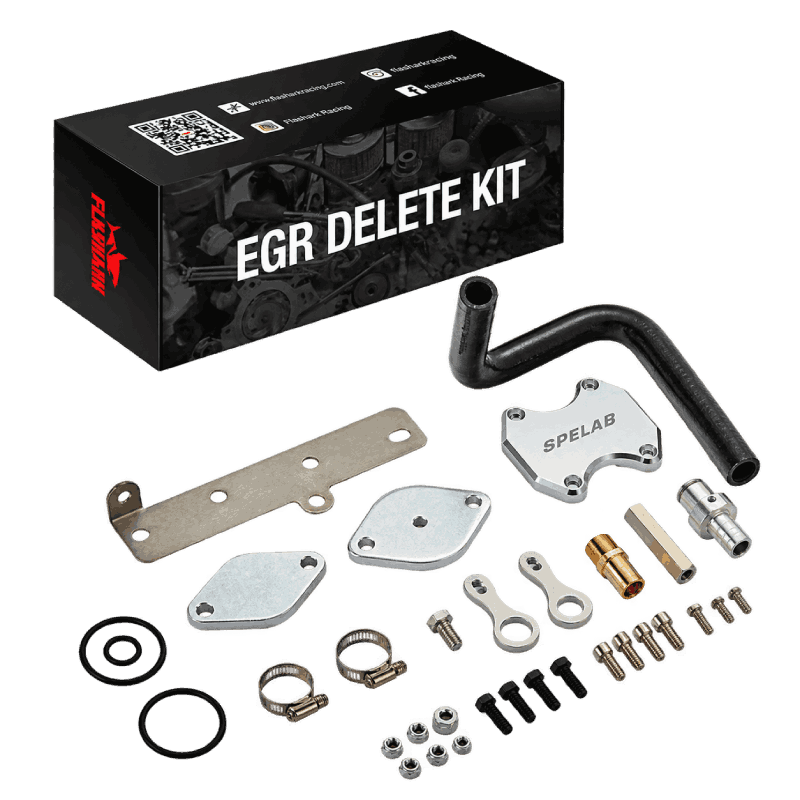
An EGR delete removes or replaces EGR hardware, while a block-off plate interrupts an exhaust-gas passage while some hardware may remain. Neither is a compliant shortcut for repairing a street-driven Duramax. If the original EGR system is faulty, diagnose and repair it with appropriate emissions-compliant parts. For a vehicle used in a setting where a modification is lawful, compare the exact engine code, hardware, calibration, and intended use before choosing parts.
- A plate can block flow without removing every EGR component; retained hardware does not mean the system still functions as certified.
- A delete kit's contents vary. A plate, pipe, intake elbow, and cooler replacement are different components.
- Neither approach guarantees power, fuel-economy, cooling, or reliability gains.
- Identify your Duramax engine and emissions configuration before considering fitment or diagnostics.
Duramax EGR Deletion
An exhaust gas recirculation (EGR) system routes some exhaust back into the intake under controlled conditions to reduce nitrogen-oxide emissions. “EGR delete” is a broad aftermarket term: a kit may remove, bypass, or replace selected EGR parts, and its contents differ by application. It should not be confused with an emissions-compliant repair.

The existing EGR delete kit collection includes different applications. The LMM product page is an example of an application-specific listing; verify its current fitment, contents, and permitted use before relying on it.
Pros
- Depending on the kit, selected EGR components may be removed or replaced, which can simplify access to those components in a lawful non-road application.
- Hardware choices can be matched to a specific build after the engine and configuration are identified.
Cons
- Disabling an emissions control may violate federal and state rules for a motor vehicle, including a vehicle described as “off-road only.”
- Parts, labor, and diagnostic consequences depend on the exact configuration; a check-engine light or operating issue cannot be predicted from the kit name alone.
- There is no reliable basis here to promise a fixed gain in power, temperature, fuel economy, or service life.

EGR Block-Off Plates
A block-off plate is a physical barrier placed at a specified EGR passage. Depending on the design, the valve, cooler, pipework, or sensors may remain installed. If the plate prevents the certified EGR flow, that hardware's presence does not make the emissions system operational. A plate is not automatically a cheaper, simpler, reversible, or road-legal alternative to a delete.
Pros
- The hardware change may be narrower than removing multiple EGR components in a compatible, lawful application.
- Some plate designs can be physically removed, although restoring a compliant system requires all original functions and parts to be working correctly.
Cons
- Blocking EGR flow can still constitute emissions tampering.
- Access, sealing, cooling-system work, and diagnostic behavior vary by engine and plate location.
- Leaving components installed does not prove a plate will fit more Duramax variants.

Detailed Comparison Between EGR Delete and Block-Off Plates
| Decision point | EGR delete | Block-off plate |
|---|---|---|
| Physical change | May remove or replace selected hardware; inspect the kit list. | Blocks a specified passage; other hardware may remain. |
| Street-vehicle emissions | Can render EGR inoperative; check applicable law before any work. | Can also render EGR inoperative; “reversible” does not establish legality. |
| Fitment check | Engine code, model year, emissions equipment, and included parts. | Engine code, plate location, port shape, gasket, and retained hardware. |
| Diagnostic check | Determine the actual fault and applicable factory repair path. | Determine the actual fault; blocking flow is not a repair diagnosis. |
1. Performance
The original article treats a delete as a power upgrade. Actual output depends on the engine, calibration, condition, and test method; no controlled Duramax comparison is provided here. A faulty EGR system can also cause drivability symptoms that should be diagnosed rather than masked. The LLY product page is application-specific and should not be read as a performance test.
2. Fuel Efficiency
Neither hardware choice guarantees better fuel economy. Driving cycle, calibration, condition, and measurement method affect fuel use. Compare reliable before-and-after data for the same configuration before claiming savings.
3. Maintenance Costs
Removing components may eliminate their future service, but parts, labor, troubleshooting, and restoring the system can add costs. An EGR fault may originate in the valve, cooler, wiring, sensors, leaks, or related controls; diagnose the source before buying hardware.
4. Compatibility
Neither option wins across all Duramax engines. LB7, LLY, LBZ, LMM, and LML are distinct applications, and even vehicles within a generation can differ. Match the exact vehicle identification, engine code, emissions configuration, and manufacturer's current application data. Do not assume a part listed for LMM fits LLY or LML.

Other Factors to Consider
- First identify the fault: Record symptoms and diagnostic codes, inspect the relevant components, and follow the service procedure for the exact engine.
- Check the use and rules: The U.S. EPA identifies EGR blocking and delete devices as examples of emissions tampering. A seller's “off-road only” label is not a legal exemption by itself. See the EPA tampering policy.
- Check the parts: Confirm current fitment and what is included before comparing prices or installation effort.
- Check the repair path: For a street-driven truck, choose a diagnosis and emissions-compliant repair rather than a blocked or disabled EGR system.
Technician note: Do not use a block-off plate as a diagnostic substitute. A stored code, leak, or drivability problem needs a fault-specific test. Work on hot exhaust and cooling components also requires the manufacturer's safety procedure.
Right Pick for Your Duramax Engine
For a street-driven Duramax with an EGR concern, the practical choice is to find the fault and restore the original emissions function. For a vehicle in a setting where modification is lawful, the choice between removing hardware and blocking a passage depends on the exact engine, application, and parts involved. Neither approach is inherently the performance, fuel-economy, maintenance, or compatibility winner.

Review the relevant EGR parts collection only after checking the vehicle and permitted use. Product listings, including the LMM listing, require their own current fitment and contents review. The Flashark Store homepage provides the full catalog.

Frequently Asked Questions
Q1. What is the difference between an EGR delete and a block-off plate?
A1. A delete may remove or replace selected EGR hardware, while a plate blocks a specified gas passage and may leave other hardware installed.
Q2. Does a block-off plate keep the EGR system working?
A2. No. If it prevents the certified exhaust-gas flow, retained hardware does not mean the system still works as designed.
Q3. Is a block-off plate legal on a street-driven Duramax?
A3. Blocking an emissions-control system can violate U.S. federal and state rules. Check the applicable requirements before modifying a vehicle.
Q4. Is an EGR delete legal if a kit says off-road only?
A4. A label does not create a legal exemption. The vehicle, use, and applicable federal and state rules determine what is permitted.
Q5. Will either option add horsepower?
A5. No specific gain can be promised without controlled testing of the exact engine, condition, and calibration.
Q6. Will either option improve fuel economy?
A6. Fuel use depends on the vehicle, condition, calibration, driving cycle, and measurement method; neither option guarantees savings.
Q7. Is a plate easier to install than a delete kit?
A7. Installation effort depends on access, plate location, retained parts, and the exact kit. Compare the instructions for the specific vehicle.
Q8. Do all Duramax engines use the same plate or delete kit?
A8. No. Match the engine code, model year, emissions configuration, and current manufacturer fitment information.
Q9. Will the check-engine light come on?
A9. Diagnostic behavior depends on the vehicle, fault, and configuration. Diagnose existing codes and do not assume a hardware change will resolve them.
Q10. What should I do if my Duramax has an EGR fault?
A10. Record symptoms and codes, identify the failed component with the correct service procedure, and use an emissions-compliant repair for a street-driven truck.

Steven Chen
Automotive Performance Specialist | Engine & Exhaust Systems
Steven focuses on practical engine performance, exhaust fitment, and real-world upgrade paths for classic and modern enthusiast vehicles. He reviews small-block Ford, LS, truck, and street/strip applications with one goal in mind: helping builders choose parts that actually work together. His philosophy: "Good power starts with the right combination, not the biggest part."