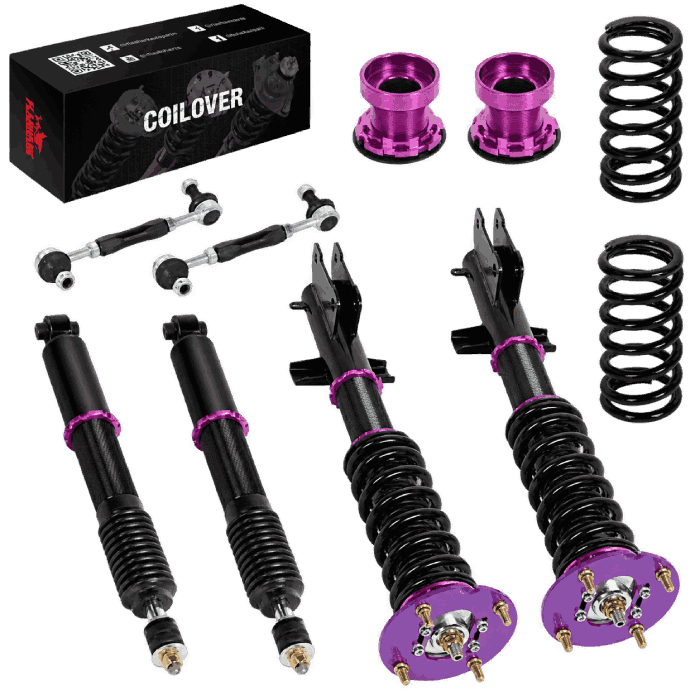
Coilovers combine a coil spring with a damper in a suspension assembly. Their main attraction is setup choice: many kits let you adjust ride height, while some also let you change damping. The right setup depends on the vehicle, the kit, and whether your priority is daily comfort, appearance, or track use.
- Check which adjustments the specific kit actually provides.
- Compare complete kits with sleeve kits by compatibility, travel, and included parts.
- Stay within the maker’s adjustment range and arrange an alignment after installation.
What Exactly Are Coilovers?
A coilover places a coil spring around a damper. Unlike a fixed-height spring and damper combination, a threaded coilover assembly can offer a specified ride-height adjustment range. Some designs also provide damping adjustment, but this is not a universal feature. The spring supports vehicle weight; the damper controls the speed of suspension movement.
If you are comparing parts, first confirm whether the kit is a complete assembly and whether its spring rate, mounts, and adjustment range suit your vehicle. Explore Flashark’s coilover collection only after checking the product’s exact fitment and contents.

The Perks of Switching to Coilovers
The main benefit is the ability to choose a setup within the kit’s designed range. Ride-height adjustment can help meet a desired stance or handling goal. Adjustable damping, where supplied, allows further tuning. Neither feature guarantees a smoother ride, more grip, or longer service life: tires, alignment, spring rate, damper design, available travel, and road conditions all matter.
Lowering also has tradeoffs. Reduced clearance and suspension travel can increase the chance of scraping or bottoming out. A sensible street setup preserves usable travel and confirms tire and body clearance.

Varieties of Coilovers You Should Know
A complete coilover kit pairs its springs and dampers as an assembly. A sleeve-style or “slip-on” kit normally adds an adjustable spring perch to an existing damper or strut; it does not automatically replace or match the damper. The terms are sometimes used loosely, so inspect the actual parts list rather than relying on a label.
| Option | Typical adjustment | Check before buying | Main tradeoff |
|---|---|---|---|
| Complete coilover assembly | Ride height; damping on some kits | Exact fitment, mounts, spring rate, adjustment range, included hardware | More setup options and usually higher total cost |
| Sleeve-style kit | Spring perch height | Damper compatibility, spring seating, travel, and condition | Lower initial parts cost may require other components |
| Lowering springs with matched dampers | Usually fixed height | Spring and damper pairing, intended drop, alignment | Fewer adjustments |
Choose by intended use and verified vehicle fitment. A budget choice is only economical if the remaining dampers and hardware are suitable.

The Inner Workings of Coilover Functionality
The spring stores and releases energy as the suspension moves. The damper resists that motion and helps control oscillation. Compression damping affects movement as the wheel travels upward; rebound damping affects its return. Some kits adjust one circuit, some both, and others use a single control that changes a combined setting.
Spring preload and ride height are separate concepts on some full-length adjustable designs. Changing a spring perch on another design can also change the resting height or available travel. Follow the exact manufacturer instructions for the hardware in front of you.
Fine-Tuning Your Ride
Begin at the manufacturer’s recommended baseline. Measure ride height consistently at each corner, record the original settings, and change one variable at a time. Check that the spring remains correctly seated, the adjusters are locked, and the tire and suspension have clearance throughout their operating range. Have alignment checked after installation or a substantial height change.
Damping changes should be small and documented. More damping is not automatically better: too much can reduce compliance on rough roads, while too little can leave the body undercontrolled. Weather and tire conditions also affect what the driver feels, so avoid treating a single test drive as proof of a universal setting.
Keeping Your Coilovers in Top Shape
Clean exposed threads according to the manufacturer’s instructions, especially after driving through salt or debris. Inspect the damper body, seals, boots, mounts, lock rings, and fasteners. Do not apply a generic lubricant to seals, adjusters, or threads unless the kit maker approves it.
Persistent leaks, unexplained noise, damaged parts, or a loss of damping response deserve inspection. Noise can come from several suspension parts, so diagnose the cause before replacing or lubricating a coilover. Serviceability and replacement parts vary by kit.

Frequently Asked Questions
Q1. What are coilovers?
A1. Coilovers are suspension assemblies with a coil spring positioned around a damper. Depending on the design, they may offer adjustable ride height, damping, or both.
Q2. What is the purpose of coilovers?
A2. Their main purpose is to provide a matched spring and damper setup with a specified range of adjustment. The result depends on the kit, installation, tires, alignment, and settings.
Q3. Do all coilovers have adjustable damping?
A3. No. Some kits have fixed damping and adjustable ride height; others allow rebound, compression, or combined damping changes. Check the specific kit specifications.
Q4. Do coilovers always make a car ride smoother?
A4. No. Ride comfort depends on spring rate, damper tuning, travel, tires, road conditions, and adjustment. A poorly matched or overly low setup can ride worse.
Q5. Are coilovers better than lowering springs?
A5. Neither is universally better. A matched coilover kit offers more setup options, while lowering springs may cost less and retain much of the original suspension layout. Check damper compatibility and intended use.
Q6. What is a slip-on coilover sleeve?
A6. A sleeve kit typically adds an adjustable spring perch and spring around an existing strut or damper. It is not a complete matched damper assembly, so compatibility and travel must be checked carefully.
Q7. Can I lower my car as far as the threads allow?
A7. No. Use the manufacturer’s approved adjustment range and confirm suspension travel, tire clearance, ground clearance, and safe spring seating.
Q8. Do I need an alignment after installing coilovers?
A8. Ride-height changes can alter alignment. Have the vehicle inspected and aligned to suitable specifications after installation and after major height changes.
Q9. How should I adjust coilover damping?
A9. Start from the kit maker’s baseline, change one setting at a time, keep left and right settings consistent unless the instructions say otherwise, and evaluate the result in a safe setting.
Q10. How do I maintain coilovers?
A10. Follow the kit maker’s instructions. Inspect for leaks, corrosion, damaged boots, loose hardware, unusual noise, and seized adjusters; clean exposed threads carefully and use only approved products.
Q11. When should a coilover be inspected or replaced?
A11. Persistent leaks, damaged parts, loose mounts, loss of damping control, or unexplained noise call for inspection by a qualified technician. Repair or replacement depends on the specific unit and manufacturer guidance.
Conclusion
Coilovers are useful when their adjustment range and matched components meet a clear driving goal. Compare the actual kit specifications, preserve safe suspension travel, and plan for inspection and alignment. A thoughtful setup matters more than simply setting the car as low or as stiff as possible.

Steven Chen
Automotive Performance Specialist | Engine & Exhaust Systems
Steven focuses on practical engine performance, exhaust fitment, and real-world upgrade paths for classic and modern enthusiast vehicles. He reviews small-block Ford, LS, truck, and street/strip applications with one goal in mind: helping builders choose parts that actually work together. His philosophy: "Good power starts with the right combination, not the biggest part."