A test pipe changes one of the most important sections of a vehicle’s exhaust system: the section normally occupied by a catalytic converter. Before choosing one, you need to understand where the pipe fits, how it differs from a downpipe or straight-pipe exhaust, and how emissions equipment, oxygen sensors, engine calibration, sound control, and vehicle-specific connections affect the result.
Test pipes are most often discussed for modified performance vehicles and competition-oriented builds. They are not automatically interchangeable between models, and mechanical fitment does not mean a vehicle will remain legal for road use.
- A test pipe is a section of exhaust tubing that normally replaces a catalytic-converter section. It does not usually replace the muffler.
- Removing a catalytic converter can change exhaust restriction, sound, odor, emissions, oxygen-sensor readings, and warning-light behavior.
- Resonated test pipes are intended to control some harsh frequencies; non-resonated pipes provide less sound attenuation.
- A test pipe, downpipe, Y-pipe, mid-pipe, and complete straight-pipe exhaust are different components, even though some shopping terms overlap.
- Power results depend on the engine, exhaust layout, pipe dimensions, calibration, fuel, supporting modifications, and test method. A pipe alone does not guarantee a fixed gain.
- Match the part to the vehicle year, engine, drivetrain, emissions equipment, sensor layout, flange pattern, pipe diameter, and downstream connection before ordering.
- Review local emissions and road-use requirements before modifying a catalytic converter or other emissions-related equipment.
What Is a Test Pipe on a Car?
A test pipe is a hollow exhaust section installed where a catalytic converter would normally sit. Its exact position depends on the vehicle. On some naturally aspirated platforms, the catalytic converters may sit between the exhaust manifolds or headers and a Y-pipe. On many turbocharged applications, a converter may be built into or connected closely to the downpipe.
This distinction matters. A test pipe normally replaces a converter section; it does not automatically bypass the muffler, resonator, or entire cat-back system. Replacing every major sound-control component is a different modification commonly described as a straight-pipe exhaust.
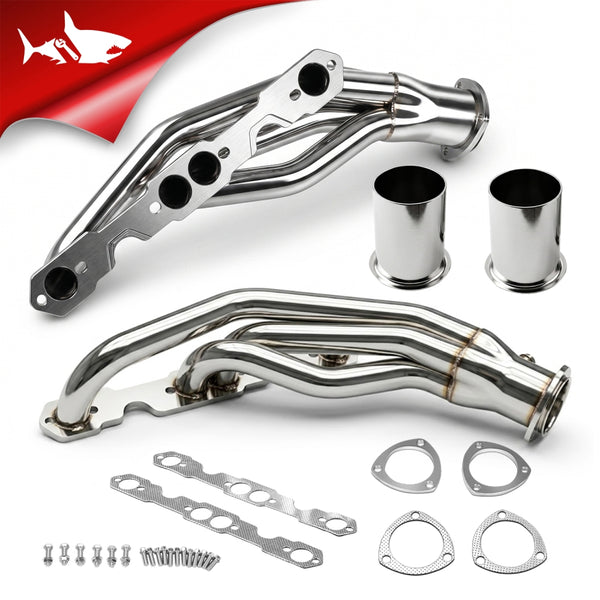
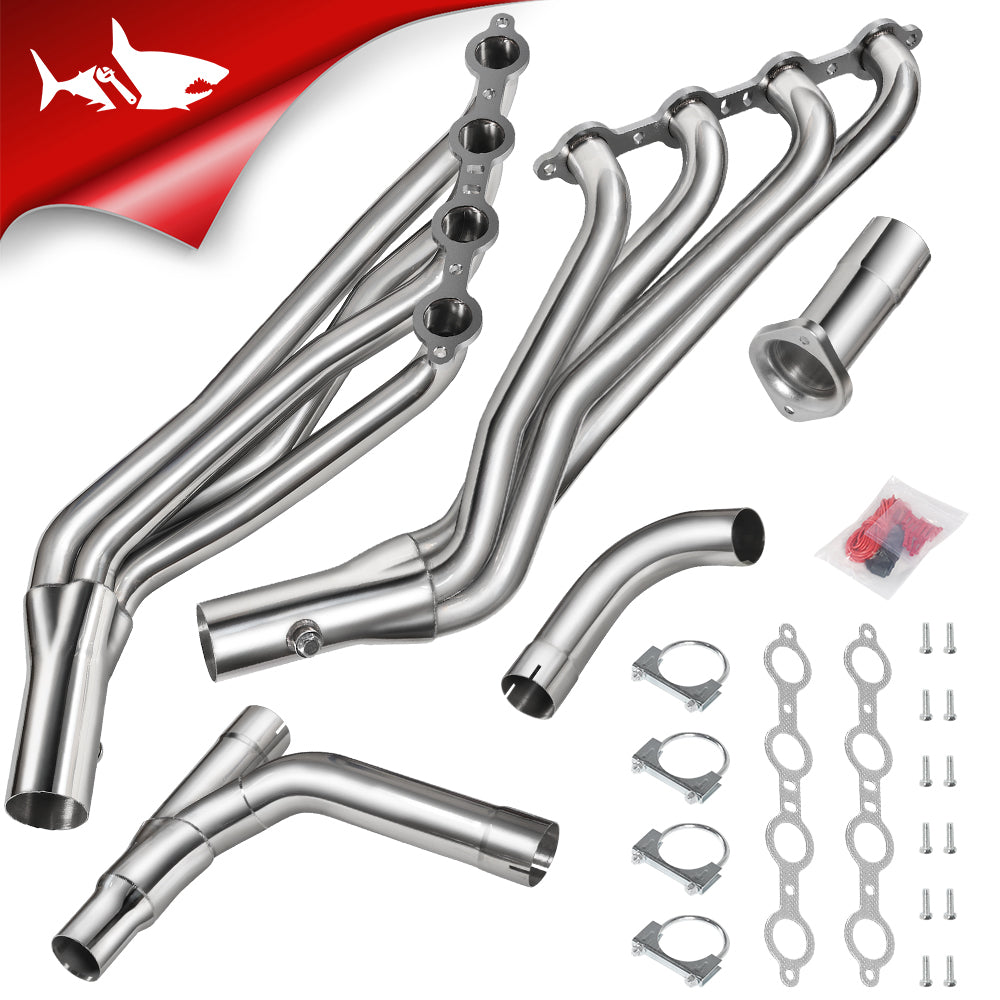
Test pipes are commonly made from exhaust-compatible steel, with material, wall construction, flange design, pipe diameter, sensor-bung position, and overall length varying by application. A part that looks similar in a photo may still have the wrong flange angle, sensor position, or connection length for the vehicle.
Two similar-looking parts are not automatically interchangeable. Compare the complete exhaust path, not just the pipe diameter. Flange orientation, converter location, oxygen-sensor clearance, Y-pipe position, and available space around the transmission tunnel can all affect fitment.
Where Does a Test Pipe Fit in the Exhaust System?
A simplified naturally aspirated exhaust path may look like this:
Exhaust manifold or header → catalytic converter or test pipe → Y-pipe or mid-pipe → resonator and muffler → tailpipe
A simplified turbocharged layout may look like this:
Exhaust manifold → turbocharger → downpipe and emissions section → mid-pipe → cat-back exhaust
These are general layouts, not universal diagrams. Some vehicles use multiple converters, close-coupled converters, integrated manifolds, paired pipes, or platform-specific crossover sections. Check the actual connection points under the vehicle before choosing a replacement section.
| Component | Primary function | Typical position | Important distinction |
|---|---|---|---|
| Test pipe | Replaces a catalytic-converter section with an open exhaust passage | Where the applicable converter normally sits | It is not the same as removing every muffler and resonator |
| High-flow catalytic converter | Retains catalytic material while using a performance-oriented construction | Replaces or supplements an applicable converter section | A high-flow converter is not a hollow test pipe; approval and road-use status depend on the specific product and jurisdiction |
| Downpipe | Routes exhaust away from a turbocharger or an application-specific upstream exhaust section | Upstream portion of many turbocharged exhaust systems | A downpipe may contain a converter, connect to one, or use a different layout depending on the platform |
| Y-pipe | Combines two exhaust paths into one, or divides one path into two | Often downstream of paired banks or converter sections | Its shape and connection pattern define it; it should not automatically be called a test pipe |
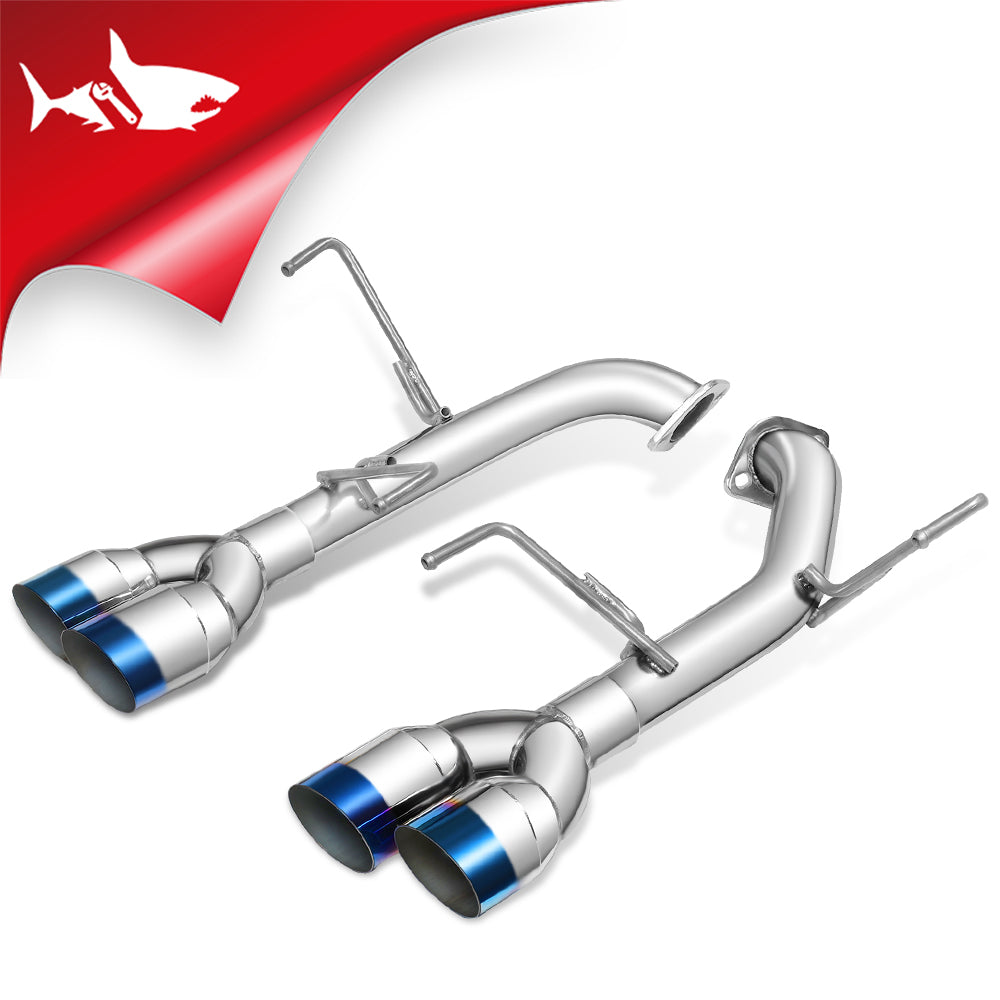
| Cat-back exhaust | Changes the exhaust behind the catalytic-converter area | Mid-pipe, resonator, muffler, and tailpipe area | It normally does not replace the catalytic converter |
Benefits of Test Pipes
The main mechanical change is the removal of the converter substrate from that section of the exhaust. This can reduce restriction at the former converter location, but the effect on engine output depends on the complete system.

Reduced Restriction in the Converter Section
A catalytic converter routes exhaust through a coated internal substrate. Replacing that assembly with an open pipe removes the substrate from that location. The practical result depends on whether the converter was a meaningful restriction, whether it was damaged or clogged, and whether the remaining exhaust is correctly sized for the engine.
A bigger pipe is not automatically the right pipe. Exhaust-pulse energy, gas velocity, pipe diameter, collector design, engine speed, valve timing, and the downstream exhaust all influence scavenging and cylinder evacuation. Reducing restriction in one section does not guarantee more power at every engine speed.
Changes in Exhaust Sound
Catalytic converters also affect sound. Removing one can increase volume and introduce more rasp, metallic frequencies, crackle, or cabin drone. The final tone is shaped by the engine, firing order, header or manifold design, Y-pipe, resonators, mufflers, pipe diameter, exhaust leaks, and tailpipe layout.
If sound quality is the main goal, evaluate the complete system. A properly selected resonator or cat-back exhaust may address tone without changing the catalytic-converter section.
Weight and Packaging
A hollow pipe can weigh less than the converter assembly it replaces. The actual difference varies by application and construction. On most street vehicles, this is a secondary consideration compared with emissions, sound, fitment, and warning-light behavior.
Competition-Oriented Exhaust Configuration
Test pipes are often considered for vehicles operated in controlled competition environments where the exhaust configuration is built around a specific rule set. The permitted configuration still depends on the event, track, sanctioning body, vehicle registration, transport method, and applicable law.
Drawbacks and Risks of Using Test Pipes
Higher Harmful Emissions
A catalytic converter helps reduce harmful exhaust pollutants. Replacing it with a hollow pipe removes that emissions-control function from the affected section and can significantly increase tailpipe emissions.
Road-Use and Inspection Problems
For road vehicles in the United States, removing a catalytic converter without installing an approved replacement can constitute illegal emissions tampering under federal law. State and local inspection, registration, and enforcement requirements may add further restrictions. Other countries and regions apply their own emissions and vehicle-modification rules.
Review the requirements that apply to the vehicle and its actual use before modifying emissions-related equipment. Mechanical fitment does not establish road legality or guarantee that a vehicle will pass inspection.
For additional U.S. guidance, see the U.S. Environmental Protection Agency’s transportation and emissions information.
Warning Lights and Oxygen-Sensor Behavior
Many vehicles monitor catalytic-converter operation through oxygen-sensor data and onboard diagnostics. Changing the converter section can affect those readings and may trigger a warning light. The result varies with sensor placement, the vehicle’s diagnostic strategy, exhaust leaks, wiring condition, installed hardware, emissions equipment, and calibration.
A warning light should be diagnosed rather than hidden. An active malfunction indicator can make it harder to notice an unrelated engine or emissions fault.
Odor, Noise, Rasp, and Drone
Without the converter substrate, exhaust odor may become more noticeable. Volume and harsh frequencies can also increase. Resonators and mufflers may reduce some sound, but they do not restore the emissions-control function of a catalytic converter.
Exhaust Leaks and Heat Exposure
Poor flange alignment, reused damaged gaskets, loose fasteners, stretched sensor wiring, or a system installed under tension can lead to leaks and contact with nearby components. A leaking connection may create noise, odor, incorrect sensor readings, or hot-gas exposure around wiring and heat-sensitive parts.
Warranty, Insurance, and Resale Considerations
Modification-related warranty or insurance decisions depend on the policy, jurisdiction, vehicle condition, and relationship between the modification and the claimed failure or loss. Keep the original components when practical, retain installation records, and review the applicable terms before making an emissions-related change.
Resonated vs. Non-Resonated Test Pipes
Resonated Test Pipes
A resonated test pipe adds a sound-control section around an otherwise open exhaust path. Depending on its internal design, the resonator can reduce selected harsh frequencies and rasp without functioning as a catalytic converter.

Non-Resonated Test Pipes
A non-resonated version uses a more direct tube without an added resonator section. It generally provides less sound attenuation, so the result may be louder or harsher depending on the engine and downstream exhaust.

| Decision point | Resonated test pipe | Non-resonated test pipe |
|---|---|---|
| Internal structure | Includes an added sound-control section | Uses a simpler open-tube layout |
| Sound objective | Intended to reduce selected rasp or harsh frequencies | Provides less attenuation and may produce a rawer tone |
| What still matters | Resonator construction, engine, Y-pipe, cat-back, pipe size, and leaks | Engine, Y-pipe, cat-back, pipe size, and leaks |
| Emissions function | A resonator does not replace the chemical function of a catalytic converter | Contains no catalytic substrate unless specifically designed and certified otherwise |
Do Test Pipes Add Horsepower?
A test pipe can reduce restriction in the converter section, but that fact alone does not establish a fixed horsepower or torque gain. Results depend on the original converter, engine condition, naturally aspirated or turbocharged layout, exhaust dimensions, headers or manifolds, intake system, fuel, calibration, and the way the vehicle is tested.
A clogged or damaged converter creates a different baseline from a healthy original converter. Likewise, a highly modified engine moving more exhaust gas may respond differently from a stock engine. Changes should be measured on the same vehicle under controlled before-and-after conditions if a reliable performance number is required.
Sound should not be used as proof of power. A louder exhaust can feel more responsive even when the measured difference is small or concentrated in a limited part of the operating range.
Test Pipes vs. Downpipes: What’s the Difference?
Test Pipes
A test pipe is defined mainly by the component it replaces: a catalytic-converter section. It may be used on naturally aspirated or turbocharged applications if the vehicle has a separate converter section with compatible connections.

Downpipes
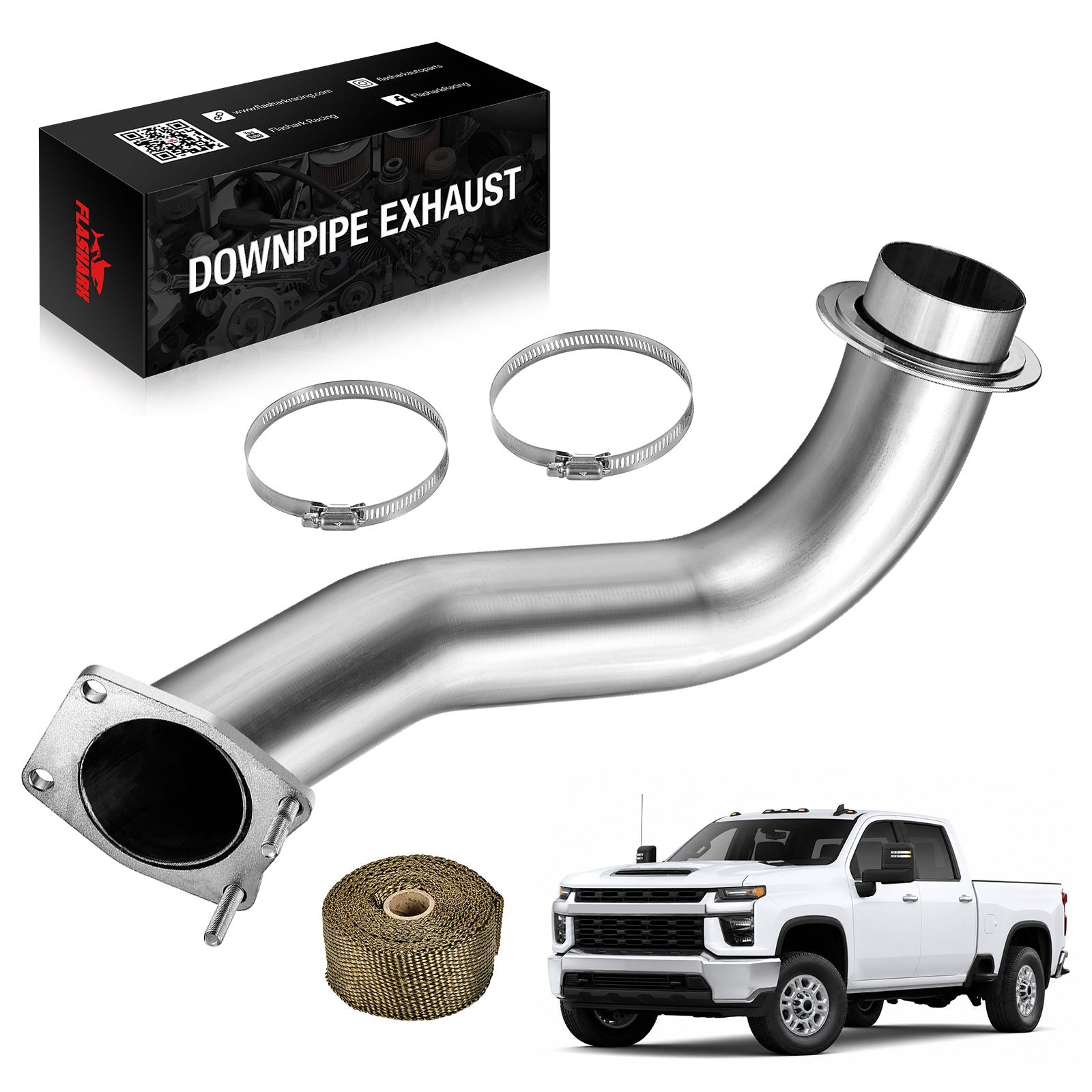
A downpipe is defined mainly by its position in the exhaust path. On a turbocharged engine, it routes exhaust away from the turbocharger toward the downstream exhaust. Depending on the platform, it may contain a catalytic converter, connect to a separate converter, or use multiple sections.

Some owners and sellers use “downpipe” as a broad shopping term for a front exhaust section, especially when product catalogs group several layouts together. The installation path is determined by the physical structure: where the pipe begins, where it ends, what it replaces, and how it connects to the rest of the exhaust.
How to Choose the Correct Test Pipe
This is one of those jobs where fitment matters more than the marketing number. Check these points before ordering:
- Vehicle identity: year, make, model, engine, chassis or platform, drivetrain, transmission, and body configuration where relevant.
- Emissions layout: number and location of catalytic converters, sensor placement, and any market-specific emissions configuration.
- Connection points: flange shape, bolt pattern, pipe diameter, overall length, and the angle of each connection.
- Sensor provisions: oxygen-sensor bung location, thread compatibility, wiring reach, and clearance from the body and heat sources.
- Downstream exhaust: factory or aftermarket Y-pipe, mid-pipe, resonator, and cat-back connections.
- Sound objective: resonated or non-resonated construction and the sound-control components already installed.
- Intended use: applicable competition rules, inspection requirements, registration status, and road-use regulations.
- Selected configuration: review the chosen product version and package contents before beginning installation.
General Test Pipe Installation Principles
Work only on a fully cooled exhaust. Support the vehicle on correctly rated jack stands or a suitable lift placed at the manufacturer’s lifting points. Never work beneath a vehicle supported only by a hydraulic jack. Exhaust fasteners, sensors, and surrounding components can remain hot long after the engine is switched off.
- Inspect the complete route. Identify the converter section, upstream and downstream connections, sensor wiring, heat shields, braces, and nearby hoses or cables.
- Prepare the fasteners. Corroded exhaust hardware may require penetrating fluid and appropriate hand tools. Avoid applying uncontrolled force near a sensor or thin flange.
- Protect the sensors and wiring. Disconnect sensors by their connectors and use the correct sensor tool where required. Do not twist the wiring harness around the sensor body.
- Support the exhaust. Prevent the remaining system from hanging on a flex section, manifold, turbocharger outlet, or wiring harness when the converter section is removed.
- Compare the parts off the vehicle. Check length, bends, flange angles, bolt pattern, sensor-bung position, and connection diameter before installation.
- Install without final tightening. Start every compatible connection and allow the exhaust to find a neutral position.
- Check clearance. Inspect the body, crossmembers, transmission, driveshaft area, wiring, brake and fuel lines, heat shields, and suspension travel where applicable.
- Tighten in sequence. Follow the applicable service and product instructions. Do not use an invented universal torque value for different flange and fastener designs.
- Check for leaks. After the first heat cycle, inspect each connection for soot, ticking, odor, loose hardware, or contact caused by thermal movement.
- Diagnose warnings properly. If a warning light appears, read the diagnostic information and inspect for leaks, damaged wiring, sensor issues, and configuration-related causes.
A common mistake is tightening every connection before the system is aligned. An exhaust installed under tension can shift as it heats and cools, causing a flange leak, body contact, or stress at another connection. Take a minute before final tightening and check the complete exhaust path.
Should You Install Test Pipes?
A test pipe may suit a competition-oriented exhaust plan when the vehicle, event rules, hardware, and calibration are considered together. It is a poor shortcut when the real goal is simply to repair a failed converter, reduce drone, or make a road vehicle louder without considering emissions and diagnostic consequences.
If the converter has failed, diagnose the cause before replacing any part. Misfire, excessive oil consumption, coolant entering the combustion chamber, fuel-control problems, or physical impact can damage a replacement converter as well.
For drivers who want a different exhaust note while retaining the converter system, a compatible resonator, muffler, or cat-back exhaust may be the more appropriate area to evaluate. For a lower-restriction converter section, compare application-specific, approved high-flow converter options where available.
Flashark Test Pipe and Exhaust Shopping Paths
Flashark groups vehicle-specific front exhaust components in its downpipe exhaust and test pipe collection. Because product names can overlap across test pipe, downpipe, and Y-pipe layouts, match the physical connection points and selected vehicle configuration rather than relying on the category name alone.
Nissan 350Z and Infiniti G35 Exhaust Option
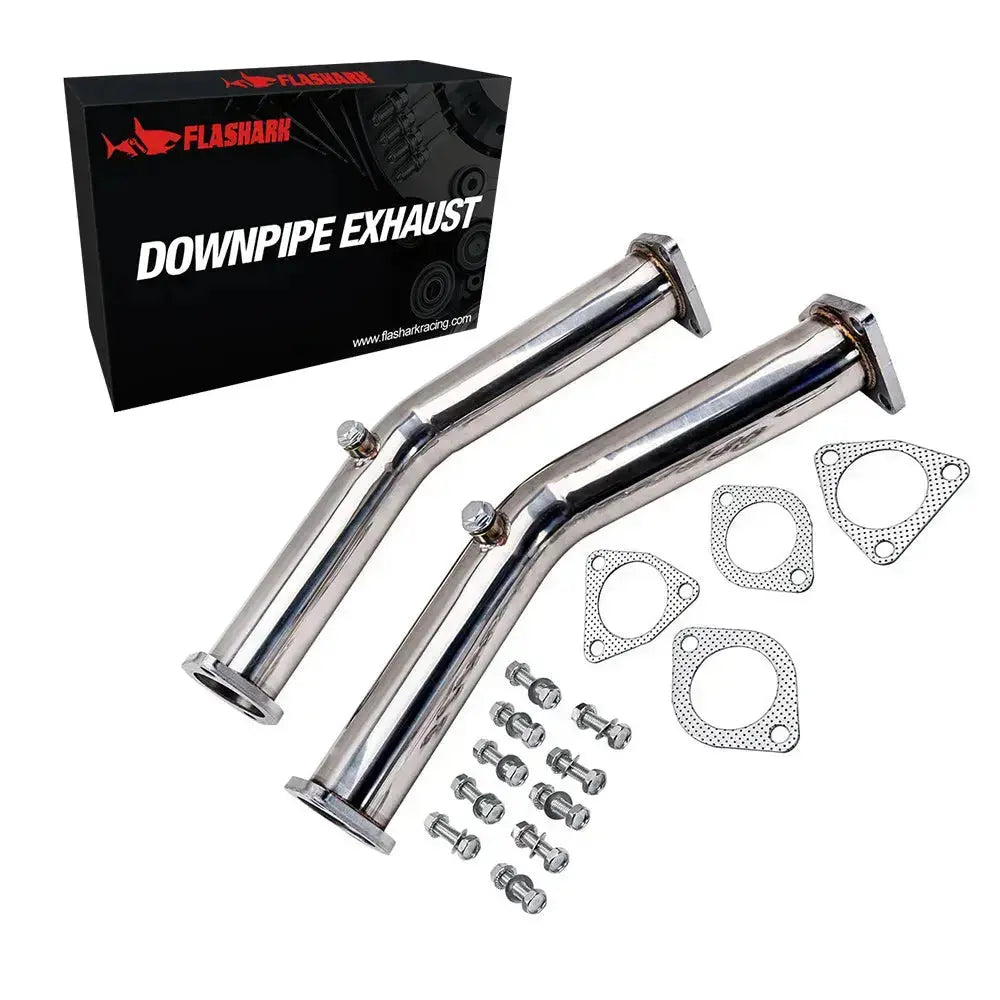
Review the Flashark Nissan 350Z and Infiniti G35 exhaust down-pipe product options. Match the vehicle year, engine, exhaust connections, sensor layout, and selected configuration before ordering.
Nissan 370Z and Infiniti G37 Exhaust Option

Review the Flashark Nissan 370Z and Infiniti G37 exhaust down-pipe product options. Check the engine, platform, sensor arrangement, flange pattern, and downstream connection for the selected vehicle.
Nissan 350Z 3.5L and Infiniti G35 Exhaust Option
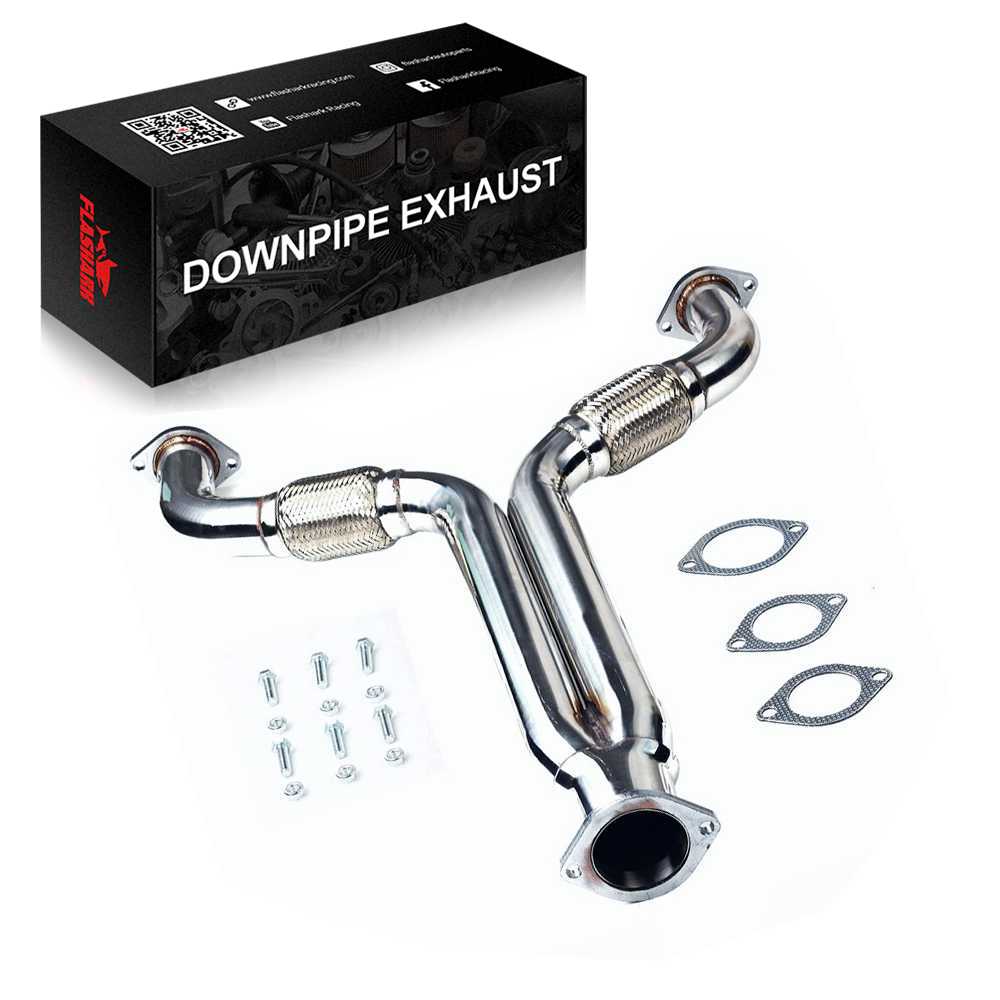
Review the Flashark Nissan 350Z 3.5L and Infiniti G35 exhaust down-pipe product options. Use the component shape, inlet and outlet locations, vehicle details, and selected configuration to determine whether it matches the intended exhaust path.
For platform-specific research, see the 370Z test pipe guide, the G35 test pipe guide, the 350Z installation guide, and the resonated vs. non-resonated test pipe comparison.
Frequently Asked Questions About Test Pipes
Q1: What do test pipes replace?
A1: A test pipe normally replaces a catalytic-converter section of the exhaust. It does not usually replace the muffler, resonator, or complete cat-back system. The exact location and number of converter sections vary by vehicle.
Q2: Is a test pipe the same as a straight pipe?
A2: Not necessarily. A test pipe is a specific section installed where a catalytic converter would normally sit. “Straight pipe” may describe a simple non-resonated section or an exhaust system with multiple sound-control components removed, so the terms should not be treated as universally interchangeable.
Q3: Is a test pipe the same as a downpipe?
A3: No. A test pipe is identified by replacing a converter section, while a downpipe is identified by its position in the exhaust path, commonly downstream of a turbocharger. Some catalogs use overlapping shopping terms, so compare the actual component shape and connection points.
Q4: Do test pipes add horsepower?
A4: A test pipe can reduce restriction in the converter section, but it does not guarantee a fixed horsepower gain. The result depends on the original converter, engine condition, exhaust design, supporting modifications, calibration, fuel, and test method.
Q5: Will a test pipe cause a check engine light?
A5: It can. Warning-light behavior depends on oxygen-sensor placement, onboard diagnostic logic, exhaust leaks, wiring condition, emissions hardware, and calibration. Diagnose any warning light rather than assuming it has only one cause.
Q6: Does a test pipe require an ECU tune?
A6: Tune requirements vary by vehicle and installed hardware. Consider the engine, sensor strategy, complete intake and exhaust combination, fuel, emissions equipment, and calibration together. Do not assume that every vehicle requires the same software response.
Q7: What is the difference between resonated and non-resonated test pipes?
A7: A resonated test pipe includes a sound-control section intended to reduce selected harsh frequencies. A non-resonated pipe uses a simpler open-tube layout and provides less sound attenuation. The engine, Y-pipe, resonators, mufflers, pipe size, and exhaust leaks still determine the final sound.
Q8: Are universal test pipes really universal?
A8: A generic tube is not automatically a direct-fit part. Pipe diameter, length, flange pattern, connection angle, oxygen-sensor position, available clearance, and fabrication requirements must match the vehicle and exhaust system.
Q9: Can a test pipe replace a failed catalytic converter on a street car?
A9: Mechanical replacement does not establish legal replacement. For U.S. road vehicles, removing a converter without an approved replacement can constitute illegal emissions tampering. Diagnose why the converter failed and select a replacement that meets the applicable vehicle and legal requirements.
Q10: Will test pipes make a car louder?
A10: They often increase volume or change rasp and exhaust odor because the converter substrate is no longer present. The final sound depends on the engine, headers or manifolds, Y-pipe, pipe diameter, resonators, mufflers, tailpipes, and any exhaust leaks.
Q11: What should I check before buying test pipes?
A11: Match the vehicle year, model, engine, drivetrain, emissions layout, sensor positions, flange pattern, pipe diameter, overall length, and downstream connection. Also review the selected configuration, intended use, and applicable road-use or competition rules.
Q12: What are the most common installation problems?
A12: Common problems include incorrect fitment, damaged gaskets, misaligned flanges, stretched sensor wiring, insufficient clearance, exhaust leaks, and tightening the system while it is under tension. Align the complete exhaust path before final tightening and inspect it again after a heat cycle.

Steven Chen
Automotive Performance Specialist | Engine & Exhaust Systems
Steven focuses on practical engine performance, exhaust fitment, and real-world upgrade paths for classic and modern enthusiast vehicles. He reviews small-block Ford, LS, truck, and street/strip applications with one goal in mind: helping builders choose parts that actually work together. His philosophy: "Good power starts with the right combination, not the biggest part."