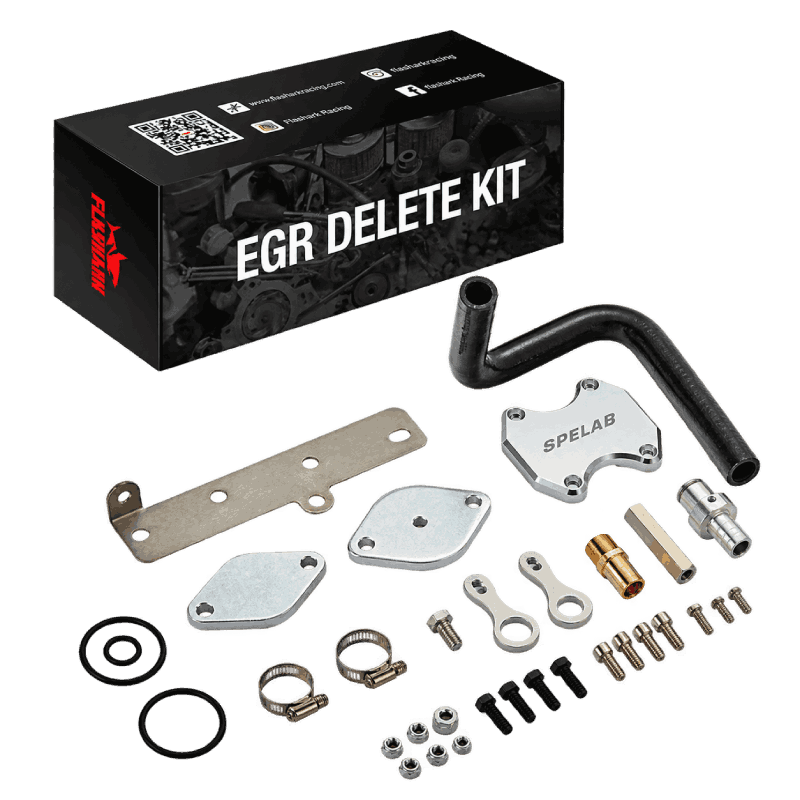
An EGR delete changes the 6.0L Power Stroke's exhaust gas recirculation path by disabling or removing emissions equipment. It does not repair the underlying cause of coolant loss, rough running, or poor fuel economy, and it can make an emissions certified road vehicle noncompliant. Diagnose the EGR valve, cooler, cooling system, and related faults before choosing a repair.
- The EGR system routes a controlled portion of exhaust back into the intake to reduce nitrogen oxide emissions.
- A failing valve or cooler can create symptoms that need diagnosis; a delete is not a reliable shortcut to finding the fault.
- There is no universal horsepower, MPG, temperature, or engine life gain.
- For a road vehicle, consider an emissions compliant repair and check applicable rules before changing the system.

How the 6.0L Power Stroke EGR system works
Exhaust gas recirculation sends a metered portion of exhaust through the EGR cooler and valve into the intake under operating conditions chosen by the engine controls. Diluting the intake charge reduces peak combustion temperatures and helps control NOx emissions. The EGR system is separate from the engine's basic fuel and air supply; the original article's description of recirculation as a way the truck generates power is inaccurate.
Potential benefits people associate with a 6.0 Power Stroke EGR delete
1. Reducing exposure to a failed EGR cooler or sticking valve
A failed cooler can contribute to coolant loss, while a sticking valve can contribute to drivability complaints. Removing components may eliminate those particular failure points, but it does not identify or fix another cooling, oil, injector, turbo, or head gasket problem. On an emissions certified road vehicle, replacing or repairing the faulty component is the appropriate path to evaluate.
2. Fuel economy and power claims
Some owners look for a 6.0 Power Stroke MPG or power change after an EGR delete. Results depend on vehicle condition, calibration, use, and how any fault was repaired. The original claim of up to 20% better fuel economy has no supporting test here and should not guide a purchase. Compare measured fuel use and diagnose faults before attributing a change to EGR.
3. Temperature and cooling claims
Removing exhaust recirculation does not guarantee a lower engine operating temperature. Coolant temperature, exhaust gas temperature, and combustion temperature are different measurements. A blocked oil cooler, cooling fault, or calibration issue needs its own diagnosis. Do not use a single temperature claim as a substitute for recorded data.
4. Cost and installation expectations
The total cost depends on the actual repair, parts, labor, diagnostics, and local requirements. The original fixed parts price and few hour installation estimate are outdated and unverified. Request a written diagnosis and quote that identifies which component failed and what work will restore compliant operation.
Drawbacks and limits of a 6.0 Power Stroke EGR delete
1. Emissions and road use restrictions
Disabling or removing an emissions control can violate U.S. federal law for an emissions certified motor vehicle, and state requirements may also apply. EPA identifies EGR blocking devices as potential defeat devices. A label such as “off road use” does not by itself make road use lawful. Check the vehicle's certification and applicable rules before making any change.
2. It will not solve every performance problem
Hard starting, low power, smoke, coolant loss, and rough idle have multiple possible causes. A stuck EGR valve is one possibility, but a delete cannot be assumed to solve those symptoms. Scan for diagnostic trouble codes and test the relevant systems before buying parts.
3. Calibration, fault codes, and monitoring
Changing an emissions system may trigger diagnostic codes or change how onboard monitoring responds. The result varies with vehicle configuration and calibration. This article cannot promise a particular check engine light or tuning outcome.
4. Power and exhaust temperature are not predictable from a kit alone
The original article says exhaust temperature may rise and horsepower may fall, while also claiming immediate power gains and lower operating temperature. Those outcomes cannot all be promised for every truck. Measure the affected system under comparable conditions and repair diagnosed faults.
Repair choices at a glance
| Choice | What it addresses | Check before deciding |
|---|---|---|
| Diagnose and replace a faulty EGR valve | A confirmed valve fault | Codes, command tests, wiring, and intake condition |
| Diagnose and replace a faulty EGR cooler | A confirmed cooler leak or restriction | Coolant loss, pressure tests, oil cooler condition, and root cause |
| Inspect the cooling and oil systems | Related overheating or coolant complaints | Measured temperatures, restrictions, and service history |
| EGR delete | Changes the emissions system rather than diagnosing a fault | Vehicle certification, legal restrictions, configuration, and unresolved faults |
Technician's note: Record fault codes and operating data before replacing components. Coolant loss or overheating should be investigated promptly; continued operation can worsen damage.
Frequently asked questions
Q1. What does an EGR delete do on a 6.0 Power Stroke?
A1. It disables or removes the exhaust gas recirculation path, changing an emissions control system rather than repairing every possible engine fault.
Q2. Does a 6.0 Power Stroke EGR delete add horsepower?
A2. No fixed horsepower gain can be promised. A diagnosed fault, vehicle condition, and calibration affect the result.
Q3. Will an EGR delete improve MPG?
A3. There is no reliable universal MPG increase. Compare measured fuel use and diagnose existing faults first.
Q4. Will an EGR delete lower coolant temperature?
A4. Not necessarily. Coolant temperature depends on the cooling system and operating conditions, so test the cause of overheating.
Q5. Can a bad EGR cooler cause coolant loss?
A5. A leaking EGR cooler can be one cause of coolant loss, but pressure testing and diagnosis are needed to confirm it.
Q6. Can a sticking EGR valve cause rough running?
A6. It can contribute to drivability symptoms, but codes and component tests are needed because other faults can look similar.
Q7. Does an EGR delete fix a hard start?
A7. It should not be assumed to fix a hard start. Fuel, electrical, and other engine faults also need evaluation.
Q8. Will a delete trigger a check engine light?
A8. It may trigger diagnostic codes or monitoring issues; the outcome depends on the vehicle and calibration.
Q9. Is an EGR delete legal for a road driven truck in the United States?
A9. Disabling an emissions control on an emissions certified road vehicle can violate federal law, and state rules may also apply.
Q10. What should I check before buying parts?
A10. Confirm the vehicle configuration, scan codes, test the EGR and cooling systems, and obtain a written diagnosis and compliant repair quote.

Steven Chen
Automotive Performance Specialist | Engine & Exhaust Systems
Steven focuses on practical engine performance, exhaust fitment, and real-world upgrade paths for classic and modern enthusiast vehicles. He reviews small-block Ford, LS, truck, and street/strip applications with one goal in mind: helping builders choose parts that actually work together. His philosophy: "Good power starts with the right combination, not the biggest part."