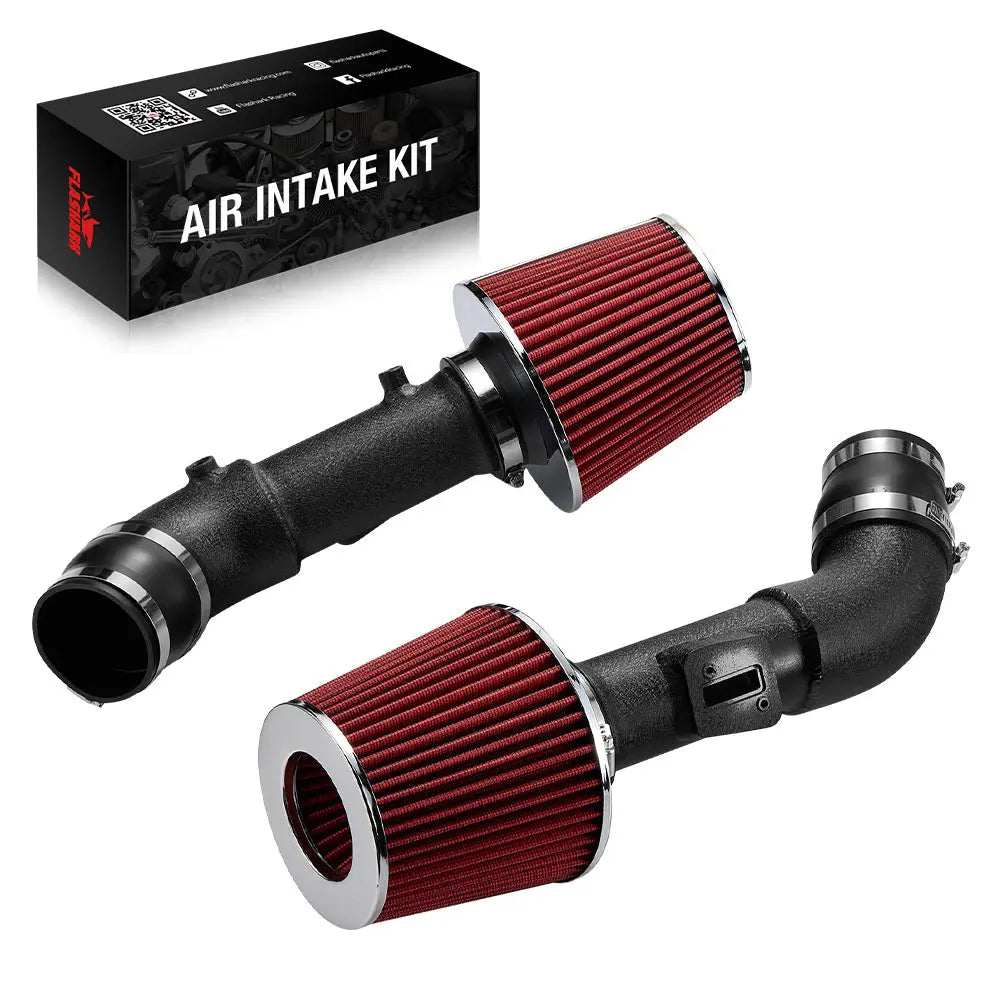
A 2017 Ford F-250 with the 6.7L Power Stroke diesel uses an EGR system to help control emissions. Flashark lists an Ordinary EGR valve and cooler removal hardware variant for the 2017 model year, but a kit label alone cannot establish that removal is legal, necessary, or beneficial for a particular truck. If you are investigating an EGR fault, diagnose the cause and check the applicable emissions rules before considering any hardware change.
- Confirm a 2017 F-250 and 6.7L Power Stroke, then select the correct year-group variant.
- This product is EGR hardware, not a DPF pipe or tuner.
- No fixed horsepower, fuel-economy, engine-life, or temperature gain is established.
- For an on-road truck, start with diagnosis and emissions-compliant repair.

Reasons to Diagnose the Ford Power Stroke EGR System First
Exhaust gas recirculation (EGR) routes a controlled portion of exhaust back into the intake under selected operating conditions, helping reduce nitrogen oxide emissions. The EGR valve, cooler, sensors, and coolant circuit work together with the truck's engine control strategy. Deposits, coolant leaks, sensor faults, or a failed valve can cause symptoms, but similar symptoms can arise elsewhere in the intake, cooling, or exhaust systems.
Read the diagnostic trouble codes and freeze-frame data, inspect coolant level and leaks, and follow the Ford service procedure for the truck's exact configuration. A clogged or failed component does not by itself prove that the entire EGR system must be removed. Repair or replacement may address the fault while preserving the emissions equipment.

What Does the Flashark EGR Kit Contain?
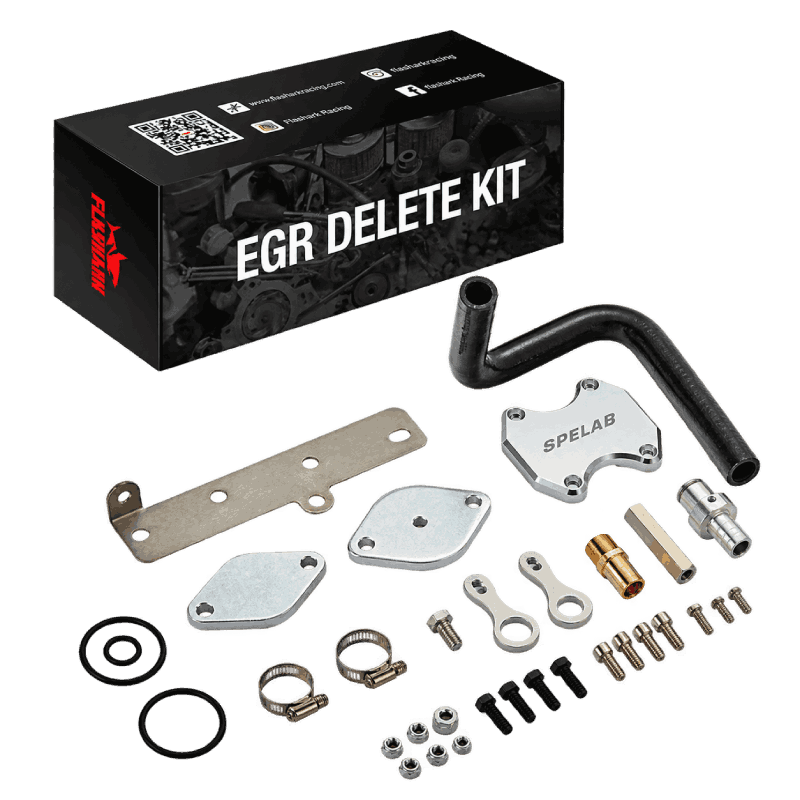
The current Flashark 6.7L Power Stroke EGR kit listing offers Ordinary and Upgraded variants. For a 2017 truck, its selector groups 2017–2023 with 2011–2014; 2015–2016 uses a separate configuration. The listing describes EGR block-off plates, coolant-routing hardware, a pressure-sensor bracket, clamps, and fasteners. Check the selected variant's current parts list and photos before purchase because finish and year group vary.
This is EGR valve and cooler removal hardware. The product listing says a DPF pipe and tuner are not included. A 2017 F-250 must also have the 6.7L diesel engine for this topic to apply; the F-250 name alone is insufficient to confirm compatibility. The broader EGR kit collection contains other applications and should not be treated as a fitment guide for this vehicle.

Is the 2017 F-250 EGR Delete Kit the Right Choice?
The useful decision is whether the truck has a confirmed fault, whether a compliant repair can solve it, whether the chosen hardware matches the vehicle, and whether the proposed use complies with current law. The kit should not be chosen on a promise of a percentage increase in mileage or power: the original article's 50% and 10% figures have no supporting test data.
| Question | What to verify | Why it matters |
|---|---|---|
| Vehicle | 2017 F-250, 6.7L Power Stroke, exact variant and current fitment listing | Similar looking parts may use different year-group hardware. |
| Fault | Codes, coolant pressure, valve and cooler condition | A symptom does not identify the failed component by itself. |
| Contents | Selected SKU, plates, hoses, brackets and fasteners | A tuner or DPF pipe is not part of this EGR hardware listing. |
| Use and law | Federal, state and local requirements for this vehicle | An “off-road use only” label is not a blanket exemption. |
Engine durability
EGR-related deposits and cooler failures are legitimate diagnostic concerns. Removing hardware, however, does not establish a longer engine life. Maintenance history, the actual fault, calibration, installation quality, and other systems all affect the outcome.
Fuel economy
Fuel use varies with load, driving cycle, tires, gearing, condition, and calibration. The kit listing provides no controlled before-and-after test for a 2017 F-250. Do not use a promised fuel saving to justify the purchase.
Engine temperature
An EGR cooler exchanges heat with engine coolant, but removing it does not guarantee a lower engine or combustion temperature. If temperatures are abnormal, diagnose the cooling system and the reported temperature source first.

Ordinary Versus Upgraded EGR Kit
The product selector includes both Ordinary and Upgraded names. The article previously attributed a five-degree temperature reduction to a pass-through plate, but no test conditions or supporting measurement are provided. The current listing does not document a complete part-by-part comparison, so compare the selected variant's photos and written contents or ask Flashark to confirm the hardware difference in writing. Do not infer performance from the name, color, or price.
The older upgraded kit link may refer to a separate legacy listing; verify its present destination and year range before using it as the basis for an order.

Is EGR Removal the Only Option for an EGR Fault?
No. Depending on the diagnostic result, an emissions-compliant repair may involve a valve, cooler, gasket, hose, sensor, wiring, or another cause outside the EGR system. Have a qualified diesel technician identify the fault and check the current Ford service information. Replacing a failed component can preserve the factory emissions system on a road-use truck.
Physical removal may also lead to diagnostic trouble codes, warning lights, derate behavior, or drivability problems when the vehicle calibration expects factory EGR hardware. The presence of a sensor bracket or block-off plate does not prove that the engine control module will accept the change. Do not assume a tuner is included or that any modification is legally permitted.

Final Words
For a 2017 F-250 6.7L Power Stroke, diagnose the EGR concern first and compare compliant repair options. If you are evaluating Flashark hardware for an application that is lawful where the vehicle is used, confirm the exact variant and package contents with the current product listing and a qualified technician. The original article's universal performance and installation assurances should not be used as purchase criteria.
Frequently Asked Questions
Q1. Does this kit fit every 2017 F-250?
A1. No. Confirm that the truck has the 6.7L Power Stroke diesel, then check its exact model and the selected variant against the current product listing.
Q2. Is the 2017 F-250 variant the same as the 2015–2016 variant?
A2. No. The current selector groups 2017–2023 with 2011–2014 and lists a separate configuration for 2015–2016.
Q3. Does the kit include a DPF pipe or tuner?
A3. No. The current product listing describes EGR valve and cooler removal hardware; a DPF pipe and tuner are separate products.
Q4. Will an EGR kit improve fuel economy by 50%?
A4. There is no supporting controlled test for that figure on this page. Fuel economy depends on the vehicle, load, route, condition, and calibration.
Q5. Will the kit add 10% power?
A5. No verified test on this page supports a fixed power increase. Diagnose the truck and request vehicle-specific evidence before relying on any performance claim.
Q6. Does an upgraded kit lower temperature by five degrees?
A6. The page provides no test method or conditions for that claim. Ask for a documented comparison of the selected hardware variants.
Q7. Is an EGR fault always caused by soot buildup?
A7. No. A valve, cooler, sensor, coolant leak, wiring fault, or another system can produce similar symptoms. Diagnostic codes and inspection are needed.
Q8. Can a failed EGR component be repaired instead?
A8. Often the fault can be addressed through diagnosis and an emissions-compliant repair or replacement. The correct remedy depends on the failed component.
Q9. Will removing EGR hardware trigger a warning light?
A9. It may. The factory calibration can detect missing or changed EGR operation, so do not assume the truck will run without codes or drivability problems.
Q10. Does “off-road use only” make EGR removal legal?
A10. No. That label does not create an automatic exemption from federal or other applicable emissions rules. Check the law for the vehicle and its intended use.
Q11. What should I confirm before ordering?
A11. Confirm the engine, year-group variant, selected SKU, current package contents, the diagnosed fault, and whether the proposed use is lawful where the vehicle operates.

Steven Chen
Automotive Performance Specialist | Engine & Exhaust Systems
Steven focuses on practical engine performance, exhaust fitment, and real-world upgrade paths for classic and modern enthusiast vehicles. He reviews small-block Ford, LS, truck, and street/strip applications with one goal in mind: helping builders choose parts that actually work together. His philosophy: "Good power starts with the right combination, not the biggest part."