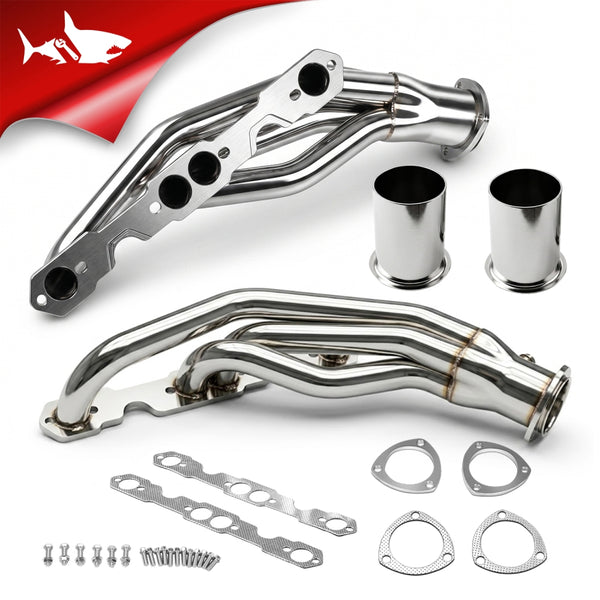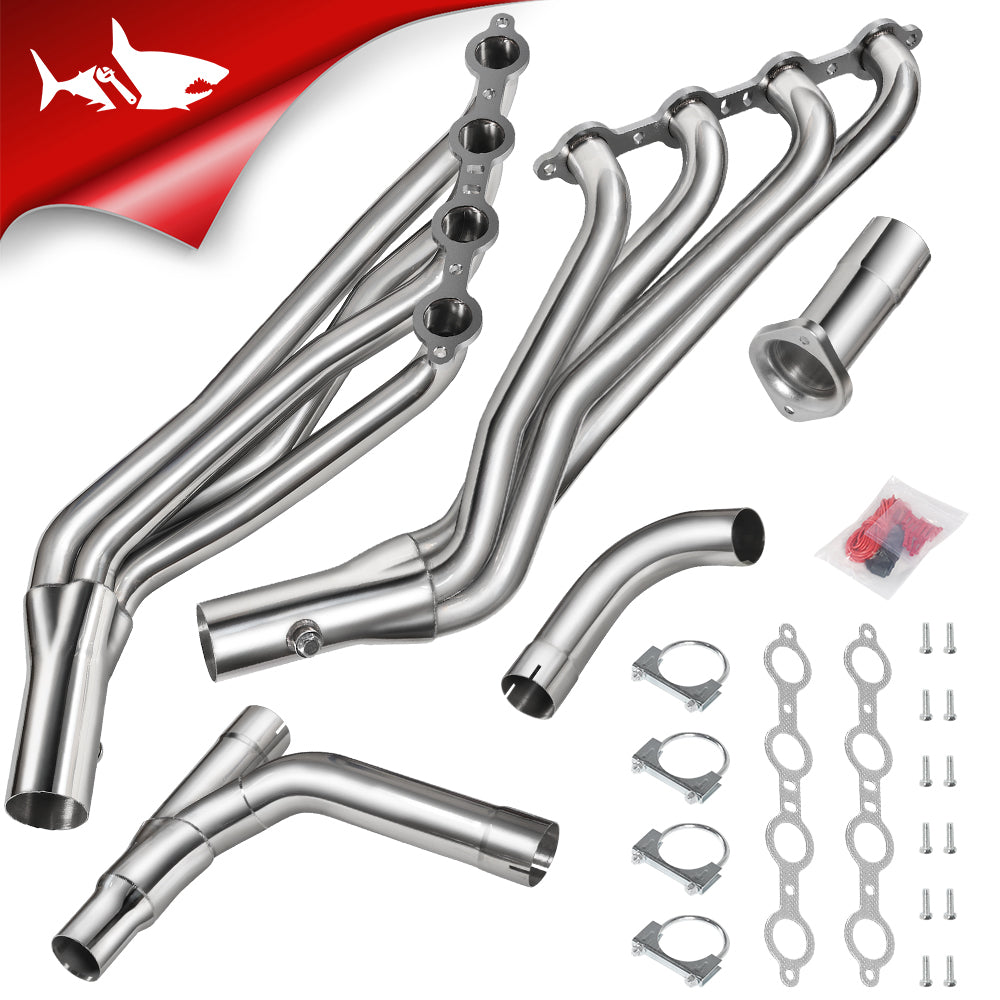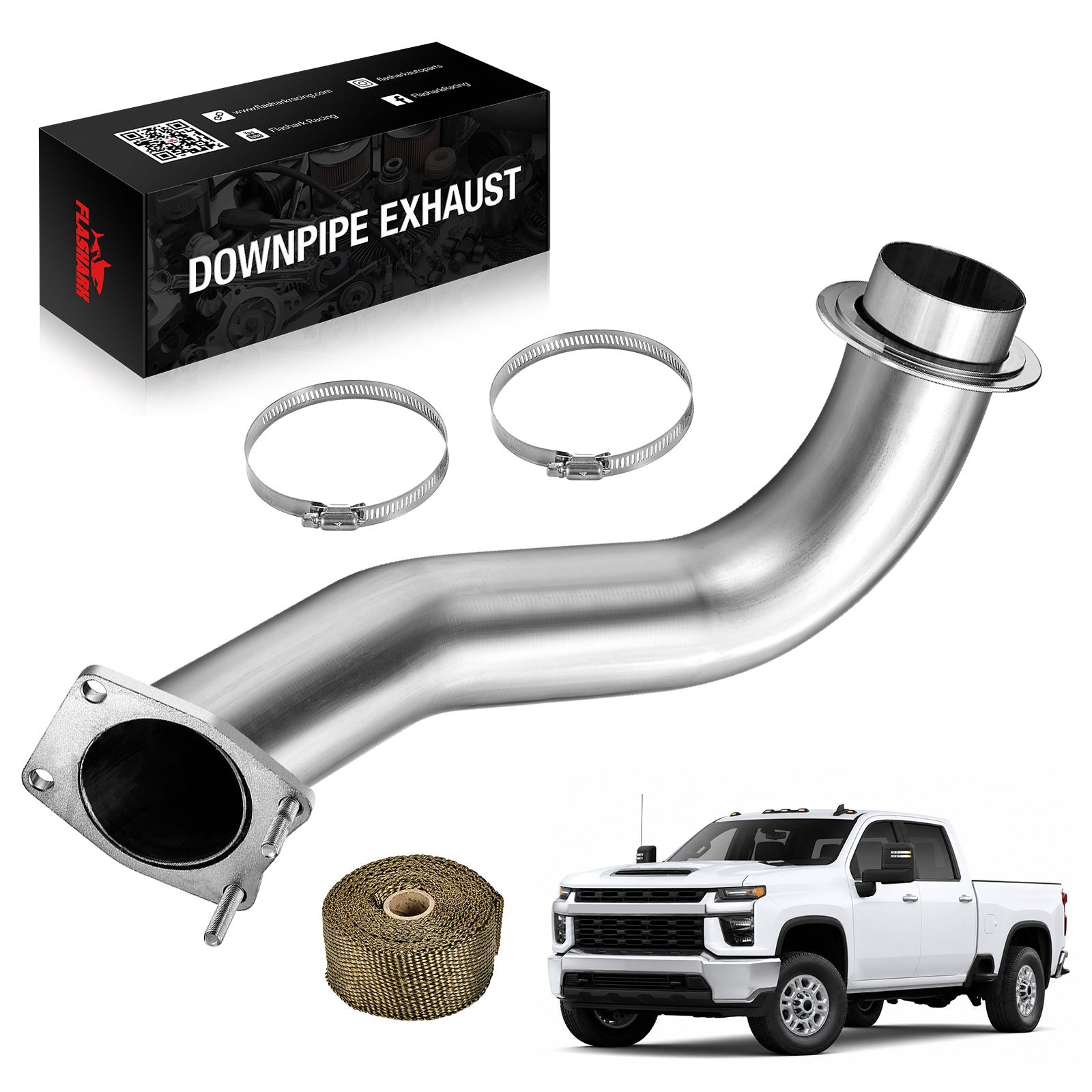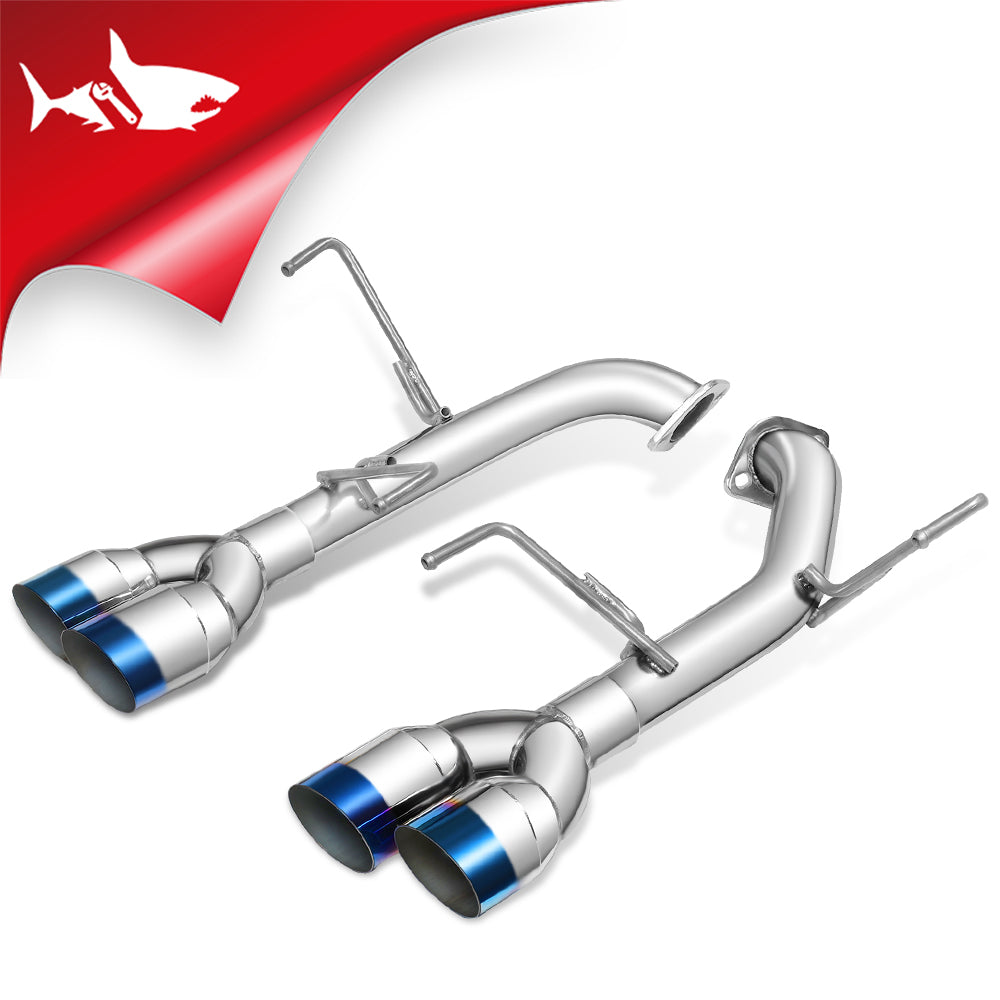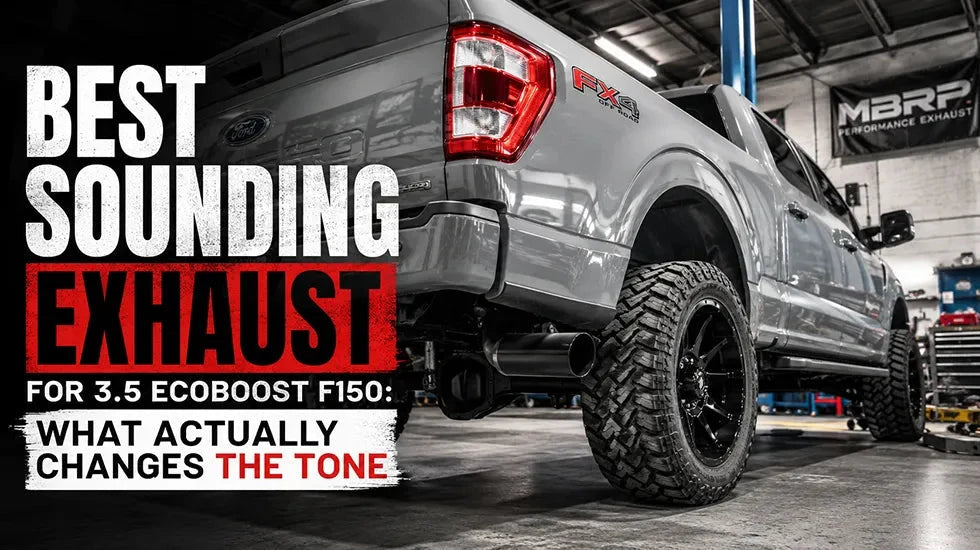
The factory 3.5 EcoBoost is a torque monster with the volume knob turned almost all the way down. Put your foot into it and the truck moves hard, but the stock tailpipe barely tells the story.
That is why so many owners start looking for the best sounding exhaust for 3.5 EcoBoost F150 trucks. Then the trouble begins. One video makes a muffler delete sound deep. Another makes the same setup sound like an angry shop vacuum. Someone on a forum says to remove the resonator. Someone else says that ruined the truck at 70 mph.
Here is the blunt truth: the loudest EcoBoost exhaust is rarely the best-sounding one. The right setup has to manage pulse timing, turbo noise, high-RPM rasp, low-frequency drone, pipe length, muffler volume, and where the exhaust exits. Miss one of those, and the truck may sound great during a ten-second cold-start clip but wear you out on the freeway.
Bottom Line Up Front
- Best choice for most daily drivers: a properly fitted 3-inch cat-back with a full-size muffler, useful resonation, and an exit located behind the passenger compartment.
- Best for a deeper tone: retain a resonator or use a tuned resonated mid-pipe instead of deleting every sound-control component.
- Best for aggressive sound: choose a freer-flowing cat-back or shorter muffler, but expect more cold-start volume and a greater chance of rasp.
- Best for towing and highway use: prioritize low-RPM drone control over maximum exterior volume.
- Best for smoother high-RPM tone: an equal-length or trombone-style layout may help on compatible applications, but fitment is highly platform-specific.
- Worst shortcut: cutting out the resonator and muffler at the same time, then trying to diagnose which missing part caused the bad tone.
Why a 3.5 EcoBoost Will Never Sound Exactly Like a 5.0 V8
Let us get this out of the way before anybody spends money chasing the wrong target.
The 3.5 EcoBoost is a 60-degree, twin-turbocharged V6. The 5.0 Coyote is a naturally aspirated cross-plane V8. Different cylinder count. Different firing frequency. Different exhaust pulse spacing. Different sound before the gases even reach the first clamp.
Then there are the turbochargers.
On a naturally aspirated engine, the exhaust pulses leave the cylinder head and move directly through the exhaust system. On the EcoBoost, those pulses first drive two turbine wheels. The turbines extract energy, soften some of the sharp pressure waves, and alter what reaches the downstream exhaust.
That is why a 3.5 EcoBoost can have a strong turbo-truck sound, but it will not produce the same uneven bass and traditional burble as a 5.0 V8. Trying to force that sound by deleting every muffler and resonator usually exposes more V6 rasp. It does not create two extra cylinders.
Mechanic’s Note: Stop asking whether the exhaust makes the EcoBoost sound like a V8. Ask whether it makes the EcoBoost sound deeper, cleaner, and more deliberate. That is a target the truck can actually hit.

The Better Goal: A Clean Turbo-Truck Sound
A well-matched 3.5 EcoBoost exhaust should deliver:
- A fuller cold start without an explosive bark.
- A low, controlled idle rather than a hollow metallic pulse.
- More presence under boost.
- Noticeable turbo character without sounding like an exhaust leak.
- Limited rasp as the engine moves through the upper rpm range.
- No constant booming inside the cab at normal cruising speed.
That last point matters. A truck can sound mild outside and still drone badly inside. Exterior volume and cabin resonance are related, but they are not the same thing.
What Actually Changes the Tone of a 3.5 EcoBoost F150?
The muffler gets blamed for nearly everything, but the muffler is only one piece of the acoustic system. The final note is shaped by the turbochargers, catalytic converters, downpipes, merge section, resonator, muffler, pipe diameter, wheelbase, cab, bed length, and tailpipe exit.
Change one part and the tone shifts. Change three parts at once and you may have no idea which one caused the rasp.
1. The Turbochargers Filter the Exhaust Pulse
The two turbine wheels sit directly in the exhaust stream. They absorb energy that would otherwise continue down the pipe as stronger pressure waves.
This produces three common EcoBoost characteristics:
- The stock truck remains relatively quiet despite strong torque output.
- A freer-flowing system can reveal more whistle and turbine sound.
- A straight pipe may get much louder without gaining the rich pulse structure of a naturally aspirated V8.
Listen to a 3.5 EcoBoost under light throttle, then under real boost. The character changes sharply. A good exhaust takes advantage of that. It stays controlled when the truck is loafing along, then opens up when exhaust mass flow increases.
2. Downpipes Change More Than Volume
Downpipes sit close to the turbochargers, so they affect the sound before the two banks have traveled through the full rear exhaust system. Changes here can bring out substantially more turbo whistle, sharper transient sound, and a more mechanical note.

They can also bring problems:
- More rasp if the rear system does not control higher frequencies.
- More cold-start volume.
- Potential oxygen-sensor or check-engine-light issues depending on the design.
- Calibration concerns on heavily modified setups.
- Emissions and inspection problems if catalytic converters are altered.
A cat-back and a downpipe are not interchangeable upgrades. A cat-back begins farther downstream and normally leaves the factory catalytic converters and oxygen-sensor arrangement untouched. For a practical under-truck explanation, see this Ford F-150 exhaust diagram and cat-back replacement guide.
3. Equal-Length and Trombone Pipes Change Pulse Arrival
This is where things get interesting.
An equal-length or trombone-style section adds pipe length to one side so the exhaust pulses from both banks reach the merge more evenly. Instead of merely making the system louder, it changes how the pulses combine.
On the right application, that can create:
- A smoother upper-rpm note.
- Less uneven, blatty exhaust character.
- A more organized sound when the engine is under load.
- A different pitch without using a dramatically quieter muffler.
Listen carefully, though. Many trombone products are built for a specific Raptor, High Output Limited, wheelbase, or factory exhaust layout. A part designed for a 2017–2020 Raptor is not automatically a bolt-on solution for every standard F-150 with a 3.5 badge on the fender.
Equal length describes a design principle, not universal fitment.
4. The Resonator Controls the Frequencies That Make You Regret the Upgrade
A muffler primarily reduces broad exhaust volume. A resonator is more targeted. Depending on its size and construction, it works on frequency ranges that cause rasp, boom, or an unpleasant metallic edge.
This is why deleting the resonator can have mixed results.
You may gain:
- A louder cold start.
- More audible turbo sound.
- A more direct exhaust note under acceleration.
You may also gain:
- A hollow tone around 1,500–2,100 rpm.
- Highway drone in top gear.
- More high-rpm rasp.
- A sound that is louder but not deeper.
Garage Case: Resonator-Delete Regret
“I cut out the resonator because the truck sounded too quiet in videos. For the first ten minutes, I loved the louder startup. Then I got on the highway. Between about 1,700 and 2,000 rpm, the entire rear of the cab hummed. I could not hold a conversation without raising my voice.”
That is a common pattern on a long-geared truck. Reinstalling a substantial resonator or adding a properly sized resonated section can keep much of the acceleration sound while knocking down the narrow frequency band that causes the headache.
Warning: Do not delete the resonator and install the shortest available muffler on the same day. Change one acoustic component, drive the truck through its normal rpm range, and then decide what still needs adjustment.
5. Muffler Design Determines Character as Much as Loudness
Two mufflers with the same inlet diameter can sound completely different.

Straight-Through Mufflers
A straight-through muffler usually uses a perforated core surrounded by sound-absorbing material. Exhaust gases follow a relatively direct path.
Typical results include:
- Good flow capacity.
- More turbine and exhaust detail.
- A smoother, packed sound when the body is large enough.
- Increasing volume as the muffler body gets shorter.
A long-body straight-through muffler is often a smart choice for a daily-driven EcoBoost. It can add presence without letting every harsh frequency out of the pipe.
Chambered Mufflers
Chambered designs reflect exhaust waves through internal passages. Some produce a strong low-frequency truck note. Some also create a nasty cabin boom when paired with a turbo V6 and tall highway gearing.
This is not a good-versus-bad argument. It is a matching problem. A chambered muffler that sounds excellent on a 5.0 may emphasize the wrong frequencies on a 3.5 EcoBoost.
Long-Body vs. Short-Body Mufflers
Here is the rule people do not like hearing: the smallest muffler is not automatically the performance choice.
A short body usually means less space to absorb and redirect sound. The truck gets louder. It may also get thinner, buzzier, and more tiring.
A larger muffler body has more acoustic volume to work with. That often gives the exhaust a deeper note and better control during steady-speed driving.
6. Pipe Diameter Changes Flow, Pitch, and Resonance
Three-inch tubing is common on aftermarket F-150 cat-back systems. It provides useful flow capacity without becoming absurdly large for a stock-turbo street truck.
But diameter does not work alone.
A 3-inch pipe with a substantial muffler and full-length tailpipe can sound mature. A 3-inch pipe with a tiny muffler and an exit under the cab can sound raw and boomy. Increasing diameter changes gas velocity, wall area, pipe volume, and the frequencies the system naturally reinforces.
For that reason, “bigger pipe equals deeper sound” is only half a sentence. The rest is: if the muffler, resonator, total length, and exit are matched to it.
7. Single Exit, Dual Split Exit, and Side Exit Do Not Sound the Same
A single side exit behind the rear tire usually keeps sound farther from the cab than a before-tire dump. A dual split-rear system can spread the exterior sound and change how it reflects from walls, trailers, and the road.
Exit position affects what the driver hears because the truck body acts like a large reflecting surface. Put the outlet closer to the cab and more sound can bounce into the floor and rear wall.
Before choosing a layout, read the practical breakdown of F-150 side-exit exhaust pros and cons, especially if the truck tows or spends hours on the interstate.

8. Wheelbase, Cab, and Bed Length Change the Acoustic Result
This one catches buyers constantly.
A SuperCrew short-bed truck and a Regular Cab long-bed truck may use different extension lengths. That changes total pipe length. Total pipe length changes resonance. The cab itself also changes what the occupants hear.
Check all of the following before ordering:
- Model year.
- Standard 3.5 EcoBoost or High Output version.
- Regular Cab, SuperCab, or SuperCrew.
- Bed length.
- Wheelbase.
- Factory single-exit or dual-exit configuration.
- Standard F-150, Raptor, Tremor, Limited, or PowerBoost application.
- Flat bumper or bumper with factory exhaust cutouts.
Do not buy by engine size alone. “Fits the 3.5 EcoBoost” is not enough information.
Best 3.5 EcoBoost Exhaust Setup by Driving Style
There is no single winner for every truck because the owner who commutes 60 miles a day has a different definition of “good” than the owner who drives to weekend meets.
Best Overall Setup for a Daily Driver
For most owners, the safe combination is:
- A complete 3-inch cat-back.
- A full-size straight-through or acoustically tuned muffler.
- A retained factory resonator or a purpose-built resonated section.
- A full-length tailpipe.
- An exit behind the passenger compartment.
This setup should stay calm during light throttle and become noticeably stronger when the turbos are moving real air. That is the balance most drivers actually want, even if they initially say they want the truck “as loud as possible.”
Best Setup for a Deep Tone Without Excessive Volume
Use a larger muffler body and keep effective resonation in the system. A polished or black tip will change the appearance, but the tip finish will not rescue a bad muffler-and-resonator combination.
For 2015–2020 owners, the Flashark 2015–2020 F-150 3-inch cat-back exhaust is one value-focused example. It uses T-304 stainless construction, a 3-inch main section, and dual 2.5-inch tailpipe sections with side-exit and split-exit choices.
Fitment still needs attention. The system excludes the Raptor, 2019–2020 Limited models, and the Standard Cab with a 6.5-foot bed. That is exactly why the vehicle configuration matters more than the engine badge alone.
Best Aggressive Setup
A less-resonated cat-back, shorter muffler, or front-of-tire exit will increase exterior volume quickly.
Expect trade-offs:
- Louder cold starts.
- More sound during light acceleration.
- Greater rasp risk near the top of the rev range.
- More attention from neighbors and law enforcement.
- A higher chance of cabin resonance.
This type of system makes sense for a weekend truck or an owner who accepts the compromise. It is a poor choice for someone who regularly starts the truck at 5:30 a.m. beside a bedroom window.
Best Setup for More Turbo Whistle
First decide which side of the engine you want to hear.
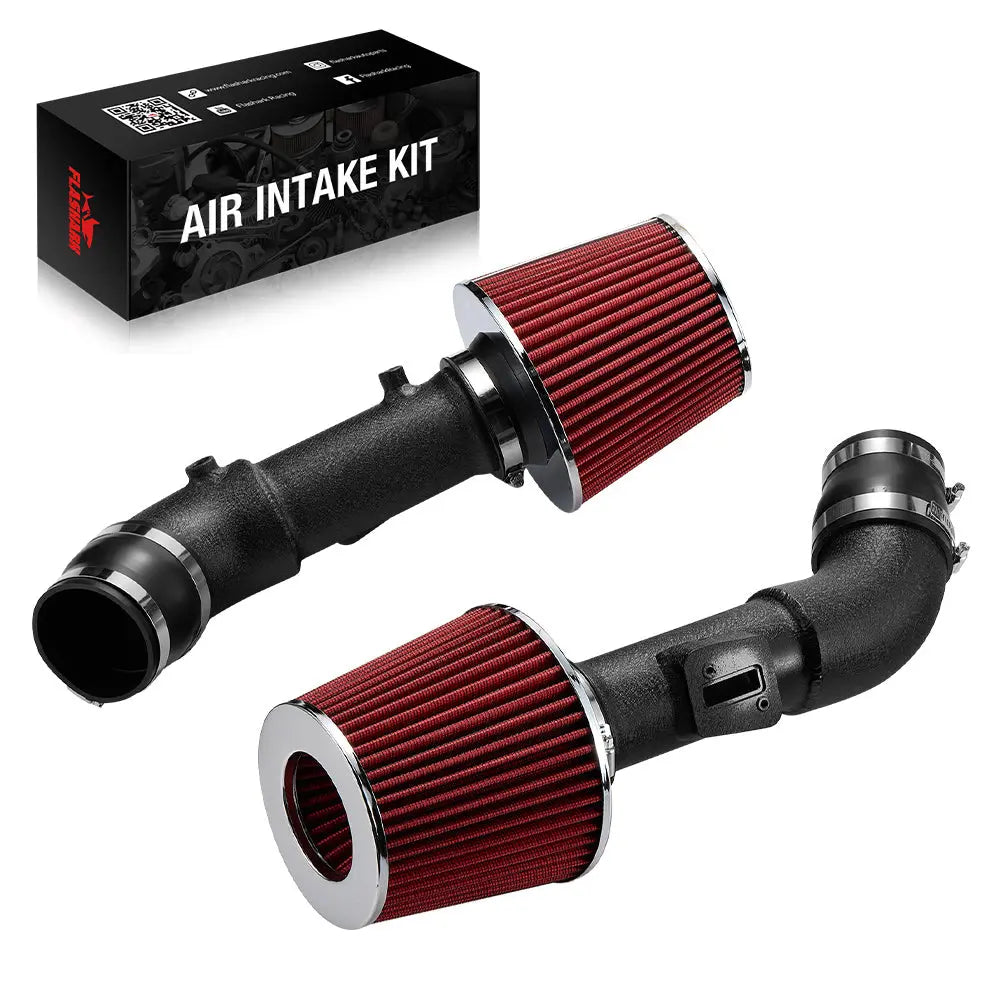
A freer-flowing intake emphasizes compressor-side noises: air rush, spool, and bypass-valve sound. Downpipe changes emphasize turbine-side whistle and exhaust character. A rear cat-back mostly changes what comes out of the tailpipe.
Many owners who say they want a “louder exhaust” are actually chasing more audible turbo activity. In that case, an intake and a moderate cat-back may be more satisfying than an extremely loud muffler delete.
Best Setup for Towing and Long Road Trips
Choose a moderate system with serious drone control. When towing, the transmission may hold the engine in a narrow rpm band for minutes at a time. A small resonance you barely notice unloaded can become unbearable while climbing a grade with a trailer.
Look for:
- A substantial muffler.
- A resonated head pipe or retained factory resonator.
- A rearward exit.
- Secure hangers with adequate clearance.
- No pipe contact with the frame, spare tire, heat shields, or crossmembers.
Best Budget Starting Point
Replace the muffler while keeping the factory resonator. Drive the truck for at least several full heat cycles and test it at the exact speed where you normally cruise.
That approach is less exciting than cutting everything out. It is also less likely to make you pay the exhaust shop twice.
When you are ready to compare applications instead of individual sound clips, browse the available Ford cat-back exhaust systems by model year and configuration. Owners comparing several platforms can also review the broader range of cat-back exhaust systems for trucks and performance cars.
Factory vs. Modified F150 Exhaust: What Actually Changes?
| Parameter | Factory Exhaust | Moderate Cat-Back | Aggressive / Low-Resonation Setup |
|---|---|---|---|
| Primary goal | Low noise and broad market comfort | More tone with daily drivability | Maximum sound and response |
| Main pipe size | Varies by year and configuration | Often 3-inch on F-150 applications | Usually 3-inch, sometimes with shorter routing |
| Cold-start volume | Low | Moderate | High to very high |
| High-rpm rasp risk | Very low | Low when properly resonated | Medium to high |
| Highway drone risk | Very low | Low to medium | Medium to high |
| Turbo whistle | Subdued | More noticeable under load | Pronounced, especially with upstream changes |
| Typical power expectation | Baseline | Usually modest on a stock-turbo truck | Depends heavily on tuning and upstream restrictions |
| Best use | Quiet commuting | Daily driving, towing, street use | Weekend or sound-focused build |

Featured F-150 Option
Flashark Cat-Back Exhaust Collection
Compare complete cat-back systems, including the 2015–2020 F-150 2.7L, 3.5L, and 5.0L application shown here. Available configurations include polished side exit, polished split exit, and black split exit.
From $299.99 $366.00
Price shown for the featured 2015–2020 F-150 configuration. Variant pricing, availability, and fitment may change.
Browse Cat-Back Exhaust SystemsBorla vs. CORSA vs. AWE vs. MBRP vs. Flashark
Brand matters, but not as much as matching the right product line, wheelbase, and sound level to your truck. Each company approaches the problem differently.
Borla
Borla commonly separates systems by sound level. Touring is generally the mild end, S-Type sits in the middle, and ATAK targets buyers who want an aggressive cold start and harder acceleration note.
Do not assume every sound level is available for every EcoBoost year or wheelbase. Borla fitment can be very specific, including engine, cab, bed, and exit position.
Best suited to: buyers who want a recognizable sound-level hierarchy and premium T-304 stainless construction.
CORSA
CORSA leans heavily into cruise-speed sound control. Its EcoBoost systems are typically sold in a Sport sound level, with application-specific exits and wheelbase requirements.
On one current 3.5T F-150 application, CORSA states that the system can reach up to 14 dB over stock under heavy acceleration while maintaining near-stock cabin volume during steady driving. That is an application-specific claim, not a number to paste onto every generation.
Best suited to: owners who want a strong exterior note but place highway comfort near the top of the list.
AWE
AWE uses its 180 Technology in selected systems to target drone while maintaining a straight-through exhaust path. Available combinations can include side-exit and dual-exit layouts, but bumper style, wheelbase, Tremor, Raptor, and PowerBoost exclusions need close attention.
Best suited to: drivers who want an aggressive tone paired with dedicated acoustic control.
MBRP
MBRP offers several material and sound-profile tiers. Street Profile systems usually aim for a deeper note that remains manageable. Race Profile systems turn the volume up and accept more compromise.
The brand also offers several exit configurations, including dual side exit, rear exit, and pre-axle layouts on selected trucks.
Best suited to: buyers who want more choices in material, price, exit location, and sound intensity.
Flashark
Flashark sits in the value-focused part of the market. The 2015–2020 F-150 system uses a 3-inch main pipe, mandrel bends, T-304 stainless construction, and polished or black exit options.
Flashark lists a product-specific gain of 16.28 horsepower and 13.04 lb-ft of torque at 4,200 rpm. Treat those numbers as a manufacturer test result, not a guaranteed gain for every truck. Dyno type, weather, tire pressure, engine calibration, fuel, drivetrain loss, and the starting exhaust configuration can all move the result.
Best suited to: owners who want a complete bolt-on system and stainless construction without moving into four-figure premium-system pricing.
| Brand Approach | General Sound Direction | Main Buying Check | Good Match For |
|---|---|---|---|
| Borla | Touring to highly aggressive | Confirm sound level and exact application | Buyers who know how loud they want to go |
| CORSA | Aggressive under load, controlled at cruise | Wheelbase and exit configuration | Highway-driven trucks |
| AWE | Strong exterior note with drone-control focus | Bumper, trim, and wheelbase exclusions | Premium sound-focused builds |
| MBRP | Mild Street to loud Race profiles | Material tier and exit location | Buyers wanting broad configuration choices |
| Flashark | Deep, value-focused bolt-on upgrade | Year, cab, bed, and trim exclusions | Budget-conscious 2015–2020 owners |
How to Compare 3.5 EcoBoost Exhaust Sound Clips
Phone videos lie. Not intentionally, but they lie.
A phone microphone compresses loud transients, trims deep bass, changes gain automatically, and may emphasize the exact rasp you would barely notice in person. Then you play the clip through laptop speakers that cannot reproduce the low frequencies anyway.
Do Not Judge an Exhaust From Idle Revs
An unloaded rev in a driveway tells you almost nothing about how the system behaves on the road.
A useful sound test should include:
- Cold start from outside the truck.
- Warm idle.
- Light acceleration from 1,200 to 2,500 rpm.
- Moderate acceleration under boost.
- Wide-open throttle through at least one full gear.
- Inside-cab audio at 65, 70, and 75 mph.
- Light grade or towing load if that is how the truck is used.
- Deceleration and transmission downshifts.
Match the Truck Before Comparing the Sound
Try to compare the same:
- F-150 generation.
- Standard or High Output 3.5 EcoBoost.
- Cab and bed configuration.
- Wheelbase.
- Downpipe and catalytic-converter arrangement.
- Resonator status.
- Muffler and exit configuration.
A modified Raptor with an equal-length section is not a fair audio comparison for a stock-downpipe XLT with a basic side-exit cat-back.
Test the Frequency You Actually Drive In
Before buying, note the rpm your truck holds at your normal highway speed. Tire diameter, axle ratio, transmission gear, and towing load all affect that number.
If the truck cruises at 1,750 rpm, you need owner feedback from that rpm range. A system that is quiet at 2,200 rpm may still boom badly at 1,750.
Installation Mistakes That Ruin a Good Exhaust
Ordering by Engine Size Alone
This is the most expensive easy mistake.
The engine may be correct while the wheelbase is wrong. The wheelbase may be correct while the bumper cutouts are wrong. The cab and bed may match while the product excludes Raptor, Limited, Tremor, or PowerBoost models.
Read the full fitment description. Then measure the truck if there is any doubt.
Removing the Resonator Before Testing the New Cat-Back
Install the cat-back first. Tighten it correctly. Drive it. Let the packing and metal go through several heat cycles. Test cold start, city driving, highway cruising, and moderate boost.
Only then decide whether the resonator is holding back too much sound.
Owners who want to fine-tune an existing system should follow a one-change-at-a-time process. This guide on how to make a cat-back exhaust louder or quieter explains the available adjustments without turning the process into random cutting and welding.
Using the Shortest Muffler That Fits
Short mufflers look simple and aggressive. They also have less internal volume for sound control.
On a turbo V6, that can expose a sharp edge under boost. If daily comfort matters, start with more muffler than you think you need. It is easier to increase volume later than to put refinement back into a system that has none.
Placing the Outlet Under or Ahead of the Cab
A pre-axle dump may sound fantastic outside. Inside, the sound can hit the floor, reflect from the road, and enter the cab as low-frequency pressure.
The problem gets worse beside concrete barriers or when towing a large enclosed trailer that reflects sound forward.
Misdiagnosing Pipe Contact as Exhaust Drone
Garage Case: The “Drone” That Was Not Drone
“The new exhaust was fine at idle, but every time I accelerated uphill, the rear floor buzzed so badly that I thought I had bought the wrong muffler.”
In this common installation scenario, the tailpipe has shifted during tightening and sits a few millimeters from a crossmember or heat shield. Engine movement under load closes the gap, the pipe touches the chassis, and the truck body becomes a giant speaker. Re-centering the system and tightening the clamps from front to rear can eliminate the vibration without changing a single acoustic component.

Before blaming the muffler, inspect:
- Band-clamp orientation.
- Slip-joint insertion depth.
- Hanger preload.
- Spare-tire clearance.
- Heat-shield clearance.
- Crossmember and frame clearance.
- Tip clearance at the bumper.
- Soot marks around leaking joints.
Does a Cat-Back Add Horsepower to a 3.5 EcoBoost?
Yes, it can. No, you should not buy one expecting a miracle.
A cat-back reduces restriction behind the catalytic converters. On a stock-turbo truck with the factory calibration, the measured wheel-horsepower change is often modest. Sometimes it is a clean single-digit gain. Sometimes the difference is close to normal dyno repeatability.
Heavily tuned trucks moving more exhaust mass may benefit more because the rear system becomes a larger part of the total restriction.
Be careful with peak numbers. A test that shows an additional 10 horsepower at one rpm point does not mean the engine gained 10 horsepower everywhere. Look at the full torque curve, correction factor, test gear, air temperature, and whether the baseline and modified pulls were performed on the same day.
Realistic Expectation
- Stock or lightly modified truck: buy primarily for tone, appearance, corrosion resistance, and a small reduction in rear-system restriction.
- Tuned stock-turbo truck: the freer rear system may support stronger airflow, but tuning and upstream components still control the result.
- Upgraded-turbo truck: pipe diameter, muffler flow capacity, and downpipe design become more important.
Also watch the butt dyno. More noise makes a truck feel faster. That does not mean the stopwatch or chassis dyno agrees.
Do You Need a Tune After Installing a Cat-Back?
A conventional cat-back normally does not require a tune because it begins downstream of the factory catalytic converters and oxygen sensors. The engine control module still sees the original emissions-monitoring arrangement.
A muffler swap or resonator change also normally does not require recalibration.
Downpipe and catalyst-related changes are different. They can affect:
- Oxygen-sensor readings.
- Exhaust backpressure near the turbochargers.
- Boost-control behavior.
- Air-fuel calibration.
- Check-engine-light status.
- Inspection and emissions compliance.
Do not confuse “the truck starts and drives” with “the calibration is correct.” Follow the component manufacturer’s instructions and use a reputable EcoBoost calibrator when upstream exhaust components are changed.
How Much Should You Spend on Better EcoBoost Sound?
Budget Tier: Muffler or Resonator Work
This is usually the least expensive route, but labor can add up if the first combination is wrong.
Before welding, ask the shop:
- What muffler body length will fit?
- Will the factory resonator remain?
- Can the change be reversed?
- Where will the outlet sit?
- Is there enough clearance under engine movement?
Midrange Tier: Complete Bolt-On Cat-Back
A matched kit gives you piping, hangers, clamps, muffler, and exit routing designed to work together. Installation is more predictable, and returning the truck to stock is easier if you keep the original system.
For many street trucks, this is the sensible middle ground.
Premium Tier: Dedicated Drone Control or Equal-Length Engineering
Higher-end systems may use application-specific acoustic chambers, resonated head pipes, carefully calculated tailpipe length, premium stainless material, or equal-length layouts.
You are paying for more than shiny tips. You are paying for development time and frequency control.
Still, expensive does not automatically mean you will like the tone. Sound preference is personal. Fitment is not.
Final Verdict: Choose the Tone Before the Brand
The best sounding exhaust for 3.5 EcoBoost F150 owners is usually a moderate, properly resonated cat-back—not the shortest muffler and not the system with the fewest parts.
Here is the final breakdown:
- Daily driver: resonated 3-inch cat-back with a rearward exit.
- Deep sound: long-body muffler with useful resonator volume.
- Aggressive build: freer-flowing cat-back with accepted cold-start and drone trade-offs.
- Towing truck: full-length tailpipe and strong low-rpm frequency control.
- Turbo-sound build: moderate exhaust paired with intake sound, or carefully selected upstream changes.
- High-rpm rasp problem: investigate resonation and pulse timing before buying an even quieter muffler.
Listen, a good truck exhaust has to survive more than a parking-lot rev. It has to sound right when the transmission drops two gears, when the turbos come alive on an on-ramp, and when you have already been cruising at 70 mph for two hours.
That is the real test.
Frequently Asked Questions About 3.5 EcoBoost F150 Exhaust Sound
Q1: What is the best sounding exhaust for 3.5 EcoBoost F150 trucks?
A1: For most daily-driven trucks, the best option is a moderate 3-inch cat-back with a full-size muffler, effective resonation, and an exit behind the cab. This combination usually produces more depth under acceleration while keeping highway drone manageable.
Q2: How can I make my 3.5 EcoBoost sound deeper?
A2: Use a larger muffler body, retain a useful resonator, and avoid an extremely short tailpipe. Deep tone comes from controlling higher frequencies, not simply removing every restriction.
Q3: Can a 3.5 EcoBoost sound like a 5.0 V8?
A3: Not exactly. The engines have different cylinder counts, firing frequencies, and exhaust pulse patterns. The EcoBoost’s turbochargers also absorb exhaust energy. A better goal is a clean, deep turbo-V6 tone rather than an imitation V8 sound.
Q4: Does a resonator delete sound good on a 3.5 EcoBoost?
A4: It can add volume and turbo character, but results depend on the remaining muffler, pipe length, exit, and wheelbase. Some trucks develop more rasp or a hollow cruising tone after the resonator is removed.
Q5: Will a resonator delete cause highway drone?
A5: It can. If the factory resonator was controlling a frequency near the truck’s cruising rpm, removing it may create a steady cabin boom. The risk increases with short mufflers and exits located close to the cab.
Q6: Does a cat-back exhaust add horsepower to a 3.5 EcoBoost?
A6: A cat-back can reduce rear-system restriction, but gains on a stock or lightly modified truck are usually modest. Treat large horsepower figures as application-specific test results rather than guaranteed gains.
Q7: Do I need a tune after installing a cat-back exhaust?
A7: A conventional cat-back normally does not require a tune because it leaves the factory catalytic converters and oxygen sensors in place. Downpipe or catalyst-related modifications may require different calibration and compliance considerations.
Q8: Is a 3-inch exhaust too large for a stock 3.5 EcoBoost?
A8: A properly designed 3-inch cat-back is common and suitable for many stock-turbo F-150 applications. Muffler design, resonation, pipe length, and exit placement are more important to sound quality than diameter alone.
Q9: Is a single-exit or dual-exit F150 exhaust louder?
A9: The number of tips does not determine volume by itself. Muffler design, pipe length, split location, resonator use, and where the tips exit have a greater effect on the final sound.
Q10: Does a side-exit exhaust cause more drone?
A10: A side exit behind the rear tire can remain comfortable, but a before-tire exit or outlet placed near the cab may send more sound into the floor. Muffler and resonator design still play a major role.
Q11: Is Borla or CORSA better for a 3.5 EcoBoost F150?
A11: Borla offers several sound personalities on selected applications, while CORSA places strong emphasis on controlling cabin noise during cruising. The better choice depends on the desired volume, exact truck configuration, exit style, and budget.
Q12: How do AWE and MBRP compare on the F150?
A12: AWE generally targets an aggressive exterior note with dedicated drone-control engineering. MBRP offers a broader range of material, price, sound-profile, and exit choices. Exact fitment should be checked by year, wheelbase, trim, and engine.
Q13: What is an equal-length or trombone EcoBoost exhaust?
A13: It is a pipe arrangement that adds length to one exhaust path so pulses from both engine banks reach the merge more evenly. On compatible applications, this can smooth the high-rpm tone. These systems are usually highly model-specific.
Q14: What exhaust is best for towing with a 3.5 EcoBoost?
A14: Choose a moderate cat-back with a substantial muffler, retained or tuned resonation, secure clearances, and a full-length tailpipe exiting behind the cab. Low-rpm drone control matters more during sustained towing loads than maximum exterior volume.
Q15: Does an aftermarket exhaust get louder after break-in?
A15: Some packed mufflers change slightly after repeated heat cycles as the material settles and soot accumulates. The difference is normally gradual, and the amount varies by muffler construction and driving conditions.
Q16: Will a cat-back exhaust void my Ford warranty?
A16: Installing a cat-back does not automatically cancel the entire vehicle warranty. However, coverage may be denied for a specific failure if the modification caused or contributed to it. Keep the factory system and document the installation.

Steven Chen
Automotive Performance Specialist | Engine & Exhaust Systems
Steven focuses on practical engine performance, exhaust fitment, and real-world upgrade paths for classic and modern enthusiast vehicles. He reviews small-block Ford, LS, truck, and street/strip applications with one goal in mind: helping builders choose parts that actually work together. His philosophy: "Good power starts with the right combination, not the biggest part."