


 Need car parts? Shop by vehicle
(Select the exact fit for your vehicle)
Need car parts? Shop by vehicle
(Select the exact fit for your vehicle)
Toma de aire frío de Jeep
Comprar entradas de aire frío por marca: Dodge | Chevrolet/GMC | Ford | Nissan | Volkswagen | Honda | Infiniti | Jeep | Toyota
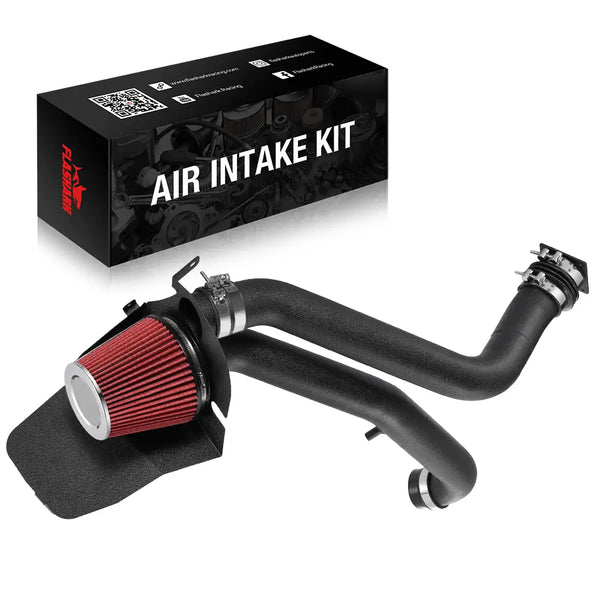
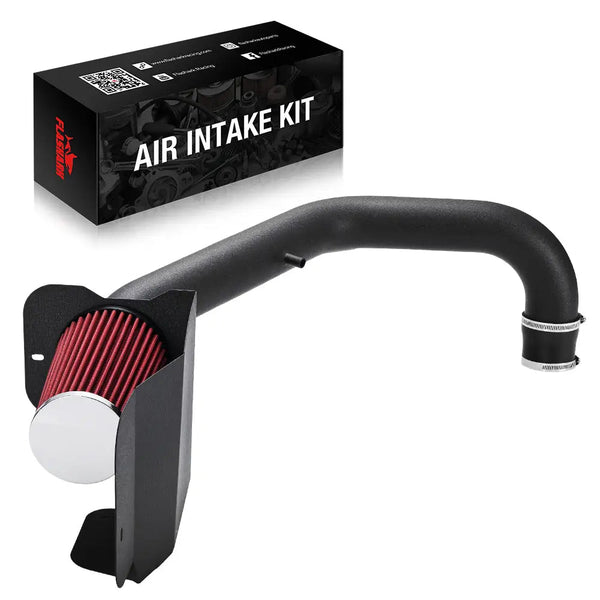
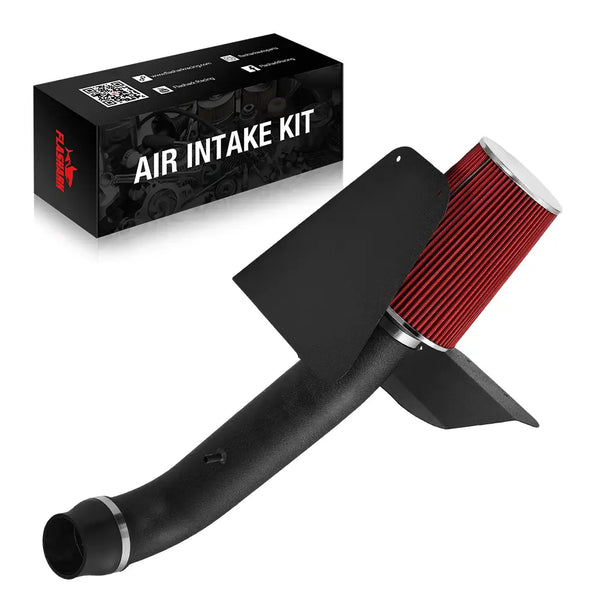
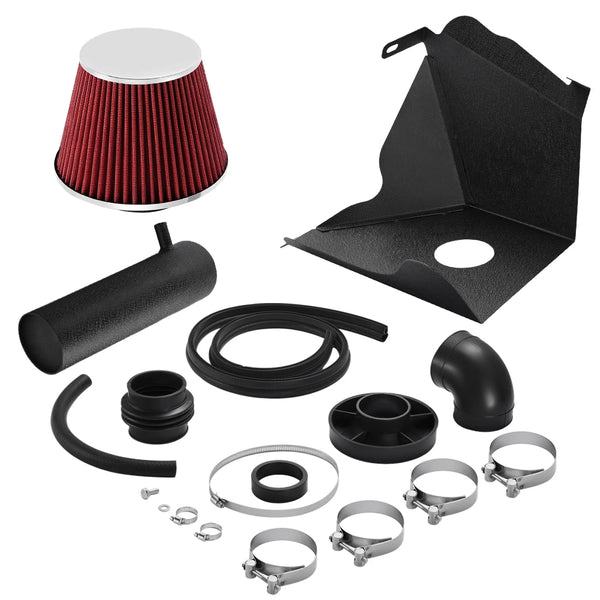
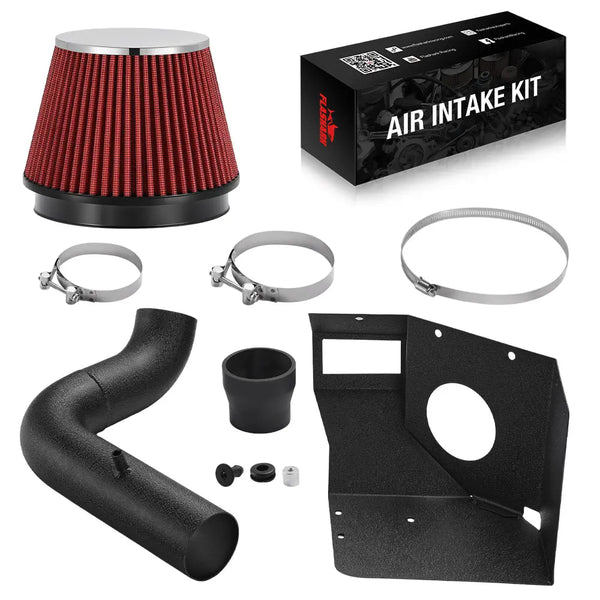
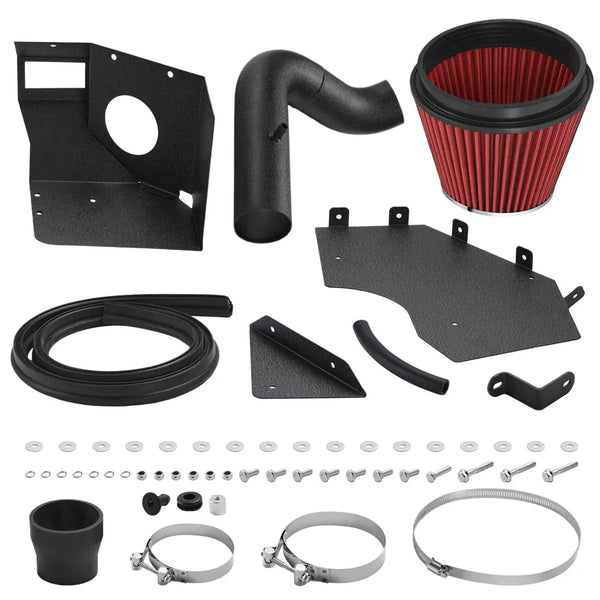
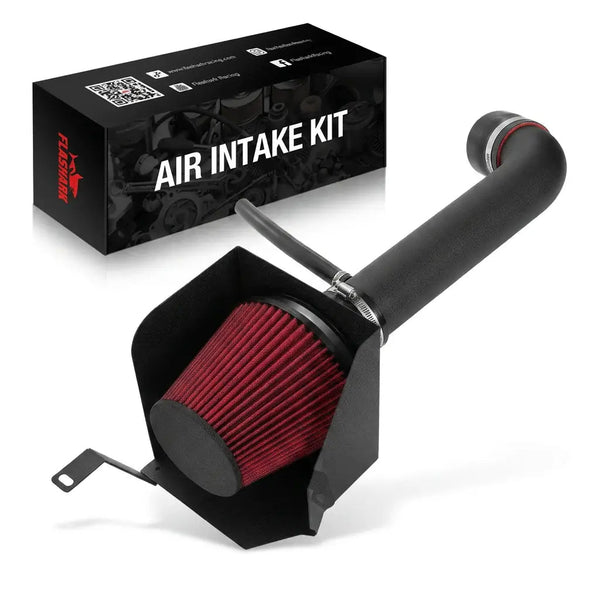
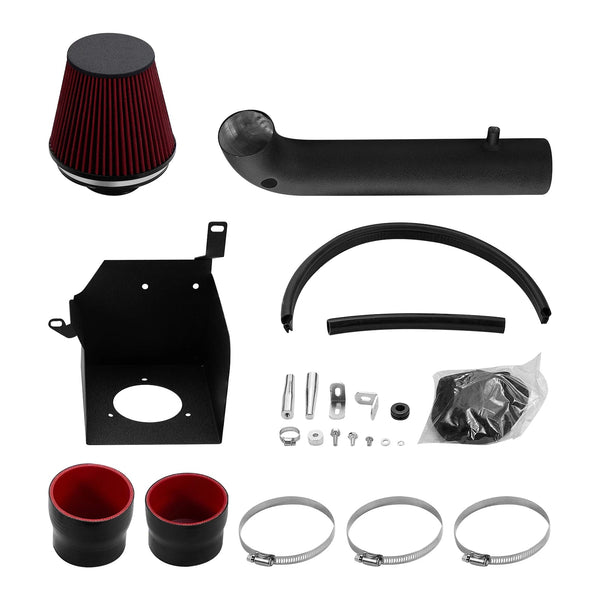
Compre kits de admisión de aire Jeep Flashark para aplicaciones selectas de Wrangler, Cherokee, Grand Cherokee, Compass y Patriot. Estos sistemas reemplazan la caja de aire y la tubería de admisión de fábrica con una trayectoria de admisión más directa, filtración reutilizable disponible y un sonido de inducción más notorio cuando se acelera.
Aquí está la clave: elegir solo por la insignia de Jeep no es suficiente. La cobertura actual incluye modelos selectos de Cherokee XJ de 1991 a 2001, Wrangler TJ de 1997 a 2006, Wrangler JK/JKU de 2007 a 2018, Grand Cherokee WJ de 1999 a 2004 y Compass y Patriot de 2011 a 2017. Los motores listados van desde cuatro cilindros de 2.0L y 2.4L hasta V6 de 3.6L y 3.8L, seis en línea de 4.0L y configuraciones de V8 de 4.7L.
Seleccione su modelo exacto, plataforma, año del modelo y motor, luego confirme los detalles de ajuste en la página del producto individual antes de realizar el pedido. Esa verificación rápida es la forma más fácil de evitar pedir el tubo, la provisión del sensor o los herrajes de montaje incorrectos.



Comprar entradas de aire frío por marca: Dodge | Chevrolet/GMC | Ford | Nissan | Volkswagen | Honda | Infiniti | Jeep | Toyota
Compre kits de admisión de aire Jeep Flashark para aplicaciones selectas de Wrangler, Cherokee, Grand Cherokee, Compass y Patriot. Estos sistemas reemplazan la caja de aire y la tubería de admisión de fábrica con una trayectoria de admisión más directa, filtración reutilizable disponible y un sonido de inducción más notorio cuando se acelera.
Aquí está la clave: elegir solo por la insignia de Jeep no es suficiente. La cobertura actual incluye modelos selectos de Cherokee XJ de 1991 a 2001, Wrangler TJ de 1997 a 2006, Wrangler JK/JKU de 2007 a 2018, Grand Cherokee WJ de 1999 a 2004 y Compass y Patriot de 2011 a 2017. Los motores listados van desde cuatro cilindros de 2.0L y 2.4L hasta V6 de 3.6L y 3.8L, seis en línea de 4.0L y configuraciones de V8 de 4.7L.
Seleccione su modelo exacto, plataforma, año del modelo y motor, luego confirme los detalles de ajuste en la página del producto individual antes de realizar el pedido. Esa verificación rápida es la forma más fácil de evitar pedir el tubo, la provisión del sensor o los herrajes de montaje incorrectos.
Cómo Elegir el Kit de Admisión de Aire Adecuado para un Jeep
Un kit de admisión de aire para Jeep no es algo que deba elegir solo por el desplazamiento. Dos Jeeps pueden tener el distintivo de motor de 4.0L y aún así usar diferentes curvas de admisión, ubicaciones de montaje, conexiones de respiradero, provisiones de sensores y espacio disponible alrededor de la batería o la cubierta del ventilador.
Olvídese del ruido del foro por un minuto. La forma correcta de comprar es sencilla: identifique el chasis, confirme el año del modelo, verifique el motor y compare el diseño de la admisión original con las fotos del producto. Flashark ofrece varias configuraciones de admisión diferentes en esta página, pero cada una está construida en torno a una aplicación definida en lugar de cada vehículo con el distintivo de Jeep.
Antes de Comprar
- Wrangler TJ: Las opciones actuales cubren aplicaciones seleccionadas de 1997–2006 de 2.4L, 2.5L y 4.0L, pero los dos diseños de admisión TJ enumerados no tienen una cobertura de motor idéntica.
- Wrangler JK/JKU: Las aplicaciones de 3.8L de 2007–2011 y de 3.6L de 2012–2018 requieren diferentes kits de admisión.
- Wrangler 2018: Confirme que el vehículo sea la plataforma JK saliente, no la plataforma JL más nueva.
- Grand Cherokee: La cobertura actual es para modelos WJ seleccionados de 1999–2004 con el V8 de 4.7L, no el seis en línea de 4.0L del WJ.
- Expectativas realistas: Espere un sonido de admisión más notorio y un filtro reutilizable en los kits aplicables. No espere una cifra fija de caballos de fuerza en cada motor.
Compare la Admisión con la Plataforma, el Año y el Motor del Jeep
Jeep reutilizó nombres de modelos y tamaños de motor en varias generaciones. Eso hace que un título de producto claro sea útil, pero no reemplaza una verificación de ajuste adecuada. Un Wrangler TJ, Wrangler JK, Cherokee XJ y Grand Cherokee WJ pueden estar estacionados uno al lado del otro en la entrada de la casa y necesitar cuatro conjuntos de admisión completamente diferentes.
Comience con el código de plataforma siempre que esté disponible. Luego verifique el año y el motor. Preste atención también a los años de transición: 2003 marca el cambio del cuatro cilindros de 2.5L al cuatro cilindros de 2.4L en el Wrangler TJ, mientras que 2012 marca el paso del V6 de 3.8L al Pentastar de 3.6L en el Wrangler JK.
| Plataforma Jeep | Años Listados | Motor | Diseño de Admisión Disponible | Verificación Clave de Ajuste |
|---|---|---|---|---|
| Cherokee XJ | 1991–2001 | 4.0L seis en línea | Admisión de filtro único con escudo térmico | Confirme el chasis XJ y las conexiones originales del sensor y del respiradero. |
| Wrangler TJ | 1997–2006 | 2.4L, 2.5L o 4.0L | Admisión de cuatro cilindros con aislamiento térmico o kit de admisión TJ con escudo térmico | No asuma que ambos productos TJ soportan los mismos motores. |
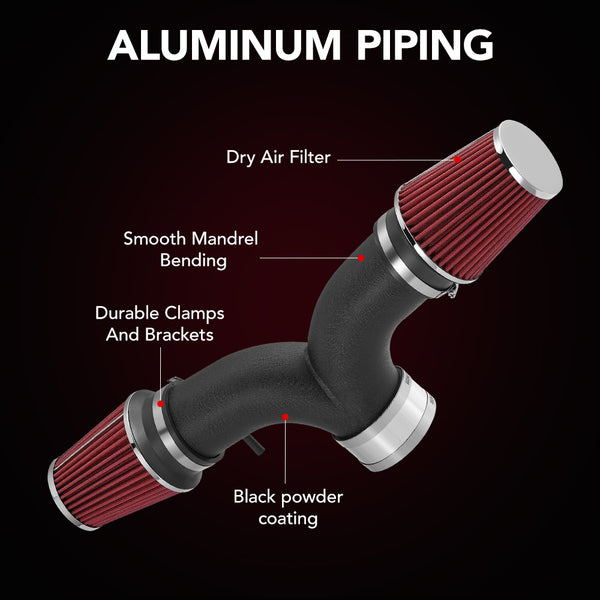
| Grand Cherokee WJ | 1999–2004 | 4.7L V8 | Admisión de filtro único con escudo térmico o admisión con tubo en Y de doble filtro | Los productos actuales no están listados para el seis en línea de 4.0L del WJ. |
| Wrangler JK/JKU | 2007–2011 | 3.8L V6 | Admisión de filtro único con escudo térmico | No intercambiable con la admisión Pentastar de 3.6L posterior. |
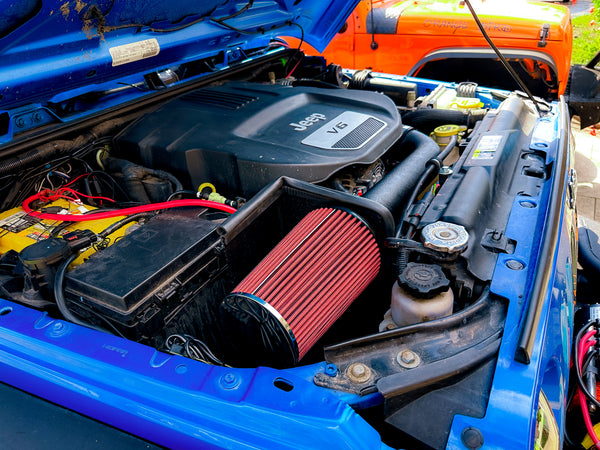
| Wrangler JK/JKU | 2012–2018 | 3.6L Pentastar V6 | Admisión de filtro único con escudo térmico de acero | Para vehículos de 2018, confirme que sea JK en lugar de JL. |
| Compass y Patriot | 2011–2017 | 2.0L o 2.4L cuatro cilindros | Kit de admisión compartido para Compass y Patriot | No extienda el ajuste listado a generaciones anteriores o posteriores de Compass. |
Ajuste de Admisión de Aire para Wrangler TJ y Wrangler JK
El nombre Wrangler genera más confusión que casi cualquier otra cosa en esta página. Un TJ de 1997-2006 no comparte su diseño de admisión con un JK de 2007-2018, y el propio JK se divide en dos grupos de motores.
Para el TJ, primero determine si el Jeep tiene el motor 2.5L, 2.4L o 4.0L. Un sistema Flashark listado se presenta específicamente para las aplicaciones de cuatro cilindros del TJ, mientras que otro producto lista una cobertura más amplia de 2.4L, 2.5L y 4.0L. Compare las curvas del tubo, los acopladores, los soportes de montaje, la provisión del sensor y la forma del escudo térmico antes de tratar esos productos como sustitutos.
La división del Wrangler JK es más limpia. La admisión del Wrangler JK de 2007-2011 es para el V6 de 3.8L, mientras que la admisión del Wrangler JK de 2012-2018 está construida alrededor del V6 Pentastar de 3.6L. No elija entre ellos solo por el estilo de carrocería, el número de puertas o el distintivo JKU.
Advertencia de Ajuste para Wrangler 2018
Jeep vendió tanto el JK saliente como el JL más nuevo durante el año modelo 2018. Un producto listado para un Wrangler JK 2018 no debe instalarse automáticamente en un Wrangler JL 2018. Verifique el VIN, la designación de la plataforma, el diseño del compartimiento del motor, la forma de la caja de aire de fábrica y las fotos del producto antes de realizar el pedido.
Diseños de Filtro Único, con Escudo Térmico y Doble Filtro
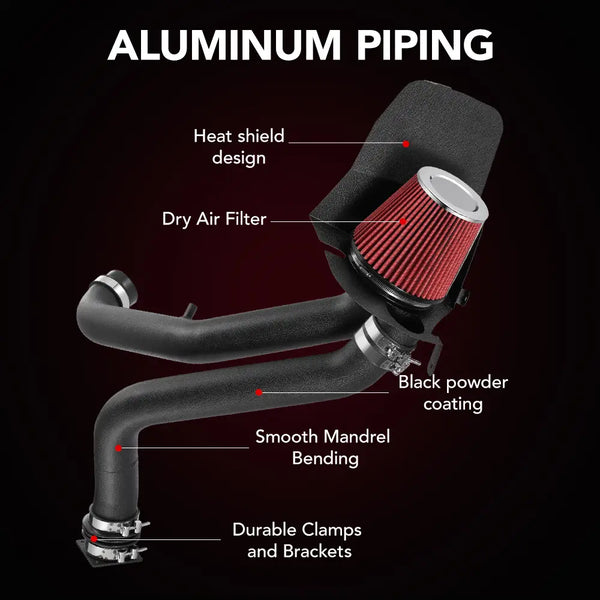
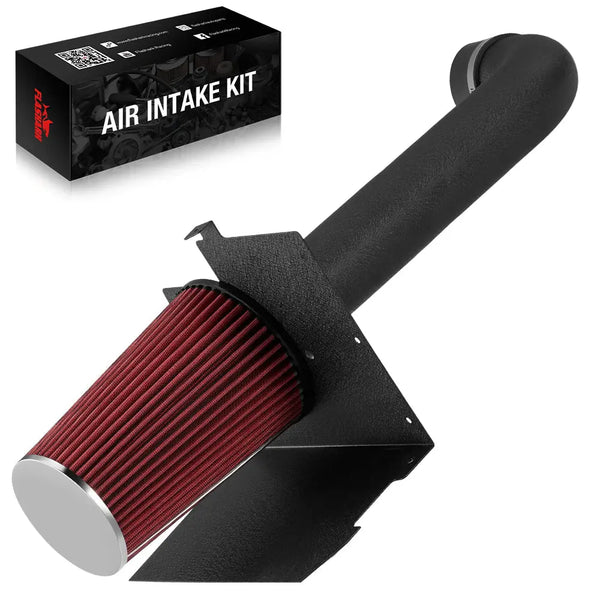
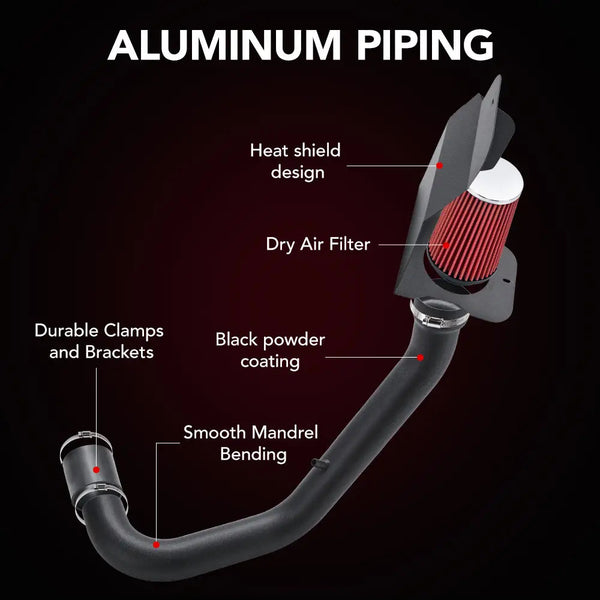
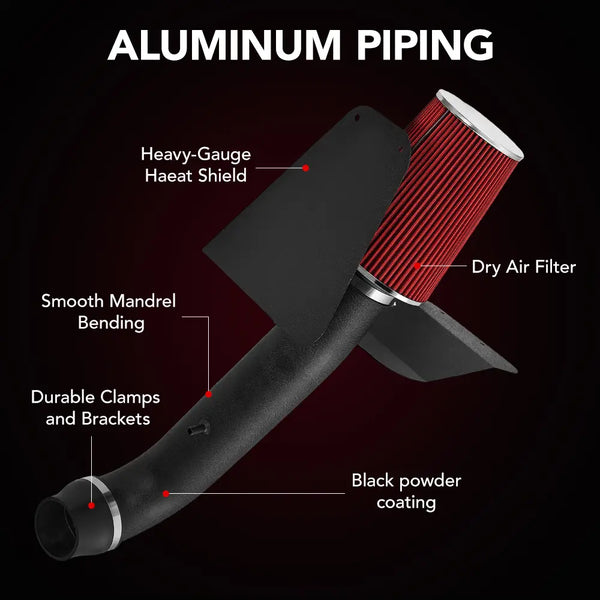
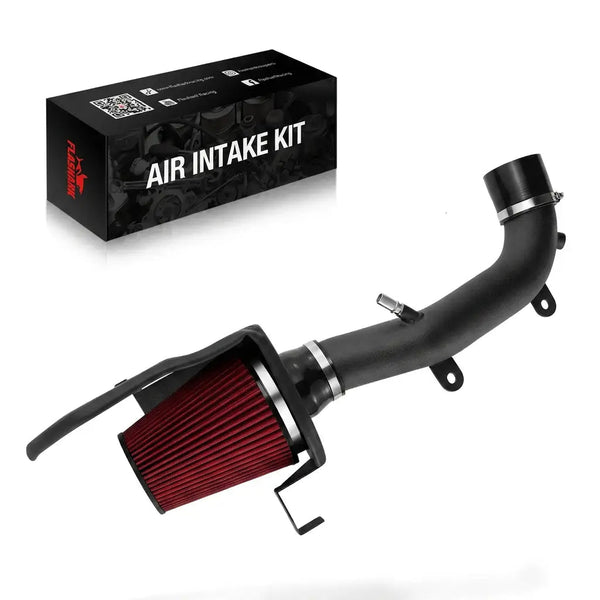
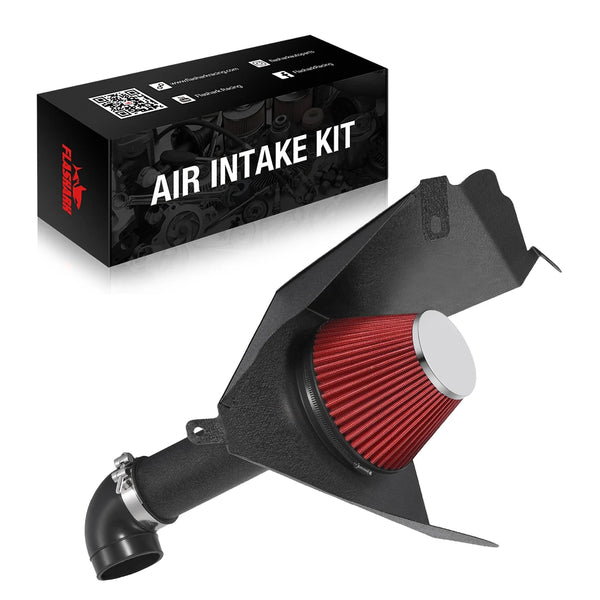
La mayoría de los productos de esta colección utilizan un único filtro seco de elemento abierto conectado a un tubo de admisión de aluminio. Un escudo térmico de acero formado separa el filtro de parte del calor circundante del compartimiento del motor, dejando suficiente espacio para el servicio y el flujo de aire.
La gama Wrangler TJ también incluye un tubo con aislamiento térmico y un diseño de cubierta protectora para el filtro. Este enfoque es útil cuando la prioridad es reducir el calor radiante directo alrededor del tubo y brindar al filtro más protección que un cono completamente expuesto.
La gama 4.7L del Grand Cherokee WJ de 1999–2004 ofrece la opción de diseño más clara. Un sistema utiliza un filtro único convencional con un escudo térmico. El otro utiliza un tubo en forma de Y más grande que alimenta dos filtros secos abiertos. La configuración de doble filtro crea una apariencia más agresiva en el compartimiento del motor y expone una mayor área de filtro, pero también deja una mayor superficie del filtro expuesta al calor del motor, el polvo y el agua.
Respuesta honesta: ninguno de los diseños es automáticamente el correcto para cada conductor. Un WJ de uso diario puede beneficiarse más de la separación física proporcionada por la admisión de filtro único con escudo térmico. Un conductor que valora la apariencia y un sonido de inducción más fuerte puede preferir la admisión de doble filtro para Grand Cherokee.
¿Qué Cambia Después de Reemplazar la Caja de Aire de Fábrica?
La primera diferencia que la mayoría de los conductores notan es el sonido. Con la caja de aire de fábrica retirada, el filtro y el tubo de admisión transmiten más ruido de inducción del motor. Con el acelerador ligeramente presionado, el cambio puede ser bastante moderado. Presione más el acelerador y el rugido se vuelve más fácil de escuchar, especialmente en los motores 3.6L, 3.8L, 4.0L y 4.7L.
También puede notar que el motor responde de manera diferente durante las transiciones rápidas del acelerador, pero no lo trate como un aumento de potencia garantizado. La condición del motor, la temperatura ambiente, la acumulación de calor, la ubicación del filtro, las modificaciones del escape, el tamaño de los neumáticos, la relación de transmisión, la adaptación de la ECU y la calidad de la instalación, todo afecta lo que el conductor siente.
No existe una cifra honesta y universal de caballos de fuerza para cada admisión de aire frío de Jeep en esta página. Un Compass de 2.0L, un Cherokee XJ de 4.0L y un Grand Cherokee WJ de 4.7L no producirán el mismo resultado. Sin pruebas controladas antes y después en el mismo vehículo, usando el mismo combustible, dinamómetro, método de corrección, presión de los neumáticos, marcha y temperatura de admisión, una afirmación fija de caballos de fuerza en las ruedas sería una suposición.
Los beneficios prácticos son más fáciles de definir: un filtro reparable, un sonido de inducción diferente, la eliminación de algunas cámaras de resonador de fábrica y una ruta de admisión diseñada para la aplicación listada. Esas son expectativas razonables. Las grandes afirmaciones de potencia atornilladas no lo son.
Verificaciones de Ajuste Antes de Instalar una Admisión de Aire Frío para Jeep
Antes de retirar la caja de aire de fábrica, extienda cada tubo, acoplador, abrazadera, soporte, conexión de manguera, panel de escudo térmico, sello de goma y sujetador. Compare el nuevo tubo con el enrutamiento original mientras el sistema original todavía está en su lugar. Esta verificación de cinco minutos puede exponer un envío de motor incorrecto antes de desmontar el Jeep.
- Confirme la plataforma: TJ, JK, JKU, XJ, WJ, Compass o Patriot.
- Confirme el año del modelo: Preste especial atención a los puntos de transición del TJ 2003, JK 2012 y Wrangler 2018.
- Confirme el motor: No se base en el estilo de la carrocería o el nivel de equipamiento.
- Inspeccione la conexión del cuerpo del acelerador: Verifique el diámetro del acoplador y el ángulo del tubo antes de apretar cualquier cosa.
- Localice cada sensor: Confirme la ubicación del sensor de temperatura del aire de admisión u otra provisión de sensor listada antes de arrancar el motor.
- Rastree las mangueras del respiradero: Cada conexión de cárter, PCV o CCV de fábrica retirada del tubo original necesita un destino correcto.
- Verifique los componentes cercanos: Busque contacto con la cubierta del ventilador, el aislamiento del capó, los cables de la batería, la manguera del radiador, la línea de A/C y los arneses de cableado.
- Revise las modificaciones existentes: Los cuerpos del acelerador, las elevaciones de la carrocería, las baterías reubicadas, los depósitos de aceite o el cableado de accesorios del mercado de accesorios pueden cambiar el espacio disponible.
Nota de Diagnóstico del Mecánico
Un ralentí irregular o una luz de advertencia inmediatamente después de la instalación generalmente requiere una inspección física antes de que se reemplacen las piezas. Comience en el cuerpo del acelerador y avance hacia el filtro. Asegúrese de que cada acoplador esté completamente asentado, con la abrazadera colocada aproximadamente a 1/4 de pulgada del borde del acoplador en lugar de colgar del extremo.
Verifique que el sensor de temperatura del aire de admisión y su sello estén bien colocados en la abertura provista. Vuelva a conectar cada manguera de respiradero o PCV/CCV, luego verifique que no quede ningún puerto tapado abierto. Donde el compartimiento del motor lo permita, deje aproximadamente 1/2 pulgada de espacio libre entre el tubo o el filtro y los componentes duros que puedan desgastar el aluminio, la silicona, el cableado o el medio filtrante.
Arranque el motor y escuche un silbido alrededor de los acopladores y las conexiones de las mangueras. Observe el ralentí durante varios minutos, inspeccione el tubo nuevamente después del primer ciclo de calor completo y vuelva a apretar las abrazaderas una vez que la silicona se haya asentado. Esa secuencia detecta las fallas comunes de instalación sin pretender que cada luz de advertencia requiera una afinación.
Sensores de Admisión Jeep, Luces de Revisión del Motor y Ajuste
Varias aplicaciones de Jeep aquí representadas utilizan la gestión del motor basada en la presión del colector en lugar de colocar un sensor de flujo de aire masivo convencional en el tubo de admisión. Eso no hace que la instalación de la admisión sea a prueba de sensores. La ubicación del sensor de temperatura del aire de admisión, las lecturas de presión del colector, la posición del acelerador, la retroalimentación del sensor de oxígeno y las fugas no medidas aún pueden afectar la forma en que la ECU calcula el combustible.
Una admisión atornillada correctamente ajustada en un vehículo que, por lo demás, está en stock, puede funcionar sin una afinación personalizada. Aun así, "no se requiere afinación" no debe leerse como una promesa de que cada Jeep, en cada condición, se comportará de manera idéntica. Cuerpos de acelerador más grandes, cambios de árbol de levas, cambios de inyectores, inducción forzada, modificaciones de escape, calibraciones previas de la ECU o fugas de vacío sin resolver pueden cambiar la respuesta.
Si aparece una luz de revisión del motor inmediatamente después de la instalación, inspeccione primero el trabajo mecánico. Verifique el conector del sensor, el sello del sensor, las mangueras del respiradero, las abrazaderas, los acopladores y cualquier cableado movido durante el trabajo. Registre el código de diagnóstico de problemas en lugar de desconectar la batería repetidamente y esperar que la luz se apague.
Advertencia de Agua y Emisiones
Un escudo térmico no es una caja de aire sellada, y una cubierta de filtro no es un snorkel. Los filtros de elemento abierto que se muestran en esta colección no deben sumergirse ni tratarse como protección para cruces de agua profundos. Inspeccione el filtro después de lluvias intensas, barro, caminos polvorientos o lavado del compartimiento del motor, y nunca continúe conduciendo con un filtro saturado.
Las reglas de emisiones también varían según la ubicación y el producto. Un kit puede estar restringido para su uso en vehículos de carretera pública controlados por la contaminación o puede no tener aprobación para aplicaciones reguladas en California. Revise la página del producto individual y los requisitos estatales o locales aplicables antes de realizar el pedido.
Elija la Admisión Según Cómo Utilice el Jeep
Un conductor diario necesita un ajuste predecible, conexiones seguras de mangueras, protección sensible del filtro y suficiente espacio libre para evitar ruidos. En esa situación, un sistema de filtro único con un escudo térmico moldeado suele ser la opción directa.
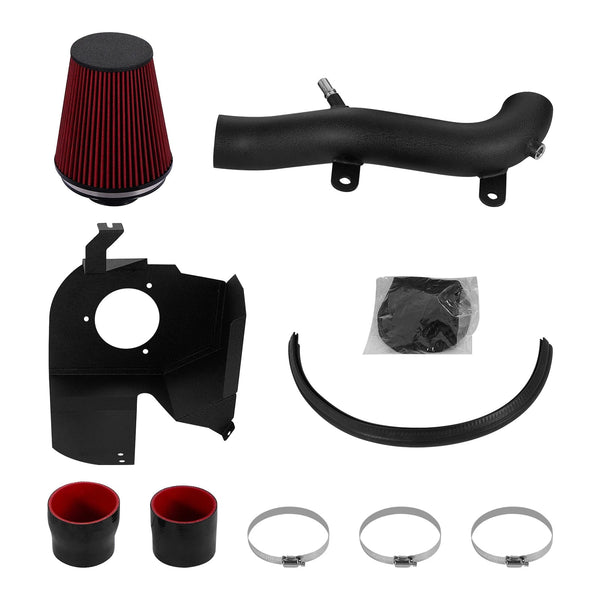
Para un proyecto de bricolaje, mire más allá del tubo pulido. Verifique si el kit incluye los soportes, acopladores, abrazaderas, hardware del sensor, conexiones de manguera, filtro y piezas del escudo térmico requeridos para la aplicación específica. Una admisión solo es "atornillable" cuando cada conexión llega a su ubicación prevista sin tirar, doblar o forzar el tubo contra otro componente.
El uso todoterreno cambia la lista de prioridades. La accesibilidad del filtro importa porque el polvo carga el medio más rápido. La resistencia del soporte importa porque el tren motriz y la carrocería se mueven. La exposición al agua importa aún más. Un filtro más abierto puede sonar bien en la calle, pero aún necesita inspección después de barro, agua estancada o uso repetido en senderos.
- Para un conductor diario más silencioso: Opte por un diseño de filtro único con escudo térmico y mantenga el filtro aislado de salpicaduras directas.
- Para un sonido de inducción más fuerte: Un diseño de elemento abierto o de doble filtro generalmente transmitirá más ruido de admisión.
- Para un XJ o TJ más antiguo: Inspeccione las mangueras de vacío, los codos de ventilación, los ojales y los conectores eléctricos antes de la instalación.
- Para un Jeep modificado: Confirme la compatibilidad con el cuerpo del acelerador, el depósito de aceite, la reubicación de la batería, el snorkel u otras piezas del compartimento del motor.
Antes de añadir un kit al carrito, confirme el modelo, la plataforma, el año, el motor, el recorrido de admisión de fábrica y las conexiones de los sensores del Jeep por última vez. Luego abra la página de producto específica para revisar los componentes incluidos, la disponibilidad actual, las notas de emisiones, los requisitos de instalación y los detalles exactos de compatibilidad.
Preguntas frecuentes sobre la instalación y el ajuste de la admisión de aire para Jeep
P1: ¿Vale la pena instalar una admisión de aire frío en un Jeep?
R1: Puede valer la pena si desea un sonido de inducción más notorio, un filtro reutilizable y un camino de admisión posventa más simple. El valor depende del ajuste correcto, la calidad de la instalación, la condición del vehículo y lo que espera de la mejora. No debe comprarse con la suposición de que cada Jeep ganará la misma cantidad de caballos de fuerza o economía de combustible.
P2: ¿Qué modelos de Jeep cubre esta colección?
R2: Los productos actuales cubren aplicaciones seleccionadas de Wrangler TJ, Wrangler JK/JKU, Cherokee XJ, Grand Cherokee WJ, Compass y Patriot. La cobertura se limita a los años y motores indicados en cada página de producto y no debe extenderse a otras generaciones de Jeep.
P3: ¿Una admisión de aire de Jeep sirve para todos los modelos que utilizan el mismo tamaño de motor?
R3: No. La cilindrada compartida no garantiza la compatibilidad compartida. El enrutamiento de los tubos, la posición del cuerpo del acelerador, las provisiones de los sensores, las mangueras de ventilación, los soportes, la ubicación de la batería y el espacio disponible en el compartimento del motor pueden diferir entre plataformas.
P4: ¿Puede una admisión de 4.0L de Cherokee XJ encajar en una Wrangler TJ 4.0L?
R4: No solo por el tamaño del motor. La Cherokee XJ y la Wrangler TJ usan diferentes diseños de carrocería, enrutamiento de admisión, puntos de montaje y componentes del compartimento del motor circundantes. Use el producto específicamente listado para la plataforma correcta.
P5: ¿Cuál es la diferencia entre una admisión de aire de Wrangler TJ y una de Wrangler JK?
R5: El TJ y el JK son plataformas Wrangler separadas con diferentes motores y diseños de compartimento del motor. Los productos actuales del TJ cubren aplicaciones seleccionadas de 2.4L, 2.5L y 4.0L, mientras que los productos del JK se dividen entre el V6 de 3.8L de 2007-2011 y el Pentastar V6 de 3.6L de 2012-2018.
P6: ¿Cómo sé si mi Wrangler 2018 es un JK o un JL?
R6: Revise el VIN y la información de la plataforma, luego compare la caja de aire de fábrica, el tubo de admisión y el diseño del compartimento del motor con las fotos del producto. Jeep vendió tanto el JK saliente como el JL más nuevo durante el año del modelo 2018, por lo que el año por sí solo no es suficiente.
P7: ¿Una admisión de aire frío para Jeep requiere una reprogramación?
R7: Una admisión de atornillado correctamente adaptada en un Jeep de serie puede funcionar sin una puesta a punto personalizada. Los requisitos de puesta a punto pueden cambiar cuando el vehículo tiene un cuerpo de aceleración más grande, un árbol de levas, inducción forzada, cambios en los inyectores, una calibración de ECU previa u otras modificaciones relacionadas con el flujo de aire.
P8: ¿Puede una admisión de aire de Jeep causar que se encienda la luz de "revisar motor"?
R8: Puede hacerlo si se instala el kit equivocado o si un sensor, manguera de ventilación, acoplador, abrazadera o sello queda suelto. Lea el código de diagnóstico y revise la instalación antes de asumir que la admisión requiere ajuste.
P9: ¿Hará una admisión de aire de Jeep que el motor suene más fuerte?
R9: Normalmente, sí. La eliminación de la caja de aire de fábrica cerrada permite que más sonido de inducción llegue a la cabina y al exterior del vehículo. El cambio suele ser más notorio durante el acelerador moderado o pesado que durante la conducción constante.
P10: ¿Los filtros de estos kits de admisión de Jeep son lavables y reutilizables?
R10: Muchos de los kits enumerados utilizan filtros secos lavables y reutilizables. Siga las instrucciones de limpieza para el filtro específico, déjelo secar completamente antes de la instalación y no aplique aceite para filtros a menos que las instrucciones del producto lo requieran específicamente.
P11: ¿Puedo usar una admisión de Jeep de filtro abierto durante cruces de agua profunda?
R11: Ninguna admisión de elemento abierto debe tratarse como un snorkel o un sistema impermeable. No sumerja el filtro y revíselo después de lluvias intensas, barro, lavado del compartimento del motor o exposición a agua estancada. Un filtro empapado puede restringir el flujo de aire y aumentar el riesgo de que el agua llegue al motor.
P12: ¿Son legales los kits de admisión de aire frío para Jeep en todos los estados?
R12: No necesariamente. Los requisitos de emisiones varían según el estado y el producto, y algunos kits pueden estar destinados únicamente para uso todoterreno o de competición. Consulte la página del producto individual y sus regulaciones locales, especialmente para vehículos registrados en California u otra jurisdicción regulada por CARB.


