Headers can change exhaust flow and pulse behavior, but the right choice for a Chevy S10 or Honda Accord depends on the exact engine, fitment, downstream connection, and emissions setup. Compare those details before expecting a performance gain.
- Match the header to the engine and vehicle configuration, not the model name alone.
- Compare tube layout, material, clearance, sensors, and collector connection.
- Look for measured results before relying on horsepower or fuel economy claims.
Importance of Performance Exhaust Headers

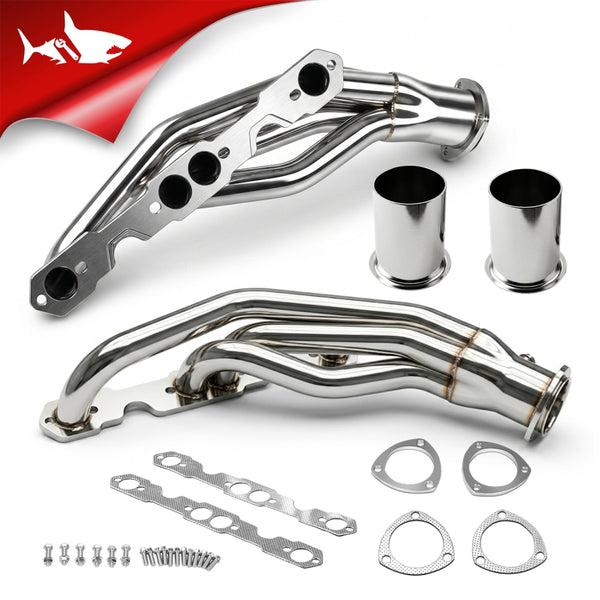
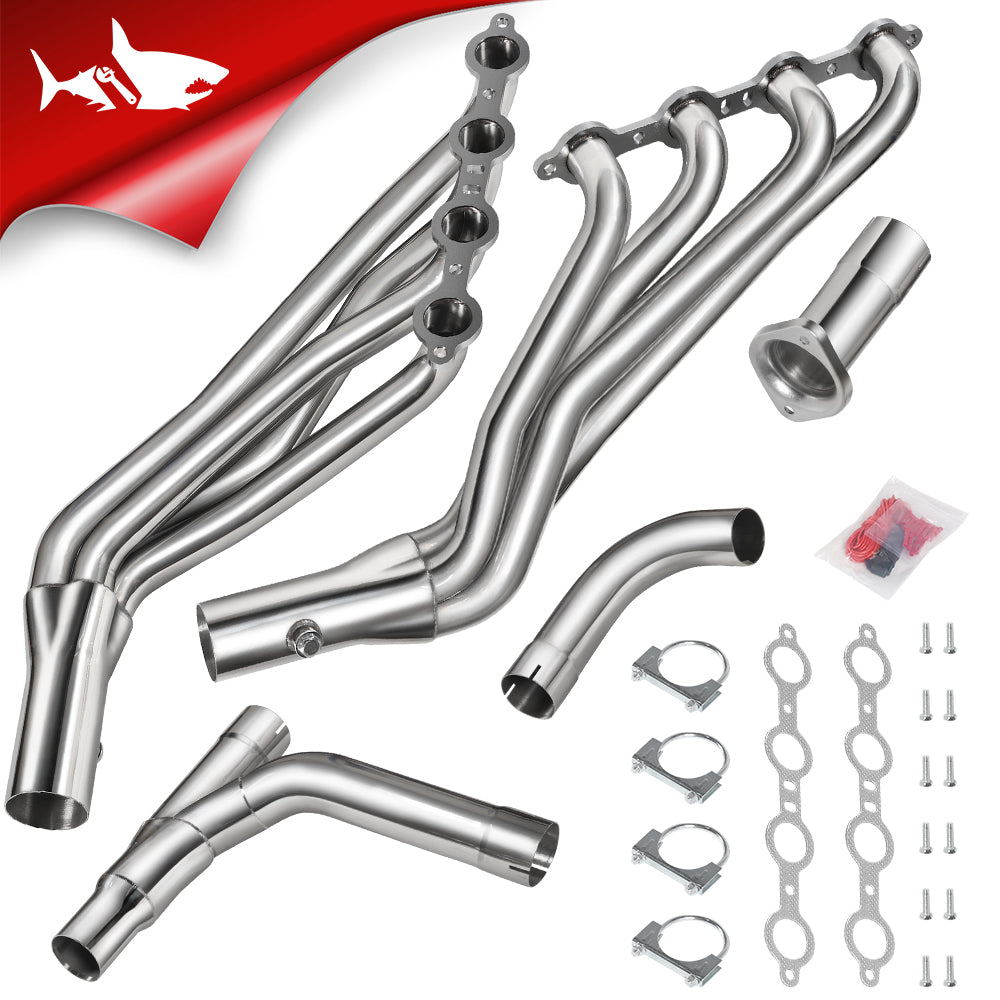
An exhaust header connects the engine exhaust ports to the rest of the exhaust system. It is separate from the intake manifold, which carries incoming air. Header tube length, diameter, and collector design influence how exhaust pulses interact; the outcome varies by engine and surrounding parts. Browse the exhaust header collection for application-specific options.
Features to Look for in High-Quality Headers
- Primary size: Match tube diameter to engine output and intended operating range; oversized tubes are not automatically better.
- Header dimensions: Compare shorty and longer layouts against space, ground clearance, and the downstream exhaust.
- Configuration: A 4-1 or 4-2-1 layout is only one part of the design; collector and tube dimensions also matter.
- Material: Check material grade, wall thickness, weld quality, and corrosion exposure rather than assuming every stainless part performs alike.
- Coating: A coating can help manage surface temperature, but heat and power effects depend on the application.
| Decision | Honda Accord check | Chevy S10 check |
|---|---|---|
| Engine and year | Confirm exact 2.3L four-cylinder application and year | Confirm exact 2.2L four-cylinder application and year |
| Connection | Compare collector, catalyst, and downstream flange | Compare collector, exhaust routing, and downstream flange |
| Controls and clearance | Check oxygen-sensor provision and emissions setup | Check sensor provision, steering and chassis clearance |
| Before purchase | Review current product fitment and installation notes | Review current product fitment and installation notes |
Exhaust Header for 1998–2002 Honda Accord

The linked Honda Accord header is presented for selected 1998–2002 2.3L four-cylinder applications. Its 4-2-1 layout is a useful starting point for comparison, but verify the exact engine, year, emissions equipment, oxygen-sensor location, and downstream connection against the current listing. A bolt-on fit or specific power gain should only be expected when supported for your configuration.
Exhaust Headers for 1994–2004 Chevy S10 Models

The linked S10 2.2 header targets selected 2.2L four-cylinder trucks. Check the current fitment table for your year and engine, plus the collector, sensor provision, and chassis clearance. Do not infer that one header fits every S10 within the year range.
Do Exhaust Headers Really Boost Performance?
Exhaust pulses can create pressure waves that help clear a cylinder under some operating conditions. Whether this produces a measurable gain depends on the whole engine and exhaust combination. Compare tests performed on the same vehicle under comparable conditions; sound alone does not establish a horsepower increase.
Header Compatibility with Different Vehicle Models
Confirm engine code, model year, trim, drivetrain, emissions equipment, flange pattern, sensor provisions, and available space. A header for a turbocharged engine has different routing and connection requirements from one for a naturally aspirated engine.
Exhaust Headers and Other Engine Modifications
Intake, catalyst, exhaust diameter, and calibration can affect the result of a header change. A tune is not automatically required or unnecessary; evaluate the specific vehicle and installed combination. If a warning light appears, read the code and inspect for leaks and sensor problems.
Exhaust Header Legality and Regulations
Before purchasing, verify the rules that apply where the vehicle is registered and used. Keep required catalysts and monitoring equipment intact, and check whether the exact part has any approval needed for that vehicle. Product fitment does not establish road legality.
Technician note: Let the exhaust cool before inspection. Check flange sealing, oxygen-sensor wiring clearance, and nearby heat-sensitive parts after installation. Follow the vehicle and product instructions for fastener procedures.
Frequently Asked Questions
Q1. What does an exhaust header do?
A1. A header routes exhaust gas from each cylinder into a collector. Its tube and collector design can affect pulse timing, flow, sound, and the engine speed range where a difference is felt.
Q2. Do headers always add horsepower?
A2. No. Results depend on the engine, existing exhaust, header design, installation, and testing conditions. Ask for comparable before-and-after data before expecting a specific gain.
Q3. Will headers improve fuel economy?
A3. Fuel economy is not guaranteed. Driving style, engine condition, calibration, and the rest of the exhaust system can outweigh any change from the header.
Q4. Are shorty or long-tube headers better?
A4. Neither is universally better. Compare the available space, intended engine speed range, downstream connection, emissions equipment, and the exact vehicle application.
Q5. What is the difference between 4-1 and 4-2-1 headers?
A5. A 4-1 design merges four primary tubes at one collector; a 4-2-1 design merges them in stages. Actual behavior also depends on tube dimensions and the engine combination.
Q6. Will a 1998–2002 Honda Accord header fit every Accord?
A6. No. Confirm the exact year, engine, trim, emissions configuration, sensor locations, and product fitment details before ordering.
Q7. Will an S10 header fit every 1994–2004 truck?
A7. No. Check the exact engine, model year, drivetrain, emissions configuration, and product fitment details. A model-year range alone is insufficient.
Q8. Do headers require an ECU tune?
A8. There is no universal answer. The need for calibration depends on the vehicle, the parts installed, sensor placement, and how the engine runs afterward.
Q9. Can headers cause a check-engine light?
A9. They can if an exhaust leak, sensor issue, catalyst change, or other installation problem affects monitoring. Diagnose any code rather than assuming the header is the cause.
Q10. Are aftermarket headers street legal?
A10. Legality depends on the jurisdiction, vehicle, and specific part approval. Verify current local rules and the part documentation before changing emissions equipment.
Q11. What should I inspect before installation?
A11. Check the product fitment notes, flange and collector connections, oxygen-sensor provisions, gasket and hardware requirements, heat clearance, and condition of the existing exhaust.
Ready to Upgrade?
Start with the exact vehicle and engine, then compare the Accord or S10 product details with the checks above. Confirm fitment and any applicable emissions documentation before ordering.

Steven Chen
Automotive Performance Specialist | Engine & Exhaust Systems
Steven focuses on practical engine performance, exhaust fitment, and real-world upgrade paths for classic and modern enthusiast vehicles. He reviews small-block Ford, LS, truck, and street/strip applications with one goal in mind: helping builders choose parts that actually work together. His philosophy: "Good power starts with the right combination, not the biggest part."